For Riza Annisa Anggraeni, running revealed a whole new side to her homeland of Indonesia. But as more and more of us run races, log Strava times and chase personal bests, she wonders: is it bringing us closer to the earth or further away?
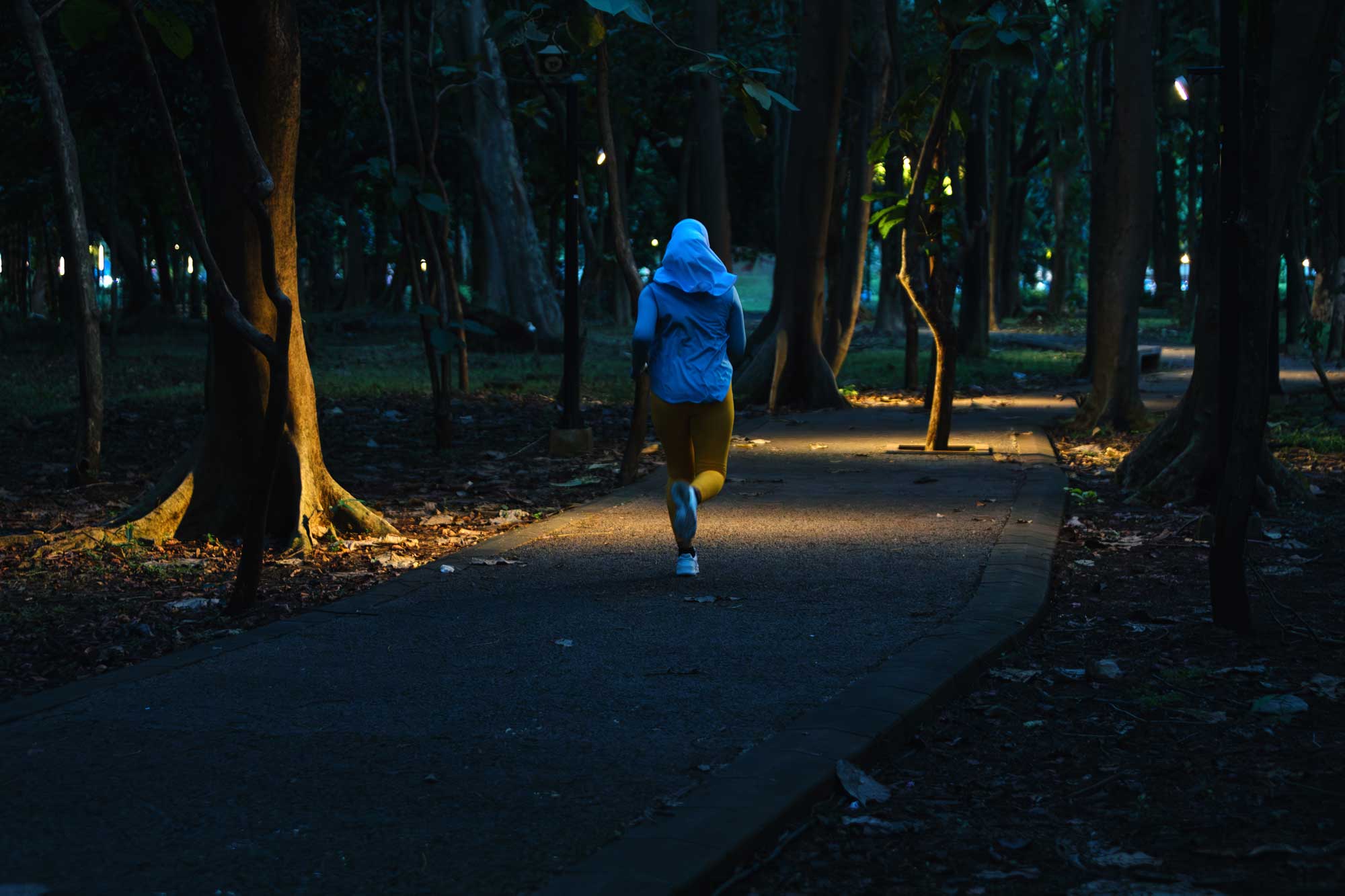
It was a Saturday morning and I was running with my husband through the heart of Bandung. Something felt different this time. The streets were unusually still, missing the familiar pulse of weekend runners.
“Why does it feel so quiet today?” I asked my husband.
“I think most of the runners are at the Maybank Marathon,” he replied.
Over the past decade, the running scene in Indonesia has flourished. By now, empty streets on a weekend should hardly feel unusual when they coincide with prestigious races like the Maybank Bali Marathon, the Borobudur Marathon or the Jakarta Marathon. Nearly every week brings another race, drawing runners away from their usual routes.
I have never entered any of these races. Since I began running regularly in 2022, I have not collected a single medal. I have covered 15 kilometers many times and even run the distance of a half marathon, but none of it was ever for the sake of a finish line or a medal. So, I wondered, as I ran through the quiet streets, what am I running for?
“I discovered a way of speaking with my body, and with the world around me”
It was my marriage that first drew me to running. My husband is a runner who has collected several marathon medals. I, on the other hand, had always belonged more to the mountains than to the roads – a hiker who found joy in the rhythm of slow living, rather than in racing against speed and time.
One day, I realized how beautiful it would be if we could spend time together through movement. So I began to run with him. At first I could only manage a pace of 10 minutes per kilometer, then nine, barely holding on for a distance of three kilometers. But little by little, the distance stretched to five, seven, 10, 15 and finally 21km.
Fifteen kilometers into my first 21km run, my legs were heavy and my breath uneven, even as I tried to hold a steady pace of around seven minutes per kilometer. Along Jalan Sumatera in Bandung, the trees arched above me, their branches weaving a canopy that filtered the sunlight into soft golden shards. The road was empty of noise, as if it belonged only to us. I could hear nothing but the rasp of my breath and the sound of my footsteps, echoing in harmony with my husband’s. He ran just behind me, always adjusting to my pace, always watching over me.
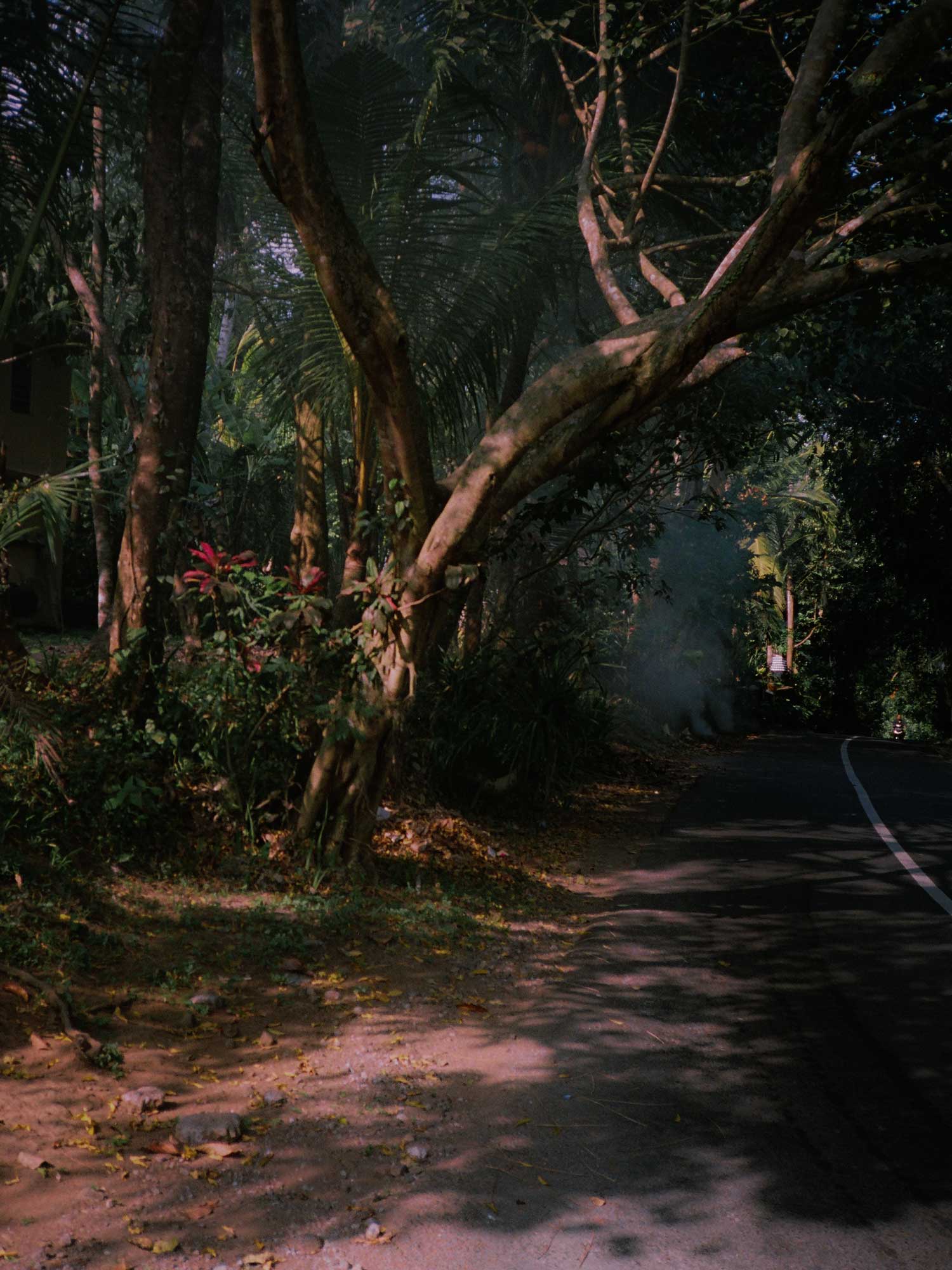
Photo: Stefan Dotter / Connected Archives
And then, something shifted. I began to hear only the voice of my body, moving in rhythm with my steps. Slowly, it felt as if my body were in dialogue with me until I no longer felt I was forcing it to run. My body seemed to glide on its own, carrying me forward effortlessly. The fatigue melted into calm, an inner stillness that pulsed in time with my breath and stride, carrying me over the 21km mark for the first time.
At that moment, I came to see running differently. I love it not just for the joy of sharing the road with my husband, but also for the intimate dialogue I have with my own body – a dialogue that only becomes apparent when I surpass 15 kilometers.
Each run carried with it a small triumph, and with every finish line I felt a spark of joy, as though my body were discovering a new language it had always known but never spoken.
Counting memories, not calories
As time went on, we began running with a small group of friends. We called it Run for Breakfast, with the motto ‘We count memories, not calories’. Every Wednesday morning we ran five to seven kilometers and then stayed to share food and stories. The laughter and warmth after each run became as nourishing as the movement itself.
Through this community, I came to see that every runner holds a different target, and each target carries its own definition of joy. Running, once the simplest and most natural act, has quietly transformed into something personal for everyone: a passion, a pursuit, a way of living that reflects the unique rhythm of each life.
When I listen to other runners talk about their marathon goals, the latest shoes, or the races they join every month, I come to see how people give meaning to the same act in such different ways. Some speak with sparkling eyes about their pace, others laugh endlessly as they recall the excitement of an out-of-town race, and some care only about the breakfast waiting after a short run.
Running, at its core the simplest of movements, becomes a mirror of character: ambition, patience, togetherness, and the desire to simply savor life. It’s a universal language, yet everyone speaks it in their own accent.
This understanding helps me resist the urge to follow trends, to constantly compare myself to others and to measure my worth in numbers and medals. My path is that of a mindful runner: someone for whom running is a space to listen to the body, to the light in the quiet joy of movement, and to keep my relationship with the Earth light and full of gratitude.
From steps to sight
As a child of the Buginese Indigenous community, I was raised to give meaning to everything I do, no matter how small. Whether in my interactions with people, with nature, or with God, there is always a value to be found.
Through running I discovered my own way of speaking, not only with my body, but also with the world around me.
In my running community we take a different route each time. One time we ran through narrow alleys in the heart of the city, surrounded by towering buildings. The alleys were lined with tightly packed houses, their back kitchens forming part of the path we ran through. As we passed a railway line, we saw children playing along the tracks – something clearly unsafe, yet so ordinary for them because they no longer had open spaces or city parks. Their spaces had been replaced by high-rises, entertainment centers and cafés.
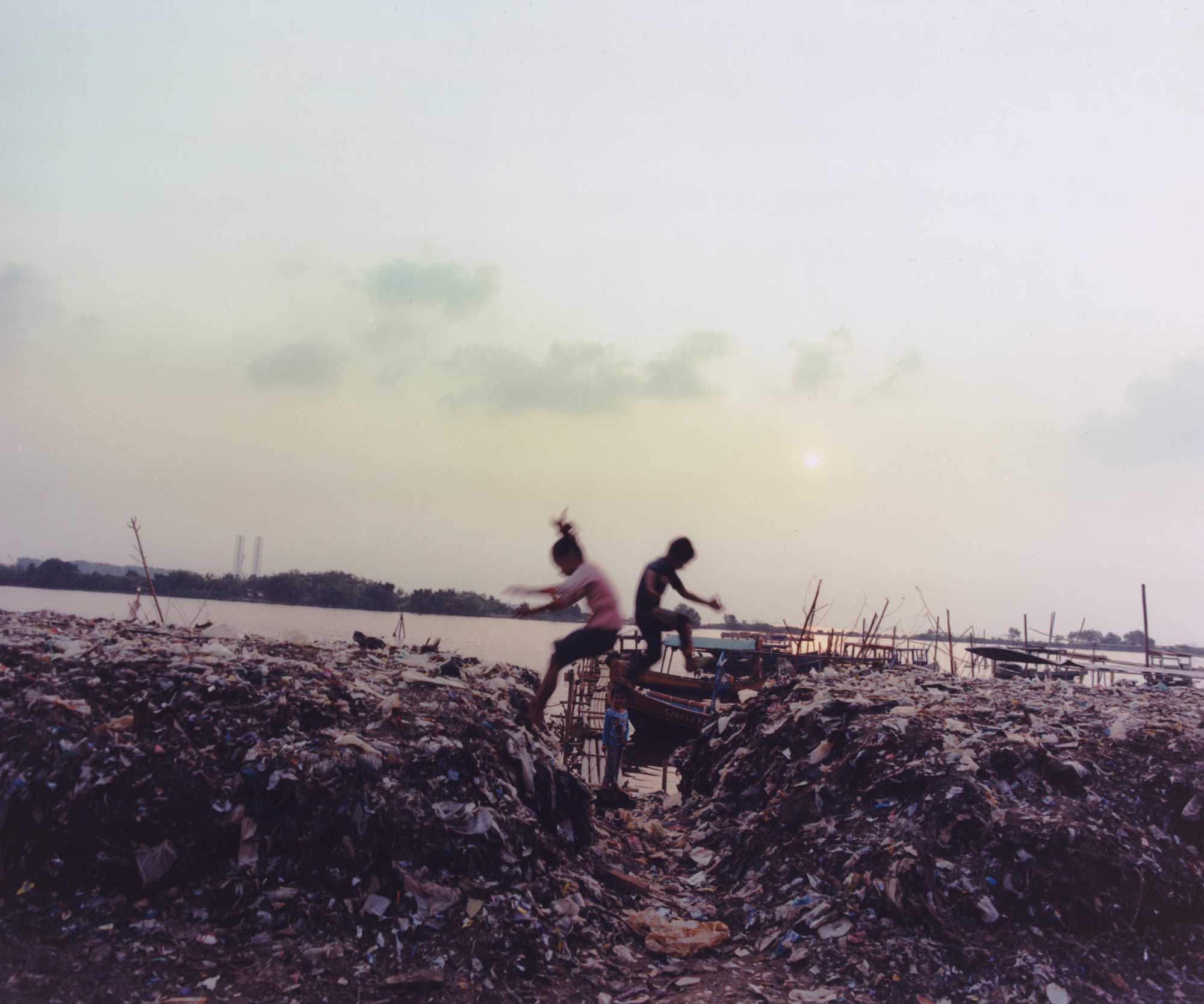
On another occasion we traced a route through the highlands and hills. Instead of pristine scenery, what greeted us was a mountain of waste. Piles of garbage were stacked neatly by the roadside, a sight that often escapes notice because such areas are rarely visited or monitored. Waste management there seemed almost forgotten.
In this way, the community opened my eyes to disturbing realities in my own hometown. If I had kept running only on the same familiar paths with my husband, I might never have witnessed situations that struck me so deeply.
Should I keep running while pretending not to see what lies before me? Or should I choose to speak up, to advocate against the injustices hidden within the spaces of my city, both in its crowded urban heart and along its quiet hillsides?
What I run for
I have found my own meaning in running, one that may differ from that of most runners. It is not about how many medals, or how far, or how fast, but about how deeply I come to know my surroundings. Deep in listening: listening to my body, to the ground beneath my feet, and to the voices too often forgotten.
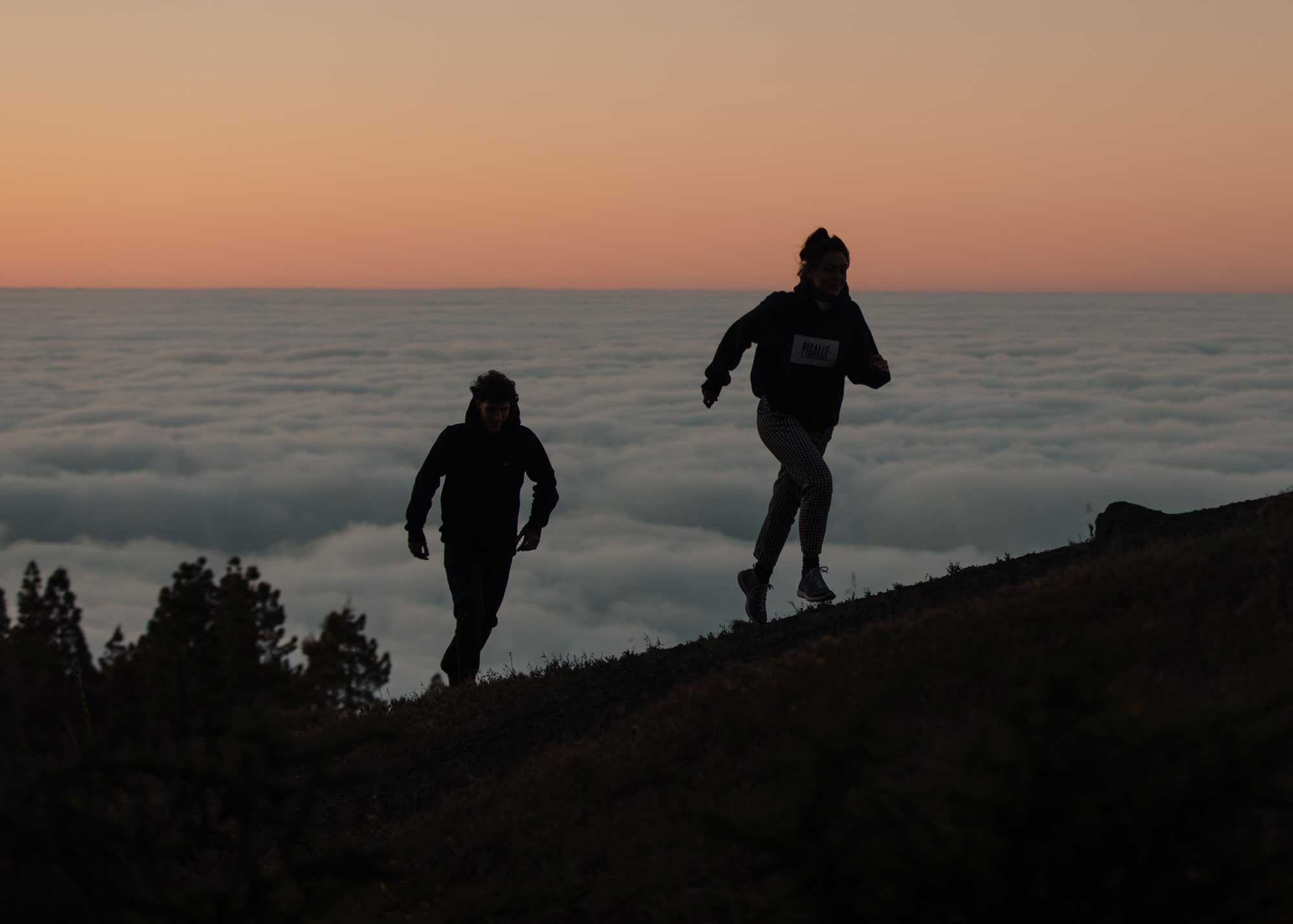
Photo: Ramon Haindl / Connected Archives
Each path seems to hold a message: the narrow alleys pressed between walls, the railway tracks where children play, and the mountains of waste rising from the hillsides. All of these are not normal situations I can ignore by closing my eyes and ears. They speak of neglect, of resilience, and of the fragile balance between humans and systems and between humans and nature.
As I process these messages, I return to the wisdom of my Buginese ancestors: that nothing stands alone, and that every act, no matter how small, carries both meaning and responsibility.
So, what am I running for? I run to remember that my body is not separate from the Earth but a continuation of it. I run to remind myself that joy and care can move together, that sustainability is not measured by performance but by reciprocity.
For me, running is not a race against time. It is a vow to move lightly, to remain faithful to Mother Earth, and to honor the living world with every step.
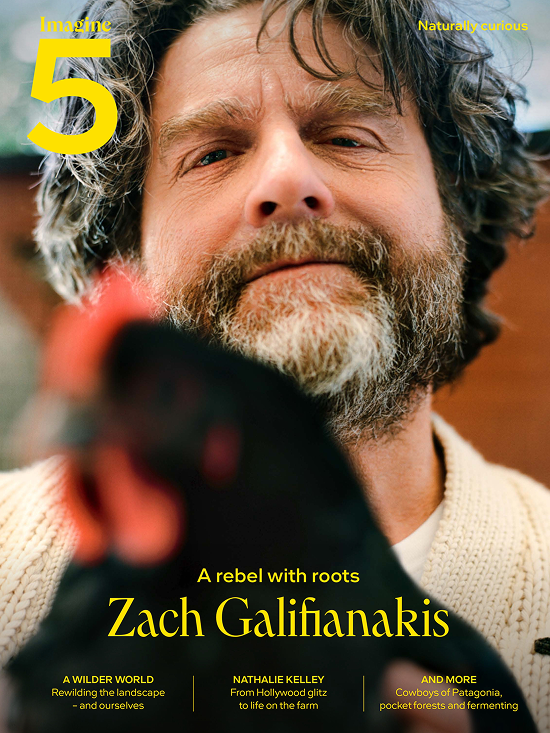
Focused on the wonderful world of rewilding, Volume 5 sees us get into the weeds – and go beyond the ferns – with our green-thumbed cover star Zach Galifianakis, walk with wolves in Slovenia, create a wilder world in Denmark, find meaning in fashion, and much, much more.
THE GREAT OUTDOORS