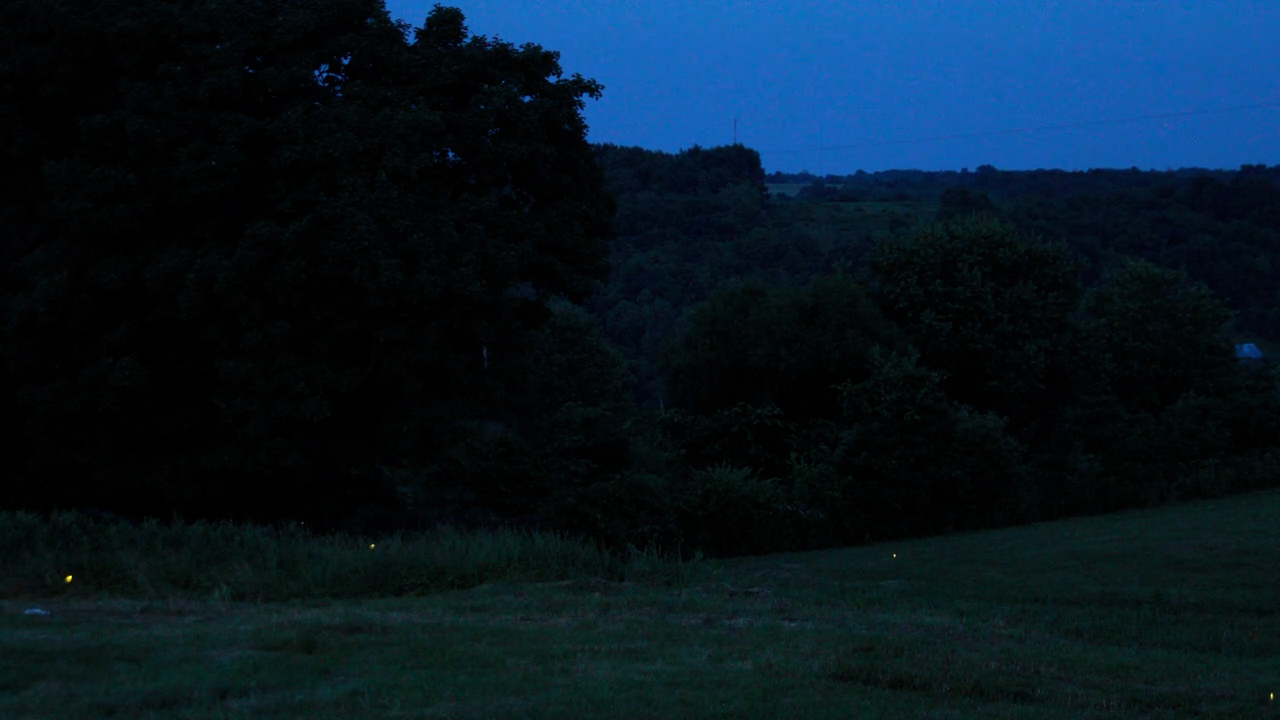
When I moved back to the east coast, I missed the light shows of my childhood. Then I met the people keeping them alive.
As a kid growing up in New England, fireflies signaled the stretching of a long summer day into night. After dinner, we’d go back outside and keep playing as the sun dipped low. Soon enough, little blinking lights would join us, flitting between our flashlight tag like they were in on the fun. Fireflies made us feel like summer would last forever.
But summers end, and kids grow out of flashlight tag. In my late twenties, I left the east coast for Portland, Oregon. You don’t see fireflies there. Certain species do live in the Pacific Northwest, but the fireflies that visibly flash while flying don’t venture west of Kansas. I didn’t think about my summertime friends for years – until I heard that they’re disappearing.
“I thrilled at the thought of our daughter growing up with fireflies. But would she?”
Of the 125 (or more) firefly species that live in the United States, about one third of them are thought to be facing extinction. The hard data are limited, but ask anyone who grew up in firefly (or lightning bug) country: yards don’t twinkle like they used to.
Last year, when my husband and I decided to move from Portland back to New England, I thrilled at the thought of our daughter growing up with fireflies. But would she? She’s three, and I’ve been grieving the world I want her to know for longer than she’s been alive; all the animals and plants she might never learn to name, as the climate keeps warming and biodiversity tumbles into tipping points we were warned about. We’re losing so much, and I feel this potential loss with the added weight of summertime nostalgia.
When we arrived in Connecticut in the winter, our new backyard was starting to freeze, and there were few insects to be seen. But fireflies were out there – I just didn’t know it yet.
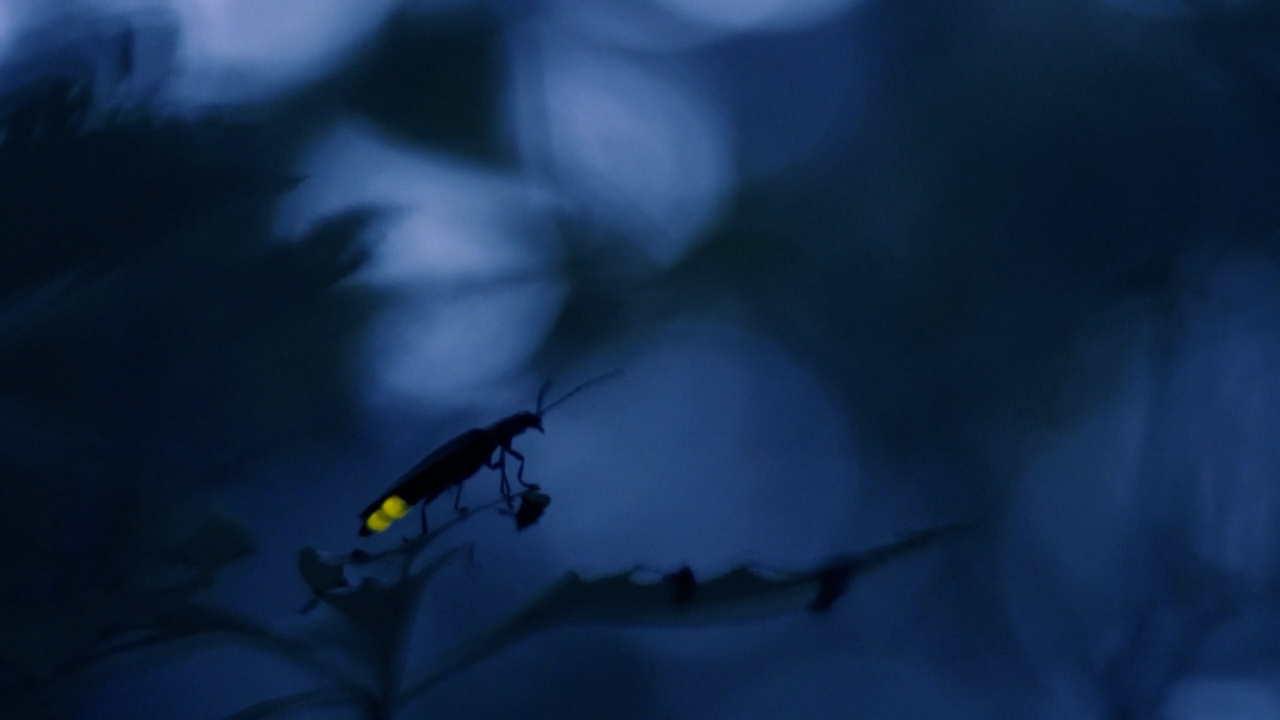
Video: American Wildlife / Getty Images
Andrew Moiseff, a neurobiologist who studies insect behavior, tells me that for most of a firefly’s life, people don’t see them. Females lay eggs on the ground in the summertime, and a couple weeks later, the eggs hatch into tiny larvae. “By fall, they’re about the size of a mealworm,” says Moiseff. They spend up to two years in this larval stage, crawling amongst the duff and leaf litter and feasting on squishy invertebrates, like worms and snails. Fireflies don’t flash in their larval stage, but they do glow. Moiseff says if you’re lucky enough to be in a healthy habitat at the right time, you might see a little spot on the ground light up. “As you walk towards it, it’ll dim out and disappear.”
All that time spent in the top few inches of earth makes fireflies particularly vulnerable to the effects of pesticides, which can kill them directly or wipe out their food sources, especially when applied to large swaths of land, like lawns. They also depend on the organic material that people like to get rid of. When you blow or mow away all the natural growth and fallen leaves, fireflies lose their habitat.
In the springtime, fireflies prepare for their final transformation. “They essentially build a mud castle around them, called a puparium,” says Moiseff. “And then they undergo complete metamorphosis.” It is only in their final two or three weeks of life that fireflies emerge with wings, to fly, flash, find a mate, and then die. In those weeks, they need nighttime darkness. Light pollution is another major threat to fireflies, who must be able to see each other flashing, in order to procreate. Fireflies don’t even eat during this time. They are completely focused on finding each other.
Bill McDonald calls this last act a “love concert”. While many people are noticing fireflies decline, McDonald, who lives in New Canaan, Connecticut, tells me he sees tens of thousands of fireflies in his yard each year. Fifty years ago, McDonald and his wife, Mary-Ellen, turned their property into a firefly sanctuary. In a town of pristine lawns, the McDonalds cultivated something wilder; their yard is a meadow of long grasses and native plants, and they don’t mow or use chemicals. They’ve cut back invasives and planted pollinator attractors, like New England asters and black-eyed Susans.
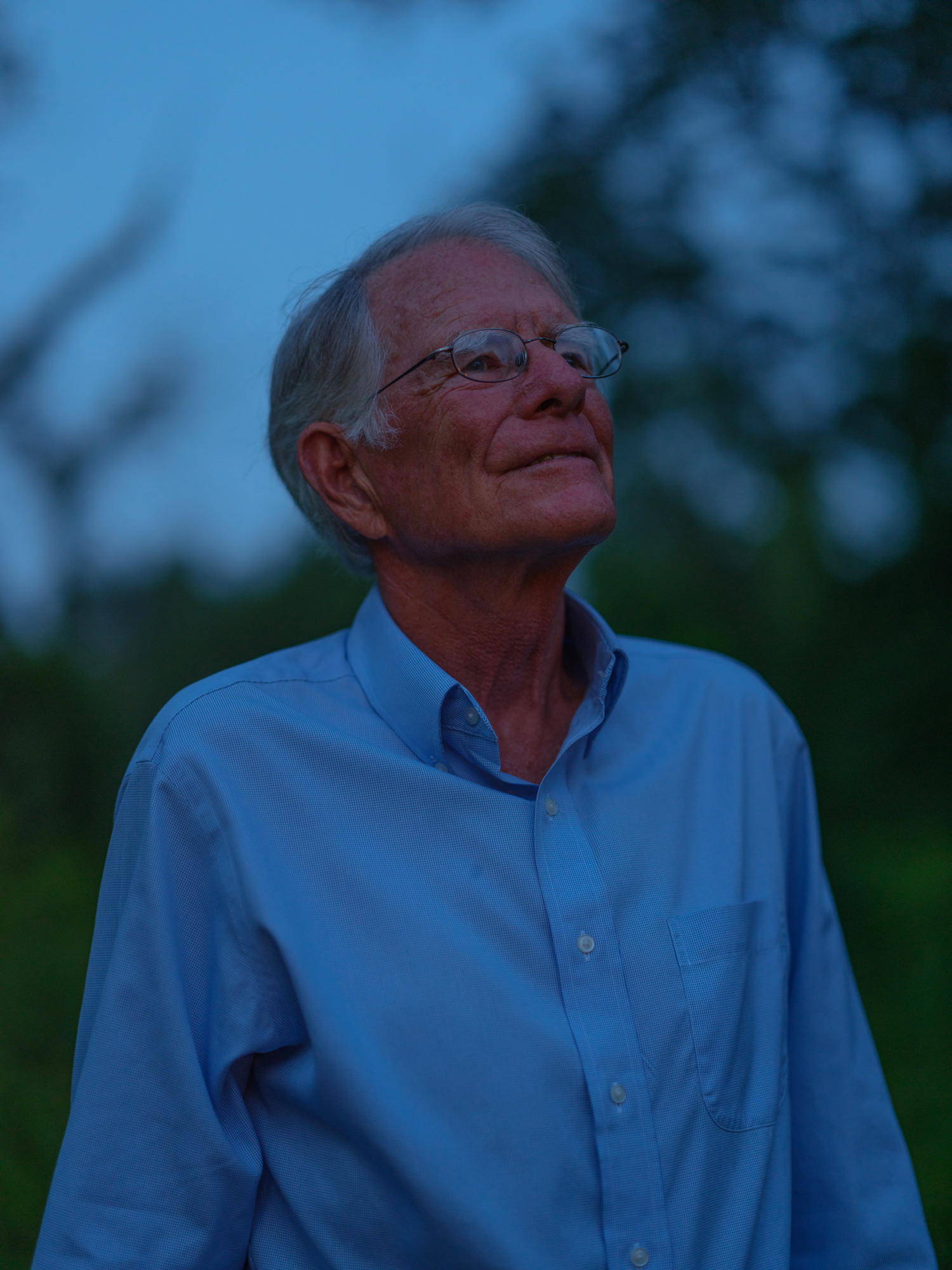
Bill McDonald. Photo: Jarod Lew
“There are no fireflies on properties next to mine,” he says. “There are little yellow pesticide flags instead.” He emphasizes that along with killing fireflies and other bugs and plants that make up a healthy ecosystem, studies show links between lawn pesticide use and increases in certain cancers, especially in children and pets, who tend to spend more time exploring at ground level.
After decades of nurturing a habitat for fireflies around his home, in 2015, McDonald helped establish the first official firefly sanctuary in the United States, as part of the New Canaan Land Trust. Tours take place during mating season – late June to early July – when groups are guided into the woods at dusk.
I snagged tickets for my family last summer, our first in Connecticut, and we drove to New Canaan on a warm July evening. We’d recently started seeing fireflies in our own yard, along the edge of the school-bus-size tangle of a forsythia bush at the edge of our property. It was the first time my Oregon-born husband had seen fireflies – but I wanted him to see more, the way I remembered them from childhood.
“Suddenly we were in the middle of the most magnificent light show”
After passing many manicured lawns, we arrived at a discreet trailhead on a quiet road. A tour guide met us, and we were given little flashlights with firefly-friendly red filters to help us navigate the narrow trail. My daughter thought it was so cool that we were hiking at night.
About an hour later, as darkness settled in, we found ourselves on a level trail circling an island of tall grass, surrounded by tall trees. The frequency of flashes had been slowly increasing since we arrived, and suddenly we were in the middle of the most magnificent light show. The fireflies flashed in numbers and layers that were impossible to fully absorb, like a time-lapsed photo that keeps moving. They flashed at the tops of the tallest trees (the males, trying to attract the females) and they flashed at our feet (females answering the males). My husband and I chased our daughter in circles as she squealed and ran after the lights. It was even better than my memories.
I left that night feeling both hopeful and frustrated in the face of a simple fact: It’s not that hard to save fireflies. This sanctuary wasn’t secluded in deep wilderness. It was tucked between developed properties and mowed lawns, just a few miles from a lit up town center.
While certain species of plants and animals will require massive conservation plans to bring them back from the brink, fireflies don’t need much. They need pesticide-free spaces that are left alone. They need us to not mow every lawn, not blow every leaf. They need native plants and fallen trees and all the stuff that occurs naturally if we don’t try so hard to smooth it over.
And they need us all to see the bigger picture.
RELATED ARTICLE

“Whoa!” In the middle of a call with McDonald, he interrupts one of my questions. “A giant hawk just flew right in front of me – he was on the hunt.” It’s a sign that his yard is full of life – and the fireflies are just one part of that picture.
McDonald calls fireflies a gateway insect. He loves the lightshows, but he says his biggest motivation is to reduce pesticide use, for the betterment of all living things, from the bugs to the birds to the children who want to play in the dirt and look at the bugs and birds. He hears from people who come to the land trust to see fireflies, and the experience convinces them to make changes. Maybe they let the edges of their grass lawn grow more wild, or they stop using chemicals to kill the weeds. Or maybe they just remember to turn off their porch lights on a summer night. Not everyone will turn their backyards into firefly sanctuaries, but little things add up.
We’ve now lived in our new home for a year, about half the life cycle of a firefly. Our backyard is mostly grass, but we have plans for native plantings this spring. Throughout that first summer, I noticed our daughter would venture to the furthest corner of the backyard, beyond the grass, to the shade of a giant maple tree. She likes to climb over the knotty roots and make stacks of rocks and sticks. And when darkness falls on summer nights, that’s where the little lights flash.



Focused on the wonderful world of rewilding, Volume 5 sees us get into the weeds – and go beyond the ferns – with our green-thumbed cover star Zach Galifianakis, walk with wolves in Slovenia, create a wilder world in Denmark, find meaning in fashion, and much, much more.