Author Megan Eaves-Egenes traveled the world for glimpses of our disappearing darkness. At the top of a mountain in a dark sky reserve in New Zealand, she met the people keeping ancient stories of the stars alive.
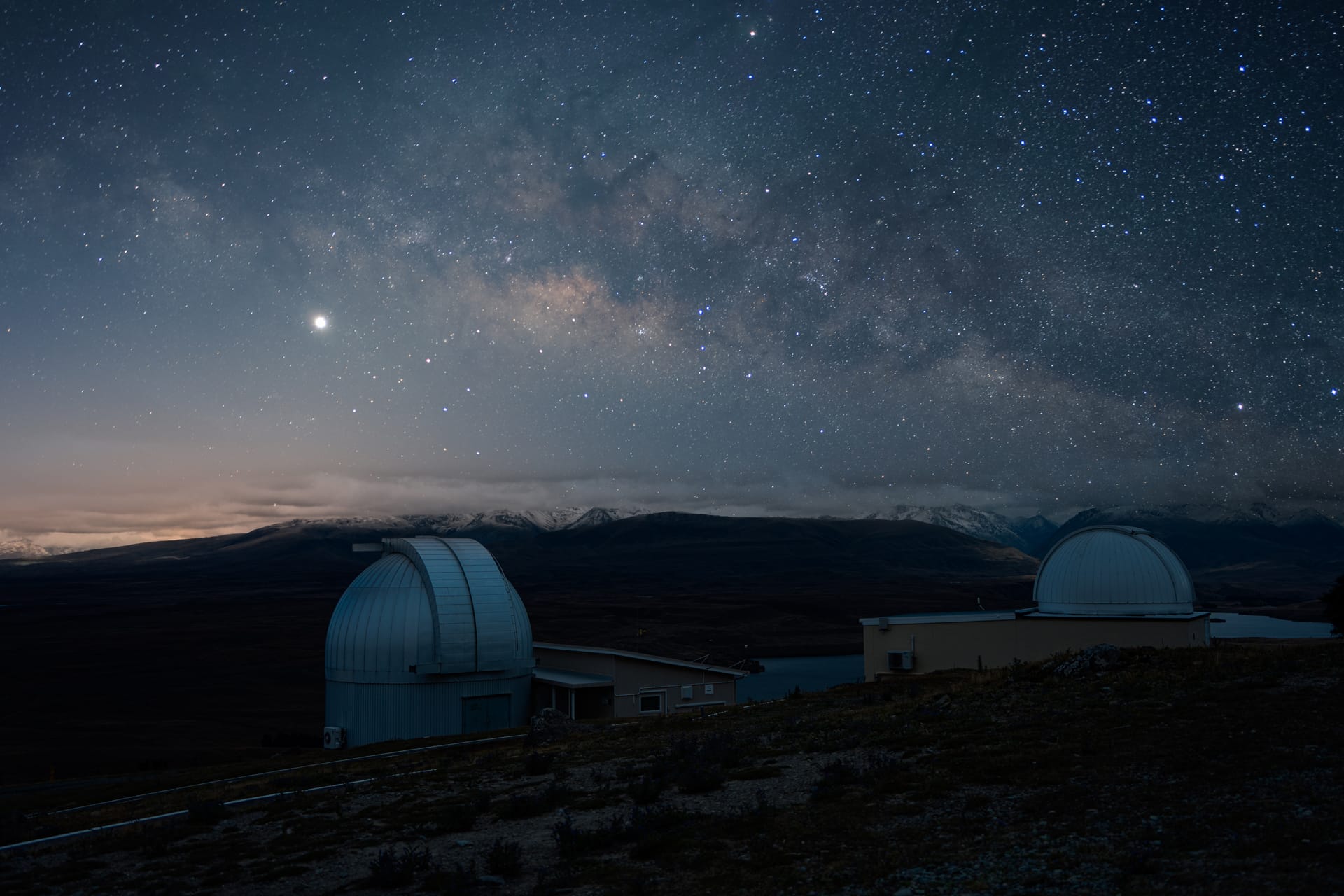
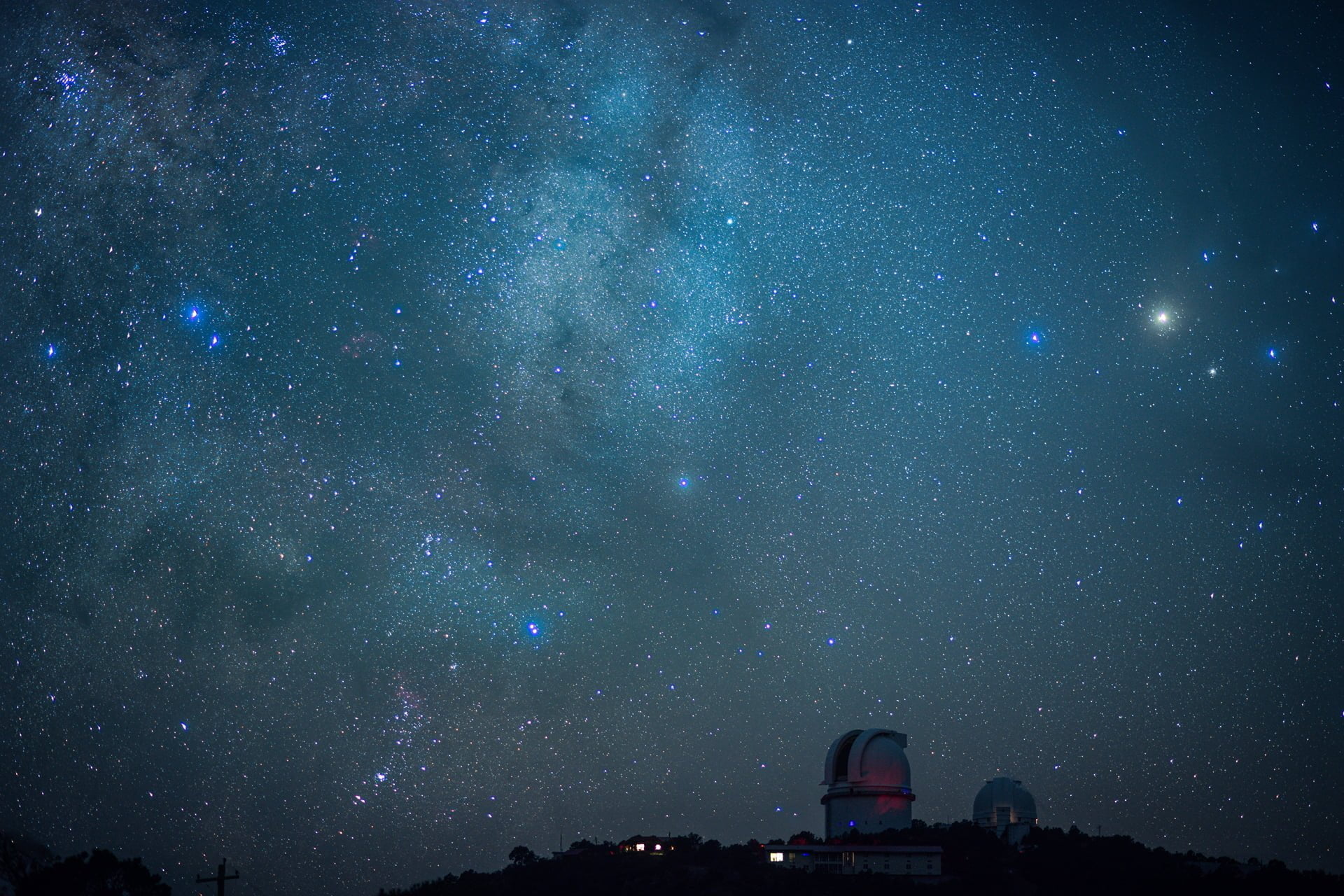
From the top of Mount John on New Zealand’s South Island, it feels as though the entire universe is visible. The mountain juts up over Tekapo, out of a bowl of prairie that’s surrounded on all sides by the Southern Alps. The mountains stretch away in brushstrokes of slate gray, cobalt and stone blue, and the night falls in an ombré blush of pink and violet that fades dark to reveal the cosmos.
I had come with my Dad to the center of the Aoraki Mackenzie International Dark Sky Reserve. Covering a vast 1,660-square-mile area, the reserve is home to the Dark Sky Project, an ‘astrotourism’ experience owned by the Ngāi Tahu, one of the main Māori communities, called iwi.
The sun was just going down when we set out for the mountaintop with Adrien Vilquin-Barrajon, the guiding operations manager at Dark Sky Project, in his little car. Adrien speaks fast, and he drove fast, too, up the winding road to Mount John Observatory.
He turned onto a steep road that switchbacked up the mountainside. When we got halfway up, he turned off the car’s headlights. “Sorry about this,” he said. “We have to turn off all the lights because the astronomers are working tonight and lights completely ruin their observations. Don’t worry, I’ve done this many times.” He grinned but I was not reassured and kept a nervous eye on the little road, and the sheer drop from the passenger’s side window down the dark cliff.
“With the horizon line below us, it felt like we were swimming in the sky”
It was cold and windy at the top, and there were no trees, so you could see for miles in every direction. Above, the sun had almost disappeared, and the world was a dome of purple sky. Below, the town of Tekapo was a crescent of amber lights along the lakeshore. Adrien led us up a small flight of stairs to a café where the lights were off and faux candles provided minimal illumination. As my eyes adjusted, mountains started appearing in shadowy outlines beyond the lake. With the horizon line well below us, it felt like we were swimming in the sky. It made me breathless.
A bridge to the past
We stood outside in a semi-circle while a guide named Heather introduced herself, then led the group through a Māori acknowledgement ceremony in which she named and thanked the ancestors and recognized them as the tangata whenua, or original inhabitants of Aotearoa.
Maori knowledge holders worked with the tour organizers to develop these tours and train the guides. Heather explained that the ancestors were the keepers of tātai arorangi – the Māori astronomical knowledge that informed everything from growing crops to navigation, fishing and the calendar.
“When Māori people look up into the night sky, they see more than just stars and planets,” she said. “They see a connection to their ancestors and all life. Māori people used the sky as a kind of life map, which marked places, time and seasons, helped to predict the weather, to know when certain fish were abundant and when to plant crops.”
“She asked us to close our eyes for a few moments. Then we opened them to reveal the sky utterly filled with stars”
She then recounted the story of how the stars were born: “There was a legendary warrior named Tamarereti, who was once sailing his waka, a type of canoe, far out on a lake, quite like the one below us now. He was very far from home and night began to fall. At that time, there were no stars in the sky, and the night was completely dark. Tamarereti felt he was in danger from a lake monster called the taniwha, so he made the decision to ascend from the lake and fly his waka home through the sky. As he sailed, he scattered glowing stones along the way, leaving a bright wake behind. Today, we call this glowing trail the Milky Way and those stones are the stars.”
Next, she asked us to close our eyes for a few moments. We stood quietly and then opened them all at once to reveal the sky utterly filled with stars.
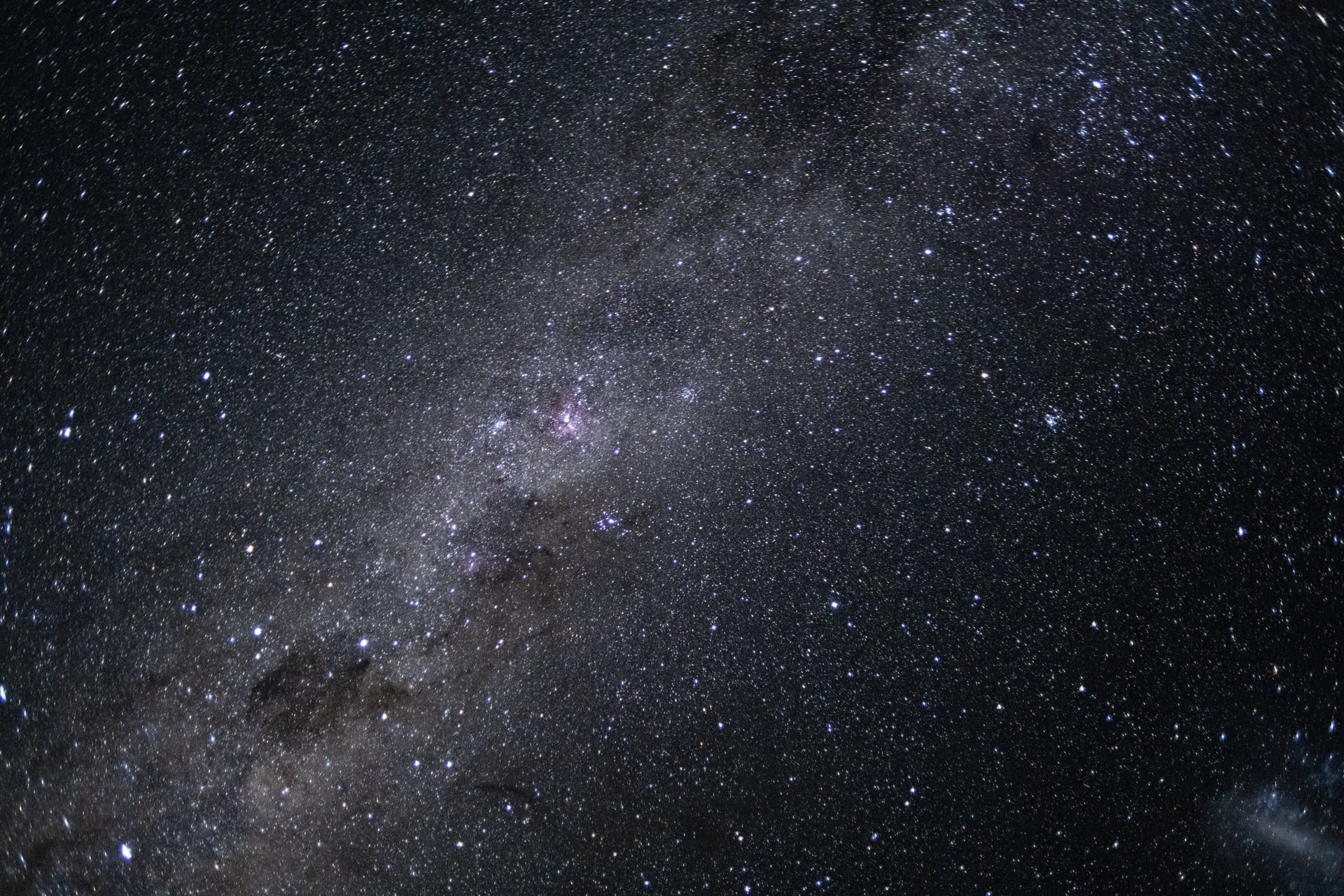
“Can you see the Milky Way?”
A few people gasped and a lady next to me spoke up in a North American accent to say she’d never seen our galaxy before. Heather explained that, because of light pollution, most people can’t see the Milky Way any more. “That’s why the Dark Sky Reserve regulations are so important here – to protect the darkness and our access to the night sky.”
“So from now on,” she continued, “if you look up and see the Milky Way, you will think of Tamarereti and remember how the stars were scattered in the sky. And if you don’t see the Milky Way, you will remember what can be lost.”
Life among the stars
The Māori are among many Indigenous peoples, including Aboriginal Australians, Native Americans, Tibetans, Guaran. and Maya, who have maintained extensive knowledge of the night sky over millennia. They use the stars as cues for activities fundamental to existence, including planting and harvesting food, travelling, hunting and spiritual rituals.
As Earth slowly orbits the Sun over a year, what we see in the night sky changes. Indigenous peoples noticed that certain constellations would appear at certain times of the year, and so would use them as sky landmarks for the change of seasons. For example, ancient Egyptians noticed that the star Sirius – the brightest in the night sky – was first visible in the east just before sunrise in August. This would occur right before the annual flooding of the Nile, and so Sirius came to mark the start of their harvest season.
In the West, many of us take the well-known constellations, such as Orion – one of our most recognizable star patterns – as a given. But these are cultural constructs. Humans have been telling stories about the different patterns and pictures they see in the stars for millennia, and those pictures differ across cultures and time.
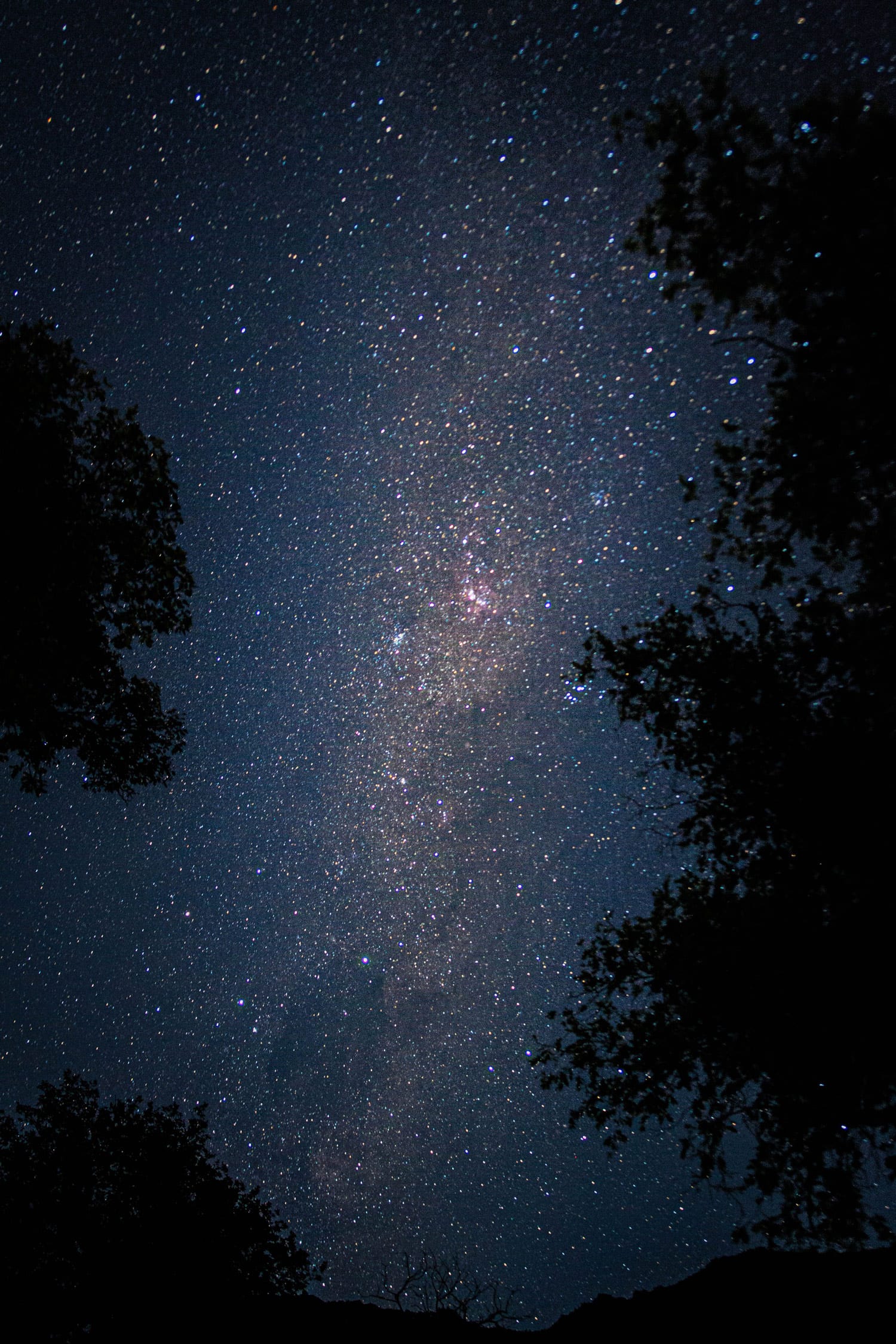
Photo: Oscar Sanchez / Pexels
The Aboriginal peoples of Australia, who are now accepted as the world’s first astronomers, have a practice of ‘sky knowledge’ going back to 8000 BCE – several millennia before the Babylonians, who began practising astronomy around 2000 BCE. The ancient Egyptians also kept detailed records of the night sky some 4,000 or 5,000 years ago, enshrined as hieroglyphs in the painted tombs of the pharaohs in the Nile Valley. The Maya created extensive astronomical calendars, made spiritual predictions and built storied temples according to astronomical alignments. Some of the earliest Native American peoples also built great cities designed according to the movements of the sky, like the one at Chaco Canyon in what is now New Mexico, built around 900 CE by the Ancestral Puebloans. They recorded significant astronomical events in petroglyphs, including solar eclipses and what some archeoastronomers believe might be an eleventh-century supernova: an ancient painting of an exploding star. The Skidi Band of the Pawnee People, who live in what is now the US Midwest, saw a ‘council of chiefs’ in the stars, which represented their governing elders.
One of the stories told among the Diné (Navajo) Nation in the southwest US, the ‘Sparkling Seeds’, concerns the star cluster Dilyéhé, which is known in Western astronomy as the Pleiades – the tornado of sister-stars that I love. In the story, Dilyéhé takes the form of a group of boys, running over a hill beyond their parents’ view – this is when Dilyéhé sets, disappearing from the night sky. The boys symbolize ‘sparkling’ corn seeds, disappearing as they are planted. So corn planting should begin when the constellation Dilyéhé, or the Pleiades, sets in late April.
RELATED ARTICLE
The Pleiades is present in many Indigenous astronomy traditions and known by many names in different cultures. The Māori people call it Matariki, and its reappearance around early July marks the start of the Māori new year. Traditional celebrations involve several nights of viewing the Pleiades, as well as mourning the deceased who have gone to live in the stars and offering food to the celestia, who have welcomed the ones who passed over. Like many elements of Māori culture, the observance of Matariki declined in the nineteenth century with the dominance of European settlers. But thanks to the work of Professor Mātāmua and other Māori activists, strides have been made in recent decades to revive and honor Māori traditions, and in 2022, Matariki was celebrated as a public holiday in New Zealand for the first time.
The darkness in between
Back on Mount John, Heather asked if there were any Australians in the group, and a couple of people raised their hands. Using a green laser pointer, she indicated a dark patch in the gleaming band of the Milky Way.
“This is the head of the Great Emu,” she explained, circling what looked like a large beak. “A constellation revered by many Aboriginal Australian societies.” Where later European astronomers told stories about their gods by connecting the outlines of stars, a number of Indigenous communities instead saw pictures in the dark patches between the stars. Heather explained that, for many Aboriginal peoples, the Emu is the single most recognizable image in the night sky – a constellation entirely defined by the dark.
While Indigenous peoples each held their own unique cosmological belief systems, there were some common themes. Namely, the interconnected relationships of all living things, from animals, birds and fish to water, plants, clouds, winds and thunder, and the invisible beings of dreams and the imagination – a holistic way of looking at life lost by Western civilizations.
Colonialism has resulted in many Indigenous peoples facing the violent and systematic eradication of systems of knowledge that kept them intimately connected to both the Earth and the sky – including their knowledge of the stars. Within Western astronomy, too, the contributions of Indigenous peoples have been ignored and devalued.
As the clock pushed past 11 p.m., the visitors quieted and pulled their jackets tight against the wind. It was difficult to take our eyes off the sky, which was completely free of clouds. Stars sparkled all the way down to the horizon like a sweep of glitter over the mountains. I took one last, long breath, knowing there was a chance I might not see this view again. I wanted to memorize it.
Setting off early in the morning, we took the only road into the village, a two-lane highway that followed the length of another perfect blue glacial lake. We pulled off on the shoulder and stood in the empty road to snap a few pictures. We were tiny ants in a giant landscape swept into being by ancient ice.
“It’s really something,” said Dad. And he was right. All of it – the sky, the glacier-carved stone, the ancestral stars and the radiant lakewater. All of it was alive with the stories of those who came before and our own new memories.
This is an edited excerpt from Nightfaring – In Search of the Disappearing Darkness by Megan Eaves-Egenes. The book is out now from Simon & Schuster


Focused on the wonderful world of rewilding, Volume 5 sees us get into the weeds – and go beyond the ferns – with our green-thumbed cover star Zach Galifianakis, walk with wolves in Slovenia, create a wilder world in Denmark, find meaning in fashion, and much, much more.

POWERFUL ESSAYS