How the return of a lost giant is shaping identity and culture in Romania’s Southern Carpathians.
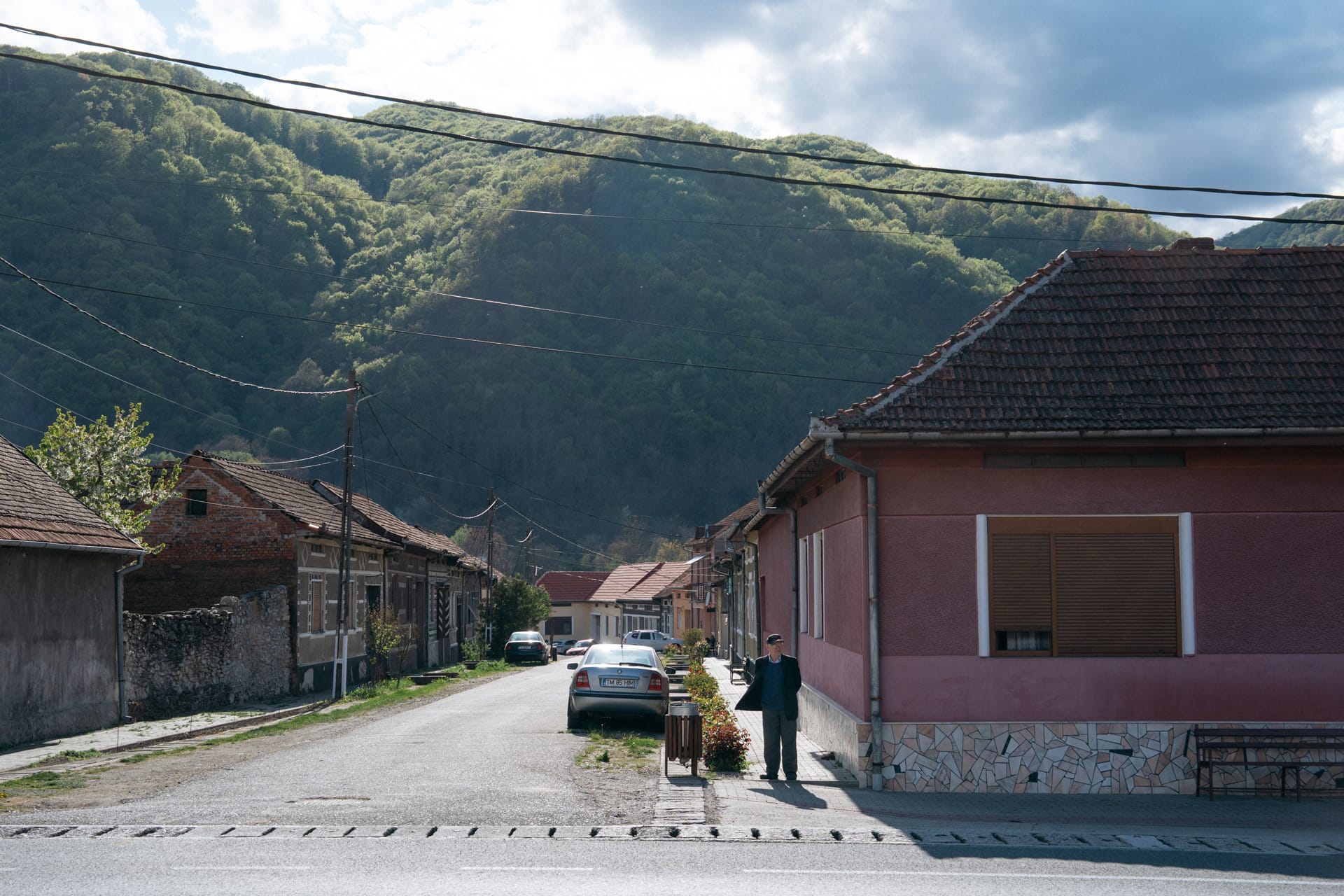
Trailing three rangers at the edge of Feneș village in the mountains of southwestern Romania, it doesn’t take long to find what we’re looking for: tracks of European bison. These gentle giants are making a comeback in places where they roamed freely two centuries ago, before hunting drove them to near extinction.
Nearby, Andrei Ponoran, a burly farmer, stands next to his tractor, taking a break from plowing his land while his wife hoes the earth by hand. Hearing the rangers say they’re accompanying a foreign journalist, he tosses out a question:
“You’ve come here to see our bison?” asks Ponoran.
Not just “the bison”. “Our bison”.
New neighbors
A program started by Rewilding Europe and WWF, in collaboration with the small town of Armeniș, released the first European bison in 2014, starting with 17 transported from zoos and reservations in Germany, Italy and Sweden. The animals were welcomed with fanfare and blessed by an Orthodox priest.
Today, after a series of reintroductions, the bison population has grown to about 250, which are concentrated in a 370-square-kilometer area (143 square miles) of mountainous forests in a remote corner of the Carpathians, an area of steep valleys and stunning beauty. Sixty per cent of the area’s bison population today were born here.
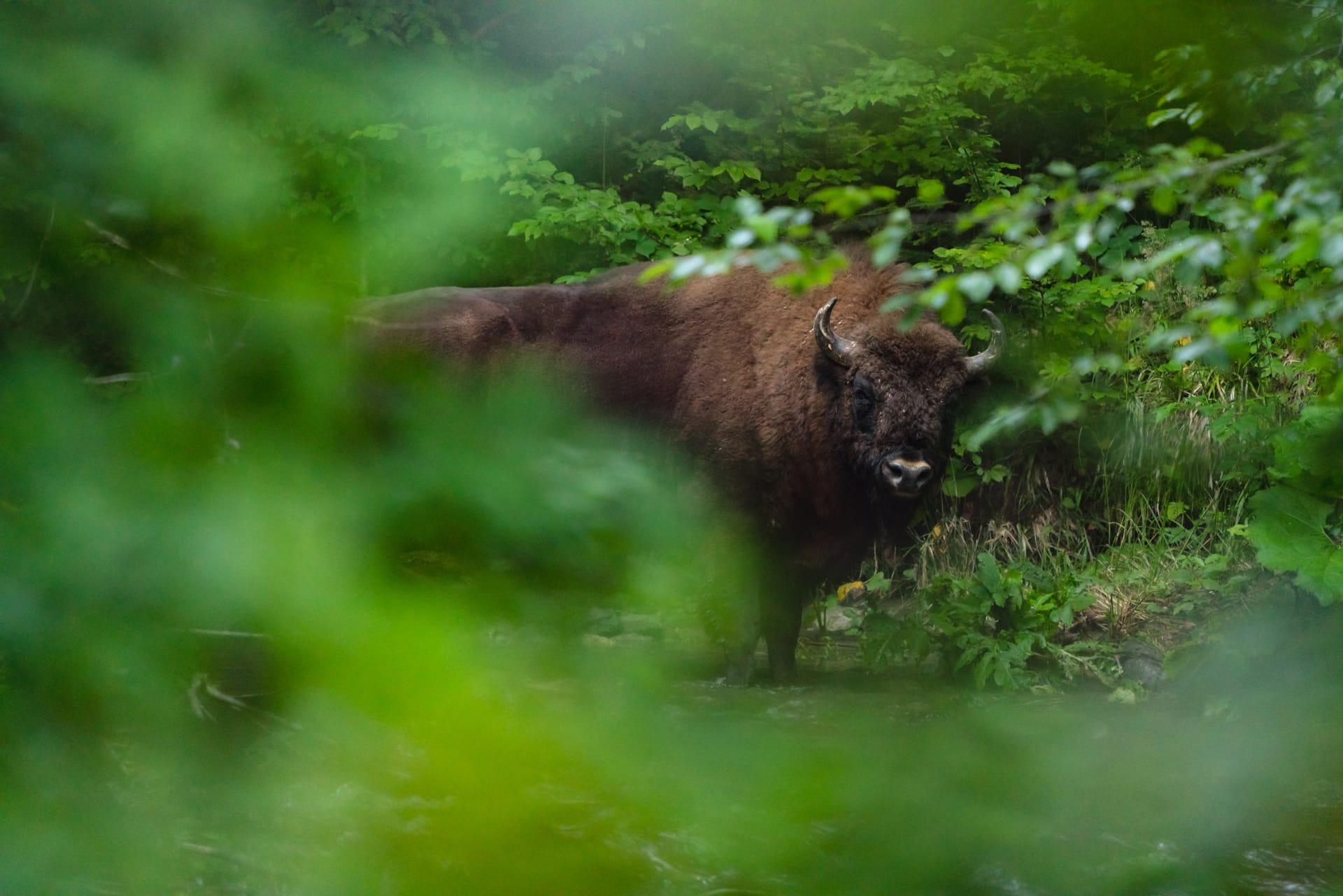
Ponoran elaborates on the dynamic between locals steeped in a tradition of agriculture, and the huge, hairy herbivores who have become their new neighbors. “The bison is a wild animal and people need to understand that,” he said. “But some don’t see it that way. They’re very vocal if they have suffered damages to their crops, but these episodes are relatively few. Most of us believe the positives of the bison outnumber the negatives.”
Indeed, this man-beast relationship has become symbiotic over the course of the past decade, as the rewilding project transcends nature recovery and gives the area notoriety through a distinct cultural identity. In a region that suffered from virtually no tourists and depopulation as residents abandoned farmwork and manual labor for cities and less taxing jobs, there is now pride and a buzz of development, particularly in wildlife tourism, with entrepreneurial ventures springing up to support an influx of visitors.
“If people are proud that they have bison here, they become real ambassadors”
Paula Bora, Rewilding Romania
Paula Bora, enterprise manager for Rewilding Romania, has attended numerous community meetings to better understand residents’ wishes related to the bison. “Our assumption was that they needed funds to start businesses,” Bora said. “But one after another told us, ‘We need to be seen – our traditions, our way of life, our products.’ We began to see the importance of cultural heritage. Here you can still find ancient cooking techniques, recipes and crafts, so we want to tap into that and promote local pride. If people are proud that they have bison here, they become real ambassadors.”
Her colleague, Sebastian Ursuța, who manages communications and community engagement, sums it up: “We stop protecting nature with fences and we protect nature with people.”
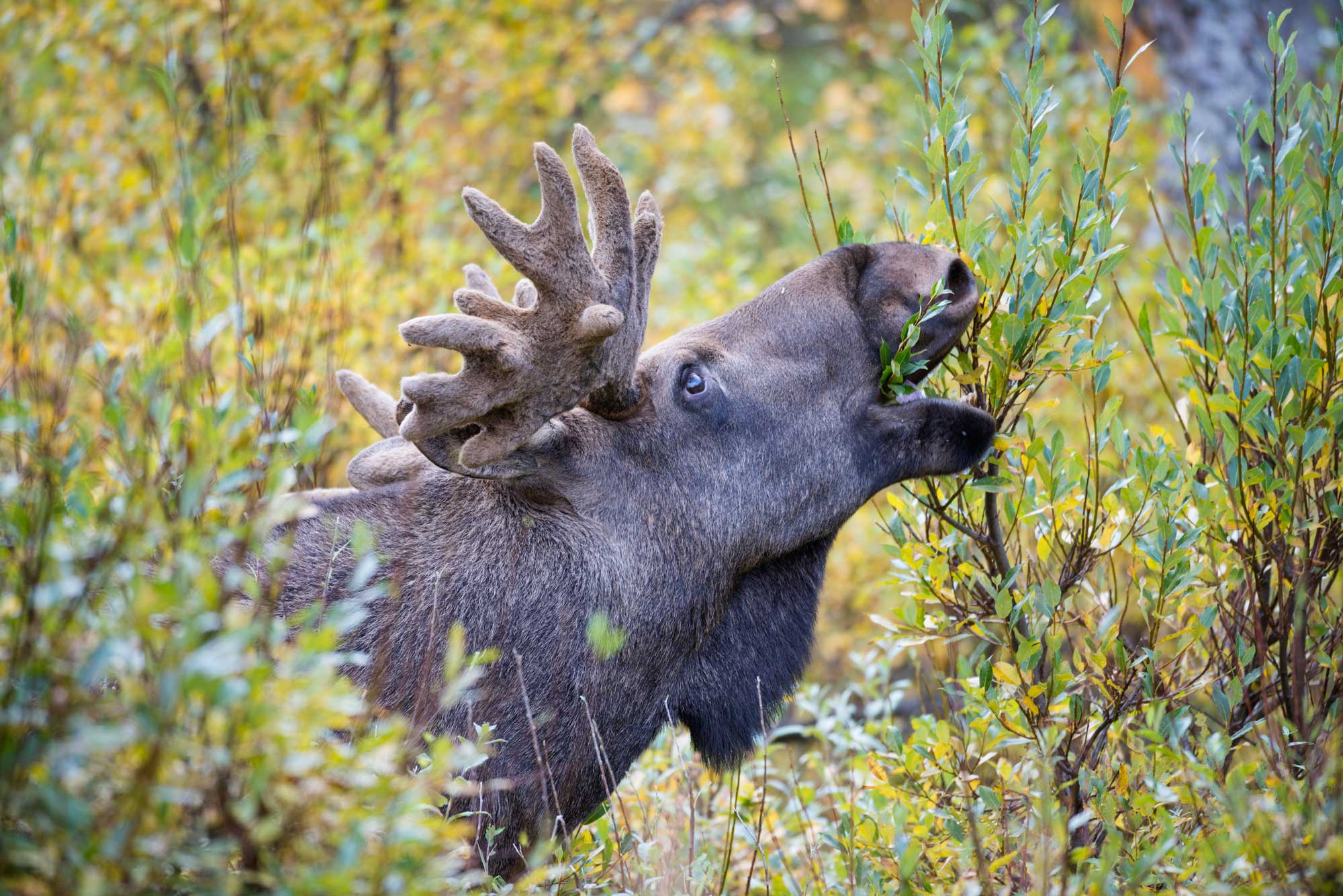
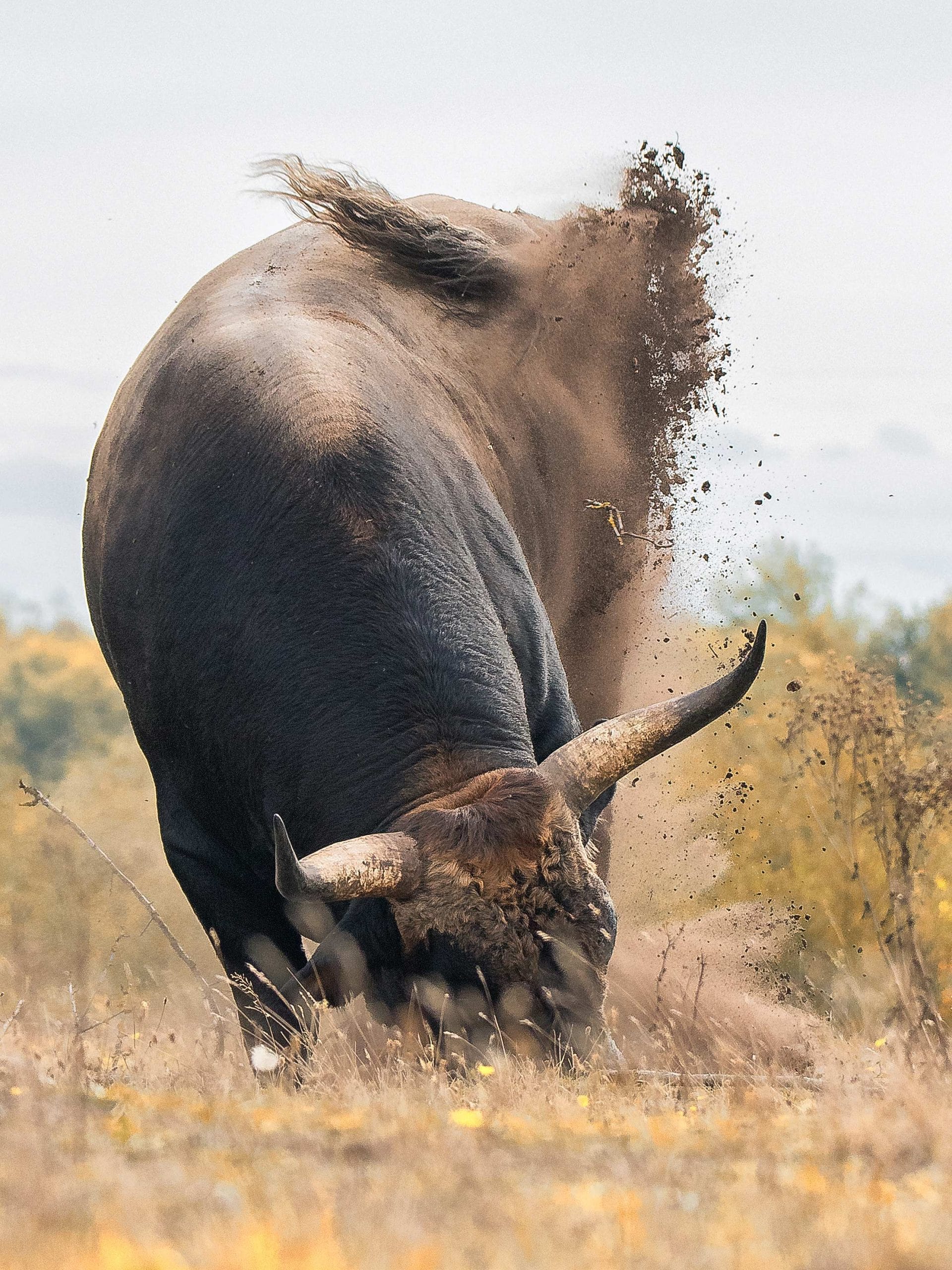
The European bison, the continent’s largest living wild land mammal, can grow to two meters tall (six feet, six inches) and nearly a ton in weight. Compared with their American cousins, they have longer legs and are lighter and nimbler, better adapted to forest living versus prairie grazing – and incredibly athletic. Rangers have seen bison leaping over fences their own height, usually when they’re spooked by people or other creatures (they avoid conflict).
RELATED ARTICLE
Experts describe the European bison as ‘landscape architects’ that aid multiple species, mostly from their sheer size as they move about. Bison keep meadows clear and compound soil, enabling the ground to retain more carbon. Birds use bison fur to make nests. Yellow-bellied toads depend on puddles created by bison hoofprints.
“In the end, the benefit to nature is huge because the scale of the bison’s work can’t be replicated by any other animal,” Ursuța said. “Its impact is proportional to its size. And their reputation is not for nothing.”
As the bison continue to accommodate to their new surroundings, so villagers are adjusting to them. Ioan Banda, a Rewilding Romania ranger, is one of many from the Romanian diaspora who chose to come back, as homesickness grew and opportunities beckoned.
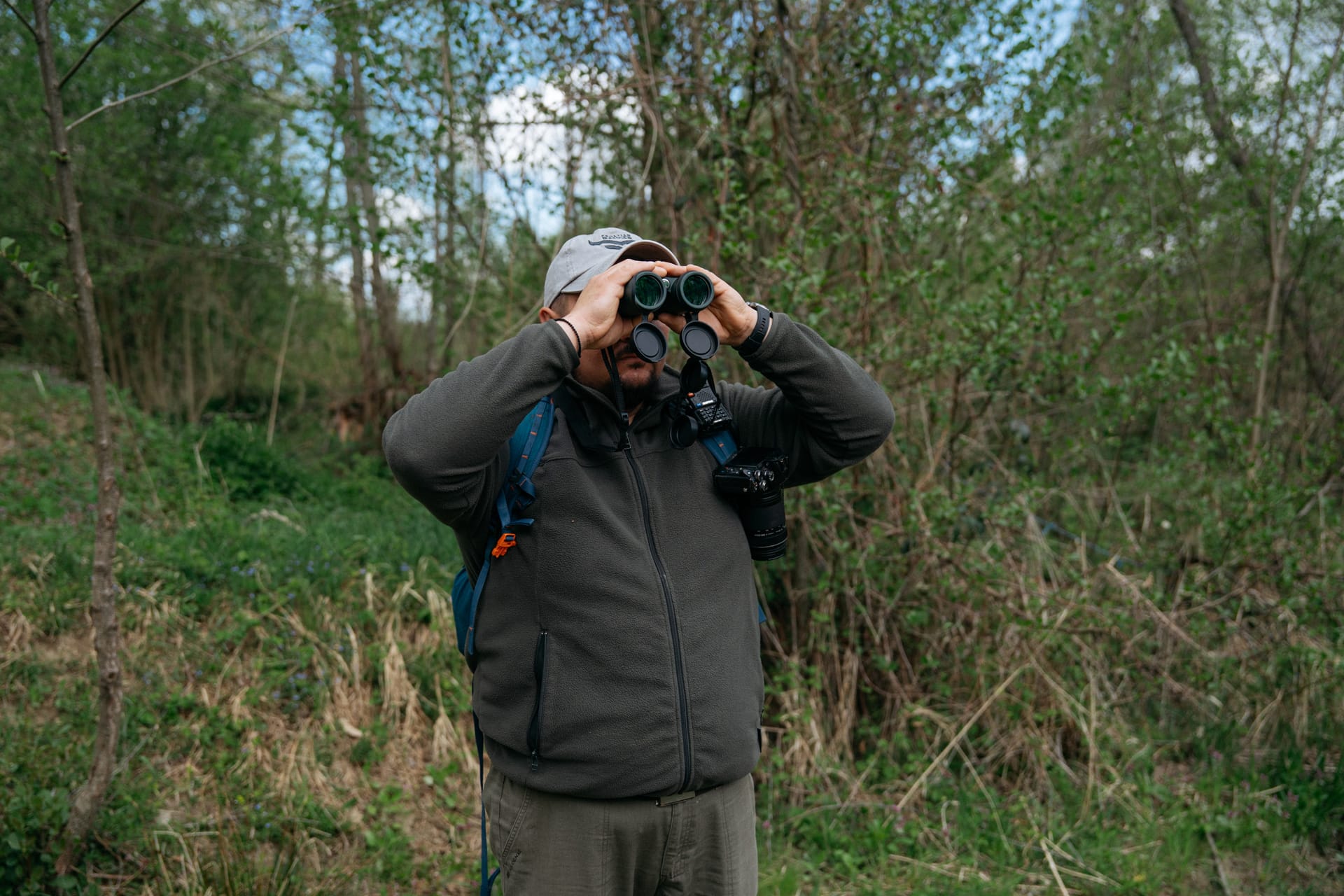
Ioan Banda moved back to Romania and became a bison ranger.
Banda, clad in forest-green ranger garb with binoculars and a walkie-talkie, observes the bison’s movements and sets up camera traps to monitor them. Rangers, who are in constant contact with locals in a WhatsApp group, also rely on electric fences and trained border collie dogs to herd the bison if they approach villages.
“We see great tourism potential,” said Banda, who returned two years ago from Germany, where he drove a truck. He’s cautious of overtourism, but says, “I’ve seen the enthusiasm building in the community since I moved back. As more people visit and want to see the bison, they need to eat, stay somewhere and maybe buy our products and souvenirs.”
A cultural icon
One place that knows this is Hațeg, a small city 90 minutes from Armeniș that’s synonymous with bison due to its 40-hectare (100-acre) reservation, a tourist attraction that opened in 1958. A life-sized bison sculpture welcomes visitors while inns and restaurants leverage the bison silhouette in their names and logos. The local beer features a bison on its label, although it’s now brewed in Bucharest. Local artisans produce unique, handmade bison keepsakes.
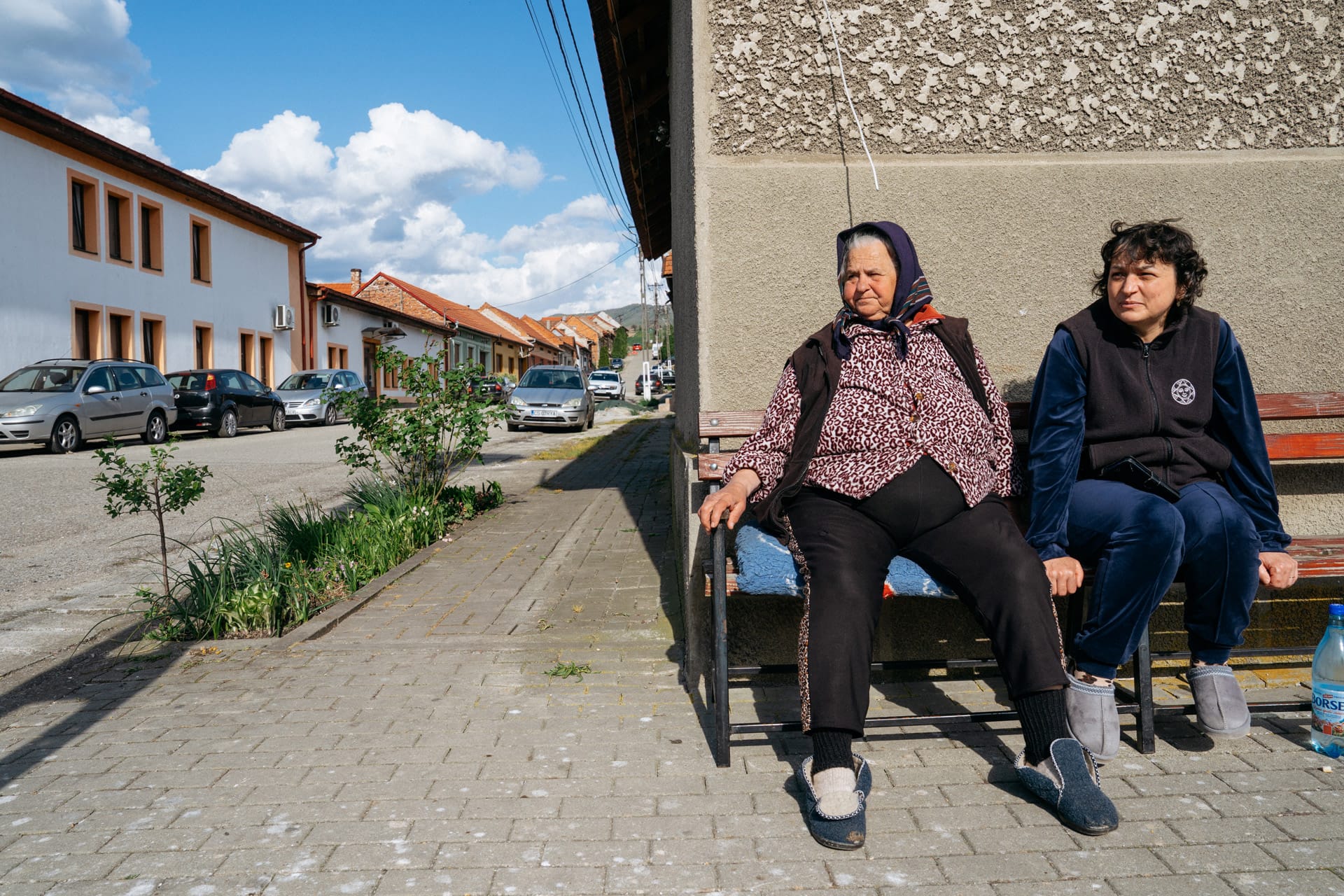
While the bison in Hațeg live in quasi-captivity, the animal is an adored mascot and cultural icon. Rewilding Romania hopes to take the branding successes from Hațeg and replicate them in the Armeniș area, capitalizing on the “wild” aspect.
Back in Feneș, Father Ioan Ponoran (no relation to Andrei), the Orthodox priest in the village for the past 24 years, believes 80% of the locals are pro-bison. The naysayers are mostly upset by the animals stomping gardens or munching their fruits.
“These are wild animals,” the priest said. “But man can do things 10 times worse than the worst animal. We all come from God.”
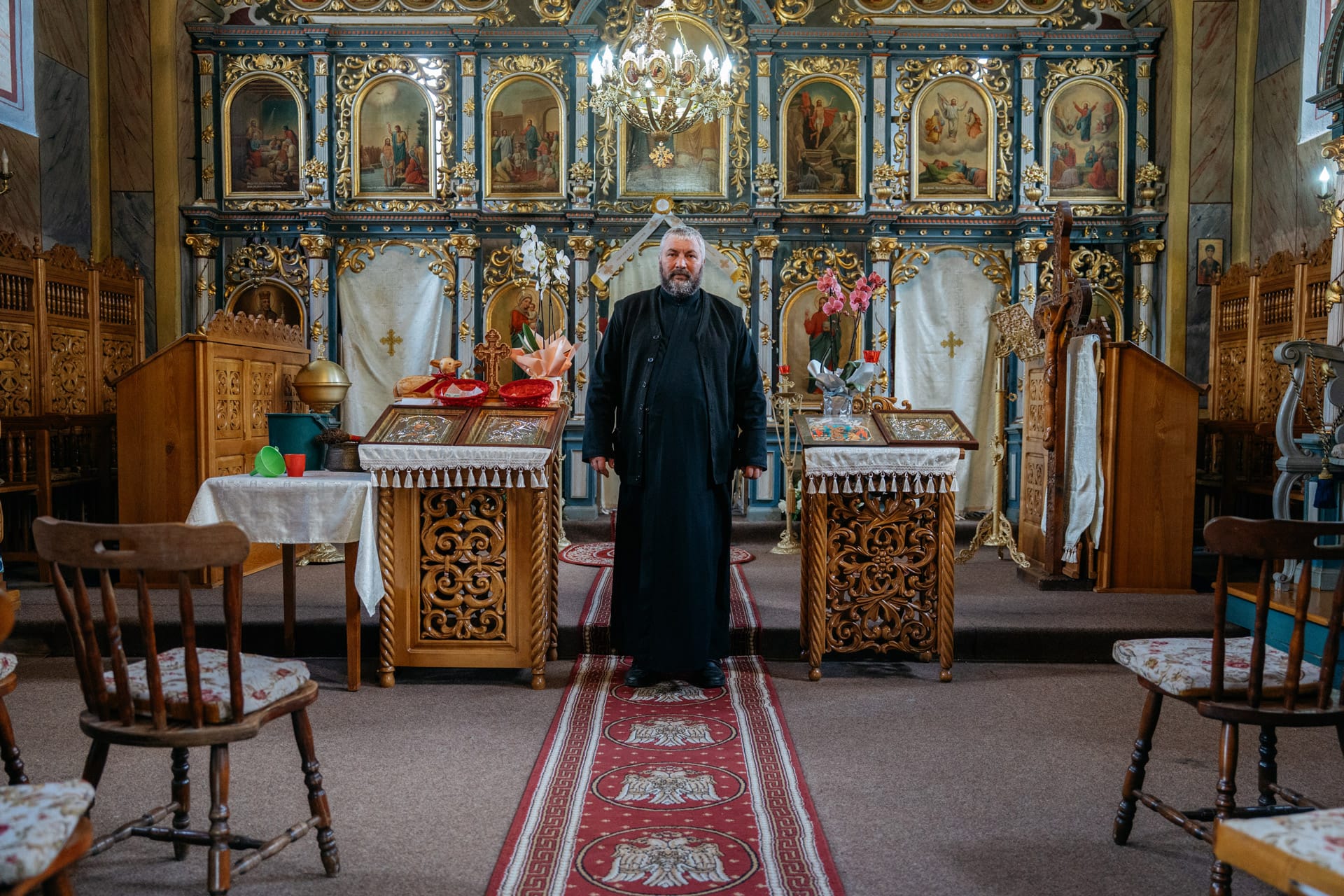
Ponoran offers homemade cheese from his cows and sheep as he waxes nostalgic about simpler times, delivering a homily-like monologue on why people should better respect animals and nature. In an area with an aging, thinned-out population, apples and cherries often remain unpicked on the trees, and “the fruits are like candy for the bison,” he says. “Wild animals need to be left alone, but sometimes things happen.”
Not long ago, Father Ponoran had to reassure the faithful after bison entered the parish’s tightly packed cemetery, damaging part of the fence and knocking over a few gravestones, including one that cracked in two. It’s since been repaired, the fracture still visible across the deceased’s name. “People weren’t mad at the bison,” he said. “They’re decent creatures, very intelligent. Maybe they were upset that a cross or gravestone got knocked over. But we heard them out, resolved the situation and it blew over.”
Winning new fans
Hunters were another group that initially balked at the bison, says Rusalin Berzescu, who works at the local hydroelectric plant but also keeps more than 40 sheep and cows and grows raspberries. Now he’s working on designs to turn two shepherd’s huts in these isolated hills into a wilderness guesthouse where visitors will sip coffee in the middle of nature, taking in a five-star view, with a strong chance of spotting bison.
“Where there are bison, there are boars”
Rusalin Berzescu
“When the bison came, there were discussions among the hunters, especially the ones looking for wild boar,” said Berzescu, an avid hunter with a chiseled jaw. Bison would bring more tourists, who would get in the way of boar hunts, they feared.
Today, he says, it’s the opposite effect, with the wild boar following the bison, whose movements dislodge things they can eat. Hunters, rangers and tour guides communicate their whereabouts and routes, alternating days if needed, to avoid dangers to humans or the bison.
“Where there are bison, there are boars,” Berzescu said, driving his weathered 4×4 on bumpy roads, seemingly unnerved by treacherously close ravines. “They’re easier to find now.”
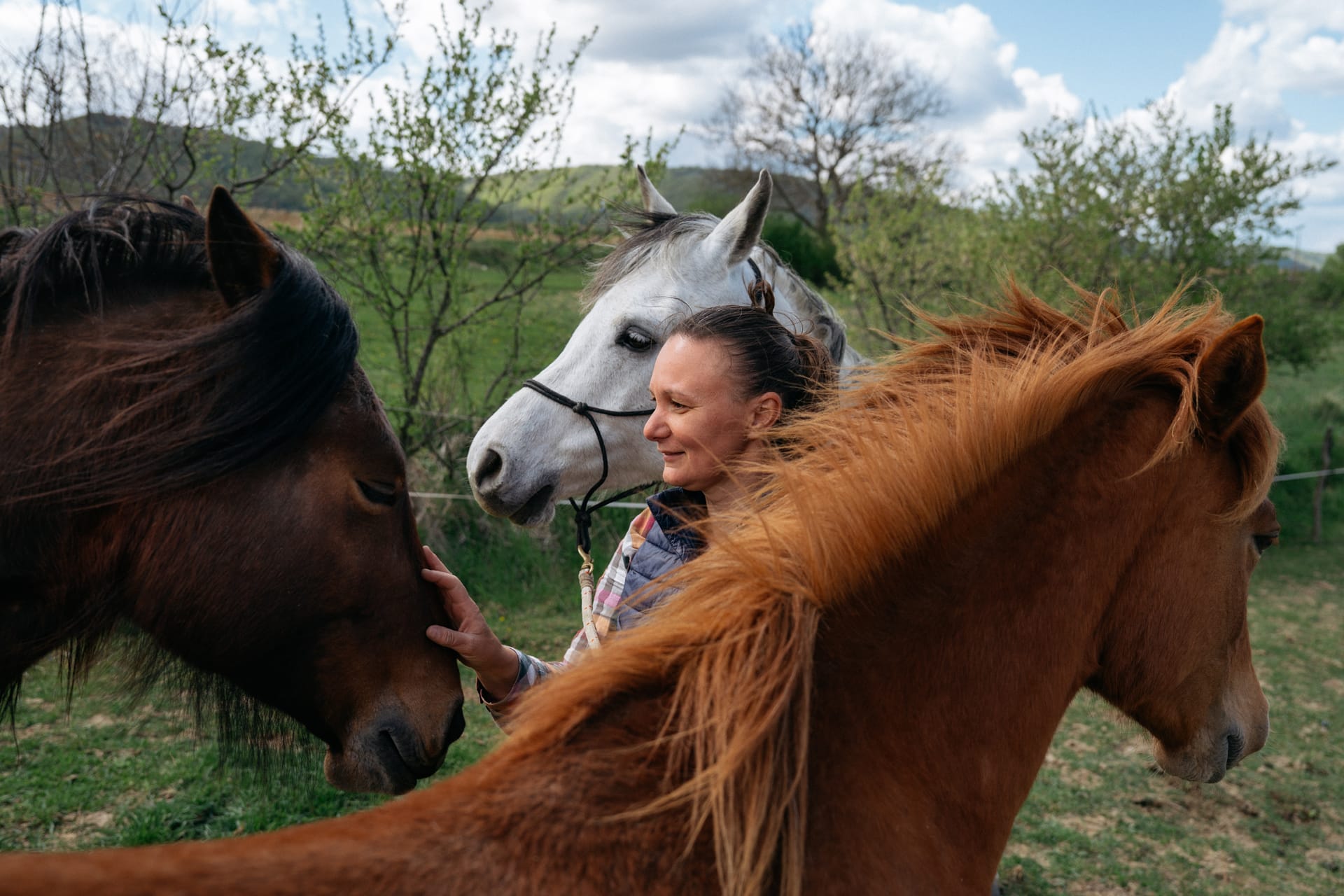
Mirela Feneș, who grew up in Armeniș before moving to the Netherlands, came back home in 2022. Last year, she founded Luma Horses, offering horseback excursions in bison country. “I never thought I’d end up back here,” she said, outside her stables on a windswept hill. “Tourism was zero, not even guesthouses. Nobody was coming. The bison were a very big chance for this area.”
Bora and Ursuța, the Rewilding Romania officers, speak passionately about the NGO’s coexistence efforts – funded partly by the EU’s LIFE Programme – aimed at creating “bison-smart communities”. Activities include training locals to open gastronomy points where they will cook traditional meals for visitors in their own homes (there are few restaurants in the area). There are also educational programs for kids and youth camps centered on the bison.
Bison cocktails
Even the challenges of rewilding can convert to opportunities. Rewilding Romania, in conjunction with a social enterprise drinks company called Casa Despi, created the bison-branded Mero apple spritzer with fruit sourced from bison country growers – those who have had to learn to live with bison on their land. They are paid three times what they would fetch on the open market. In Timișoara, a city two hours from the orchards, Mero is served at Reciproc Café, which also uses the spritzer to make a cocktail called Zimbrul – meaning bison.
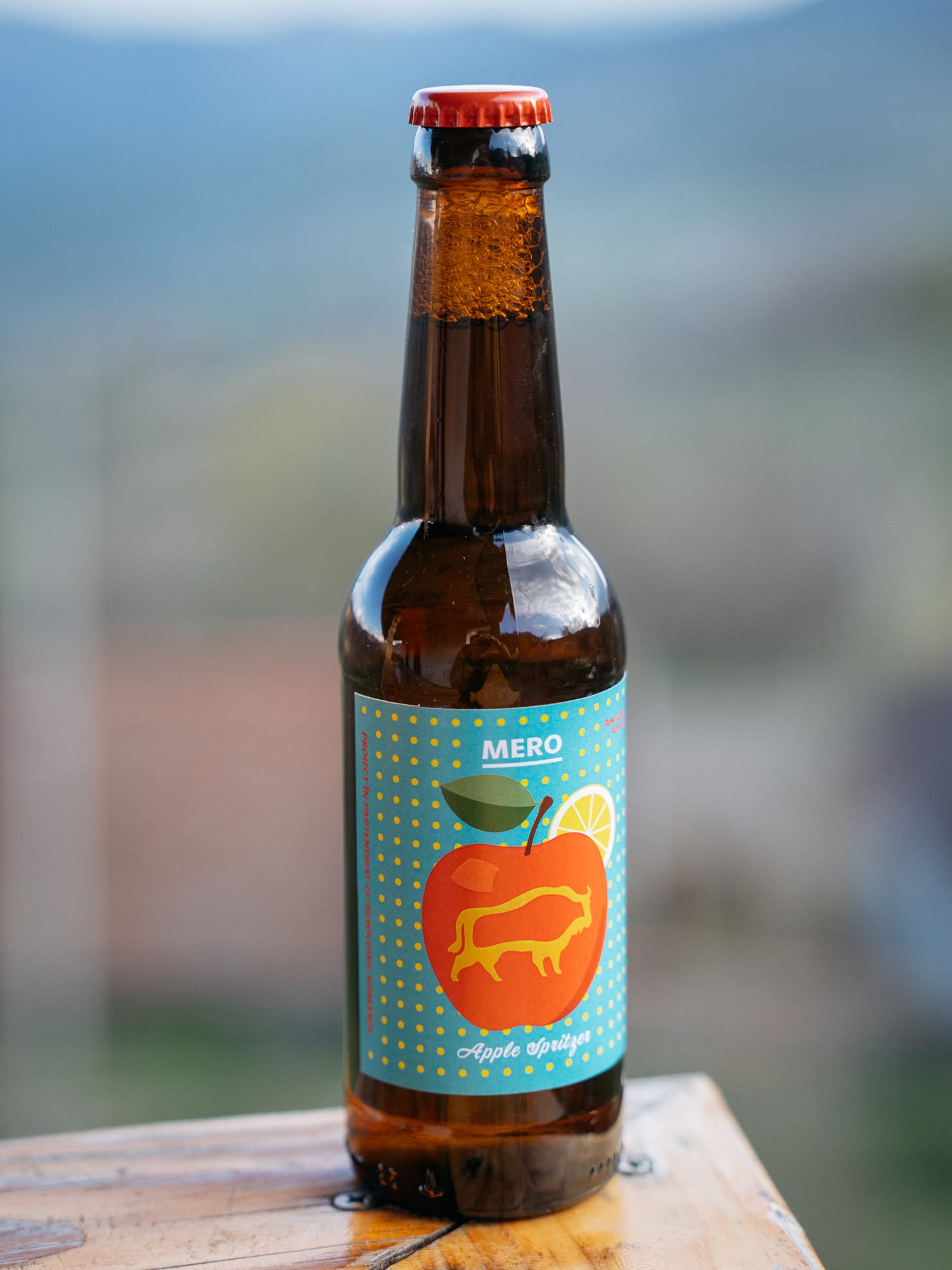
Mero apple spritzer is made with apples from the bison area.
In a further boost, the Banat region, which includes ‘bison country’, was named European Capital of Gastronomy for 2028, a title expected to draw more visitors. And this year a bison fund is set to launch, which will see tourism businesses and vendors such as Casa Despi voluntarily add a small surcharge to their prices to raise money that can be used to prevent damage by bison, and compensate people if it happens.
For Mihai Miculescu, postmaster in Armeniș, the opportunities that came with the bison revival are clear. He owns Dospita Bakery, which has become a busy gathering spot for residents and tourists. Before the bakery, Miculescu opened one of the area’s first guesthouses, a century-old, two-bedroom house he purchased and carefully renovated to retain its rustic charm. Now he’s applied for a microfinance loan to convert the barn for another two bedrooms and dining room. He has hosted bison-seeking tourists from Austria, the Netherlands and the UK, even a Romanian cabinet minister and a foreign ambassador. His success has inspired friends and neighbors to start their own guesthouses.
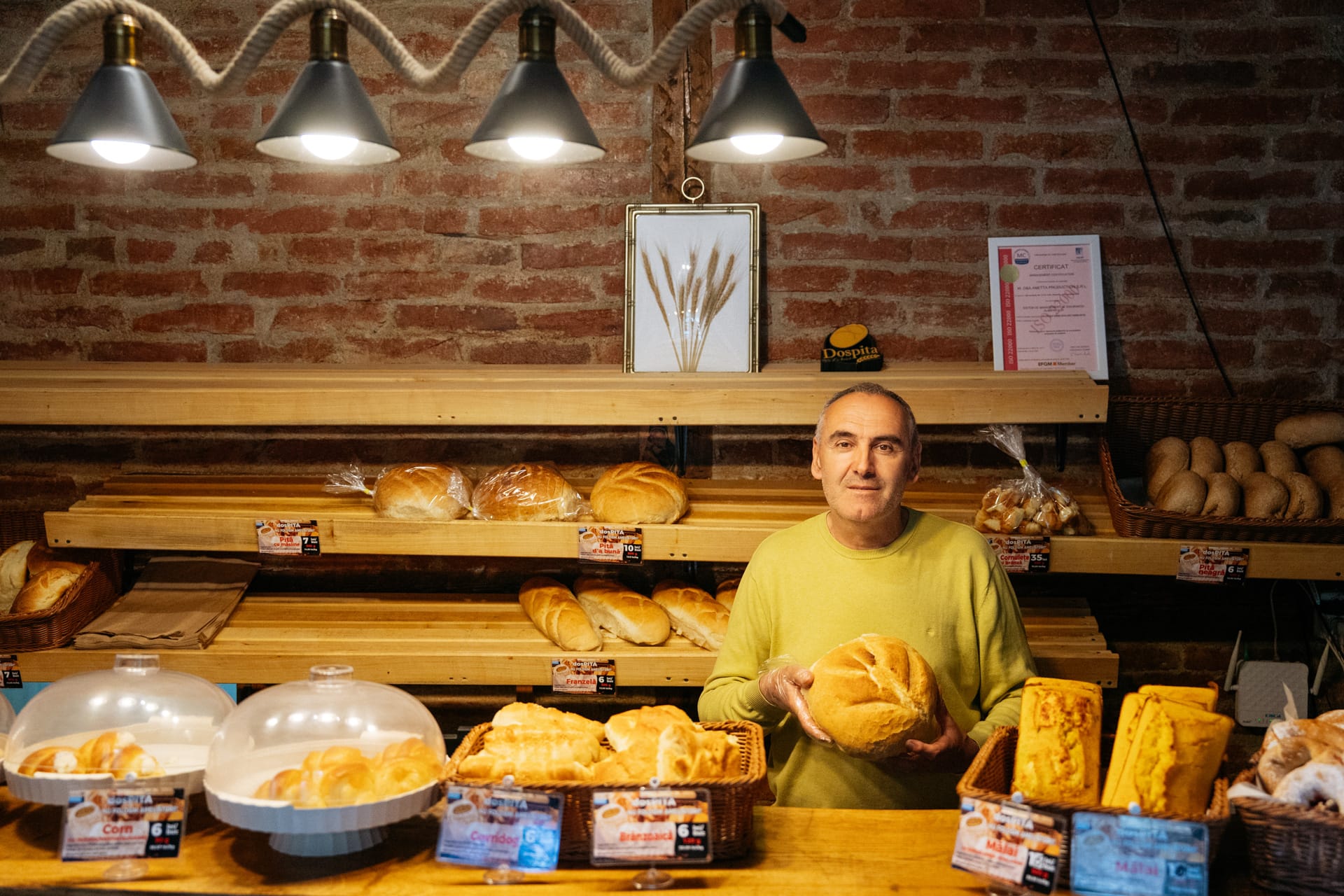
The bison have given Armeniș new life, says Mihai Miculescu.
“The village has become more famous lately and we want to contribute to its success,” said Miculescu, a courtly man, born and raised in Armeniș, who’s seen relatives move to Austria and Spain. “It’s not easy, every stone and brick, it costs money, but we remain motivated to expand. This is one of the most beautiful counties in Romania. I’m not sure why it was neglected, abandoned. But the bison have brought us hope.”
Focused on the wonderful world of rewilding, Volume 5 sees us get into the weeds – and go beyond the ferns – with our green-thumbed cover star Zach Galifianakis, walk with wolves in Slovenia, create a wilder world in Denmark, find meaning in fashion, and much, much more.