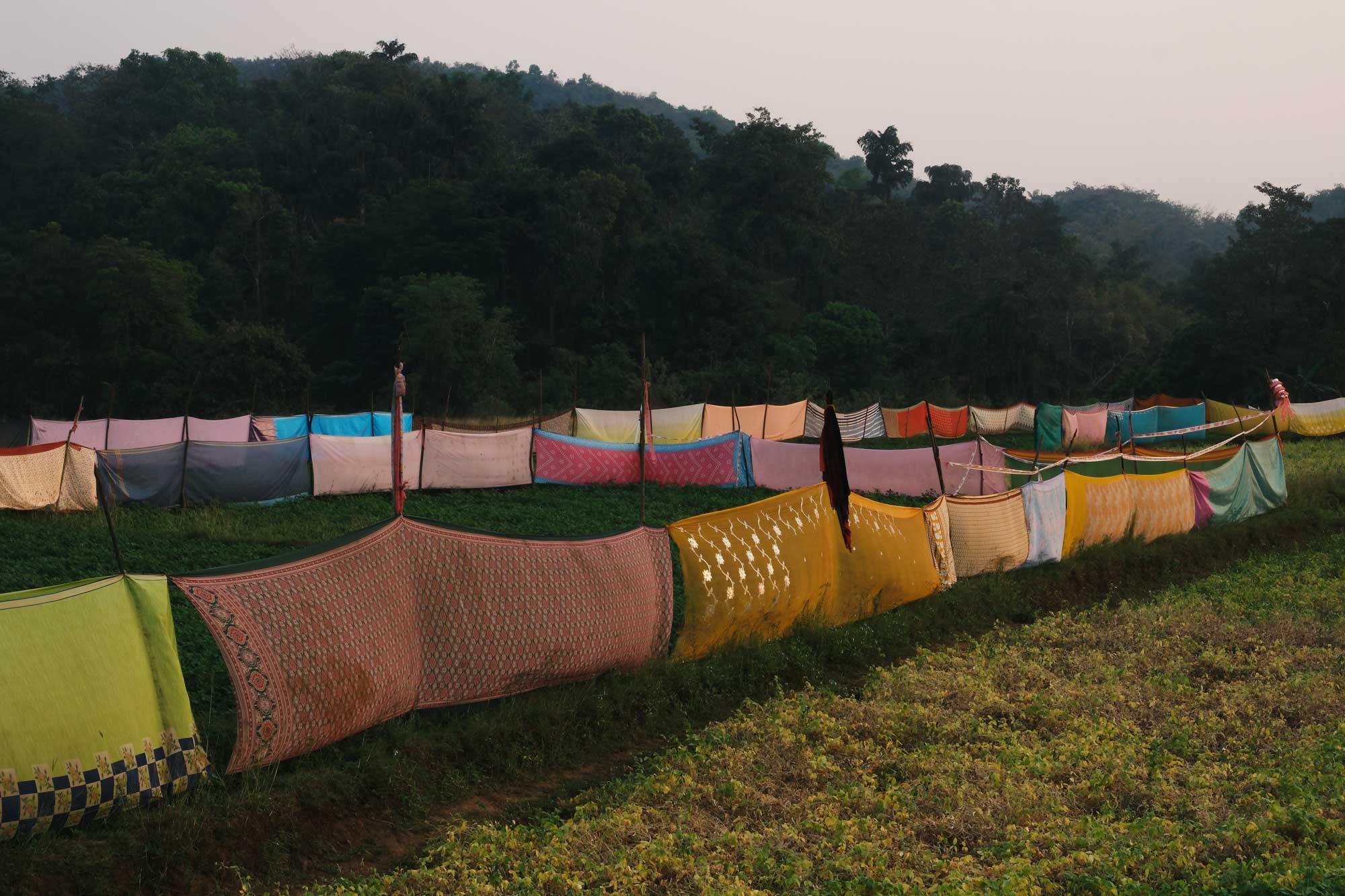
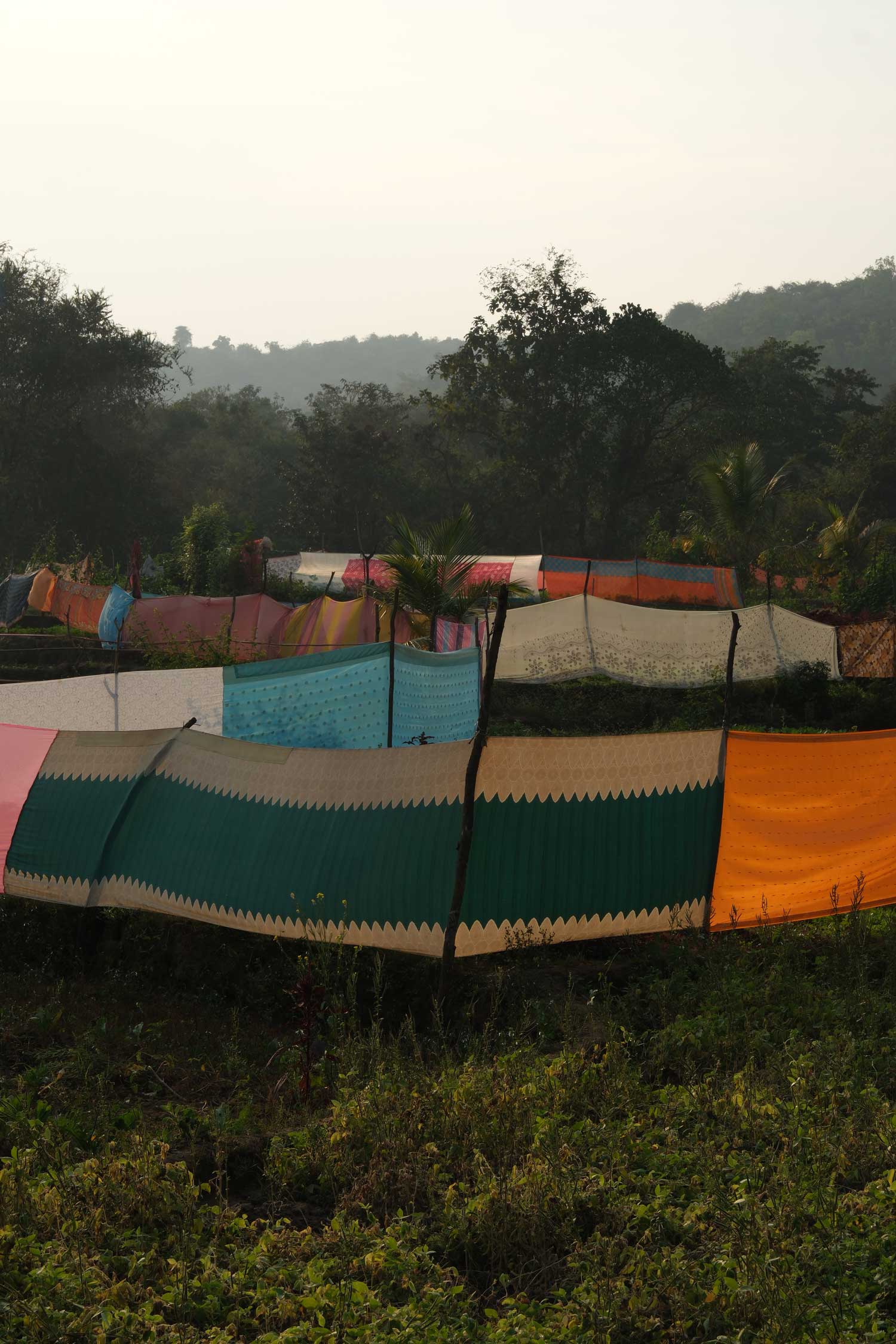
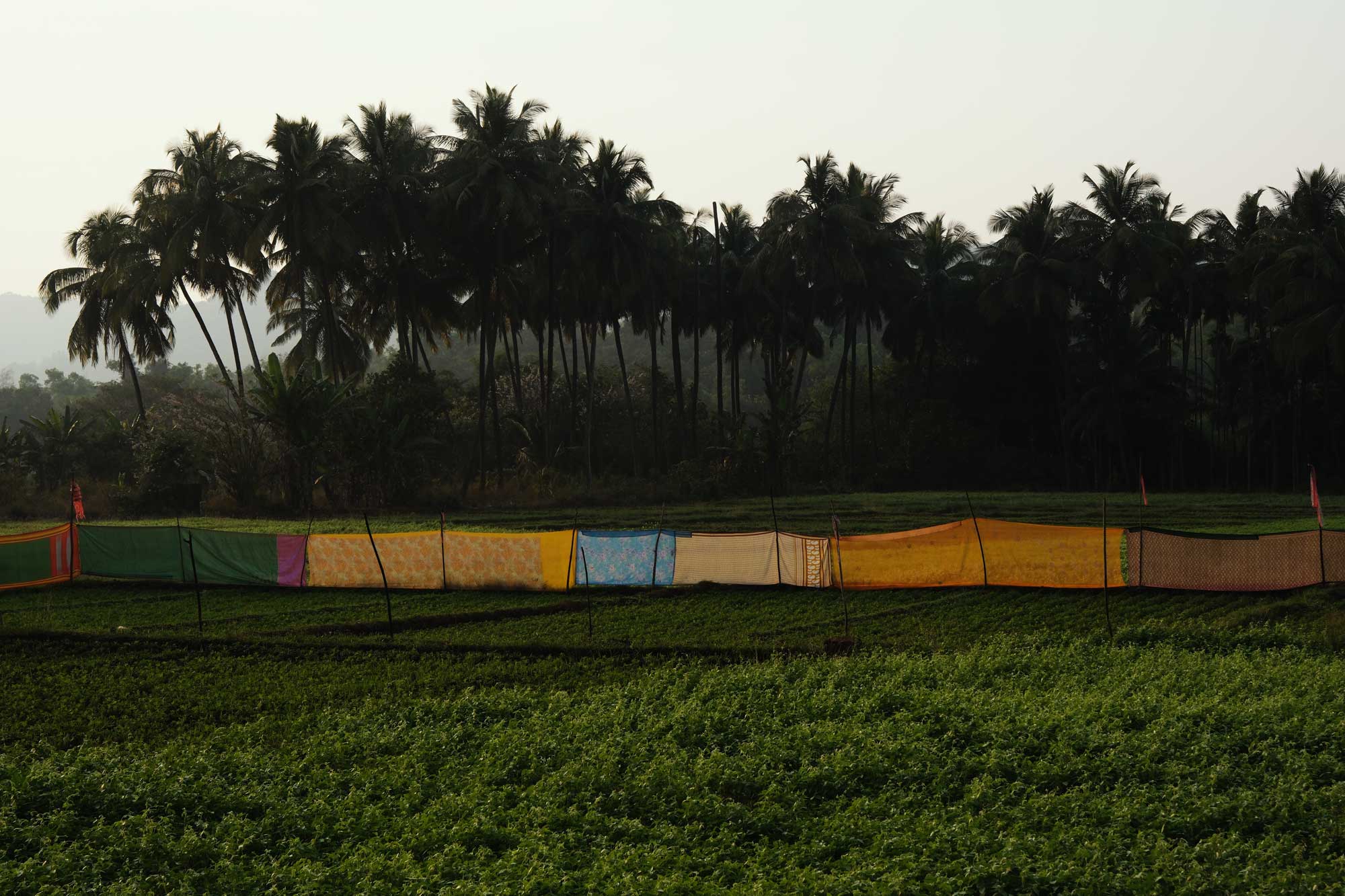
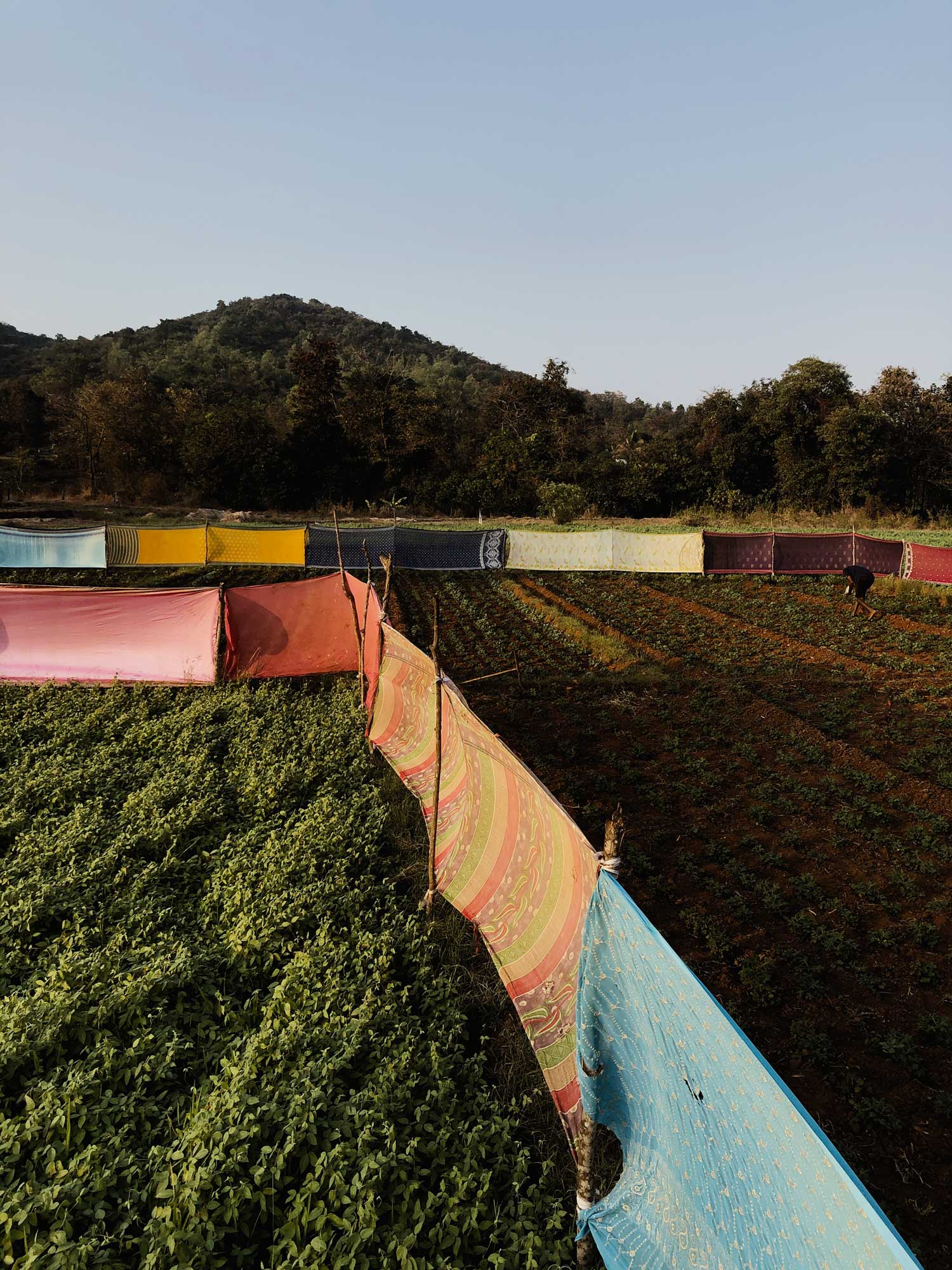
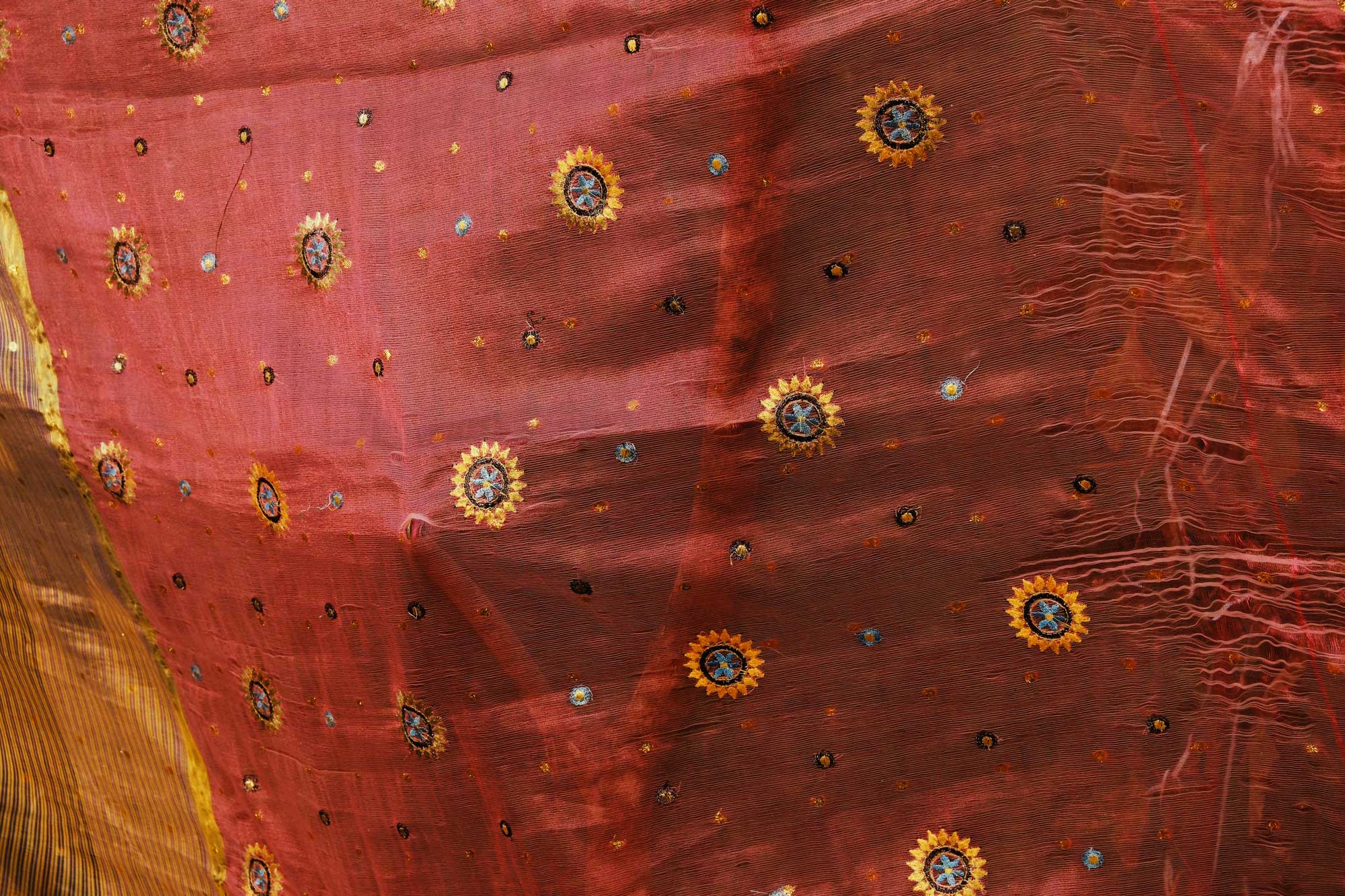
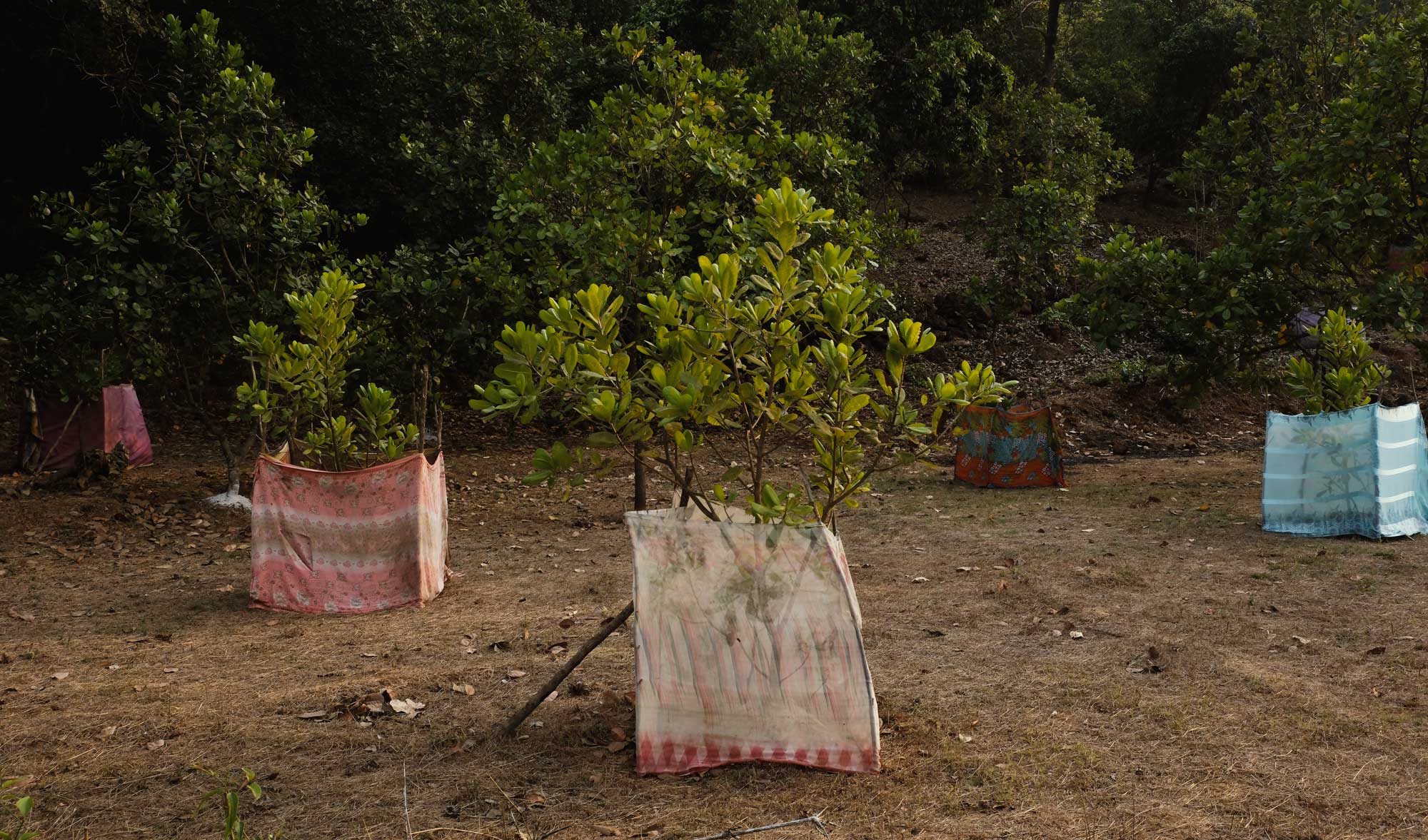
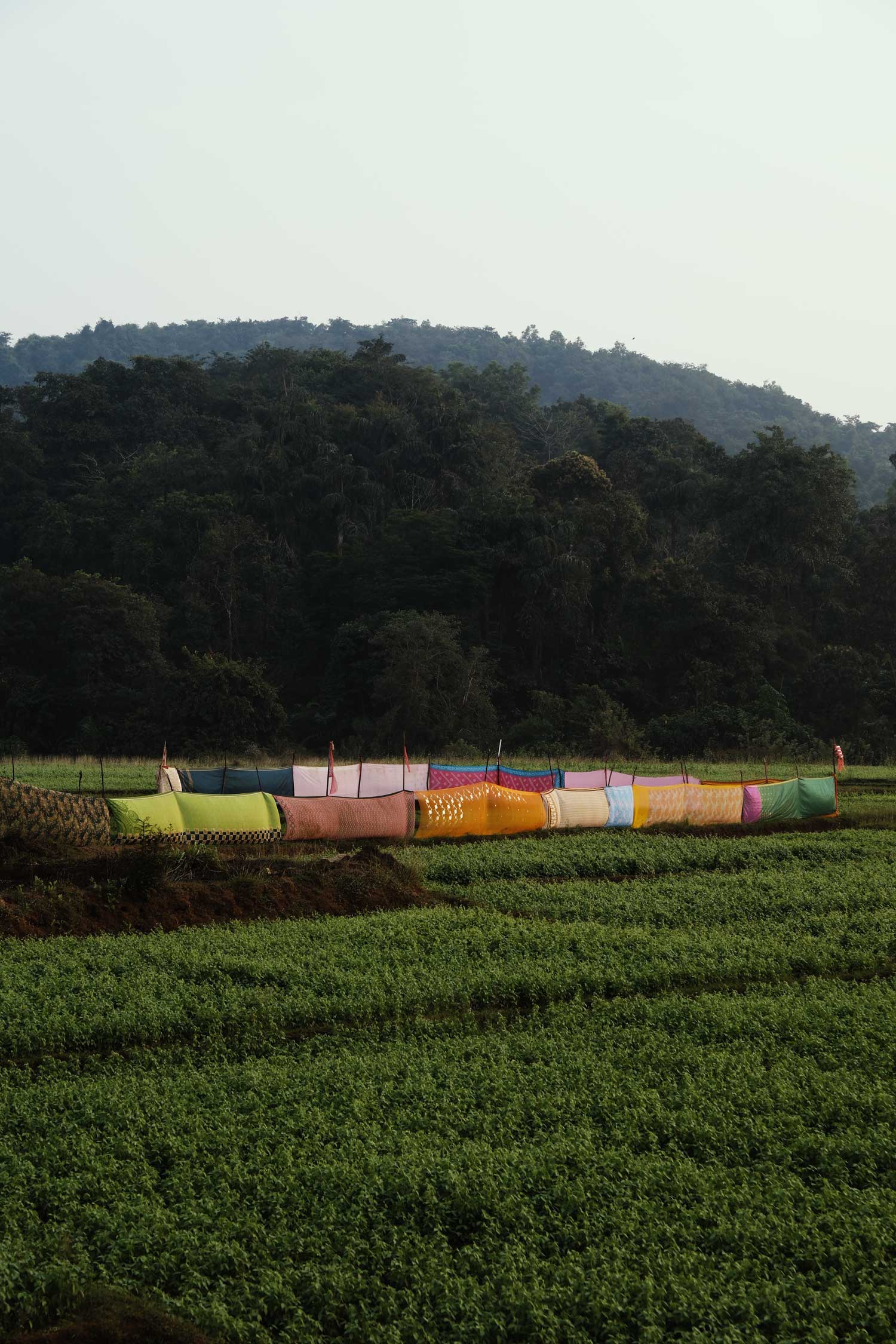
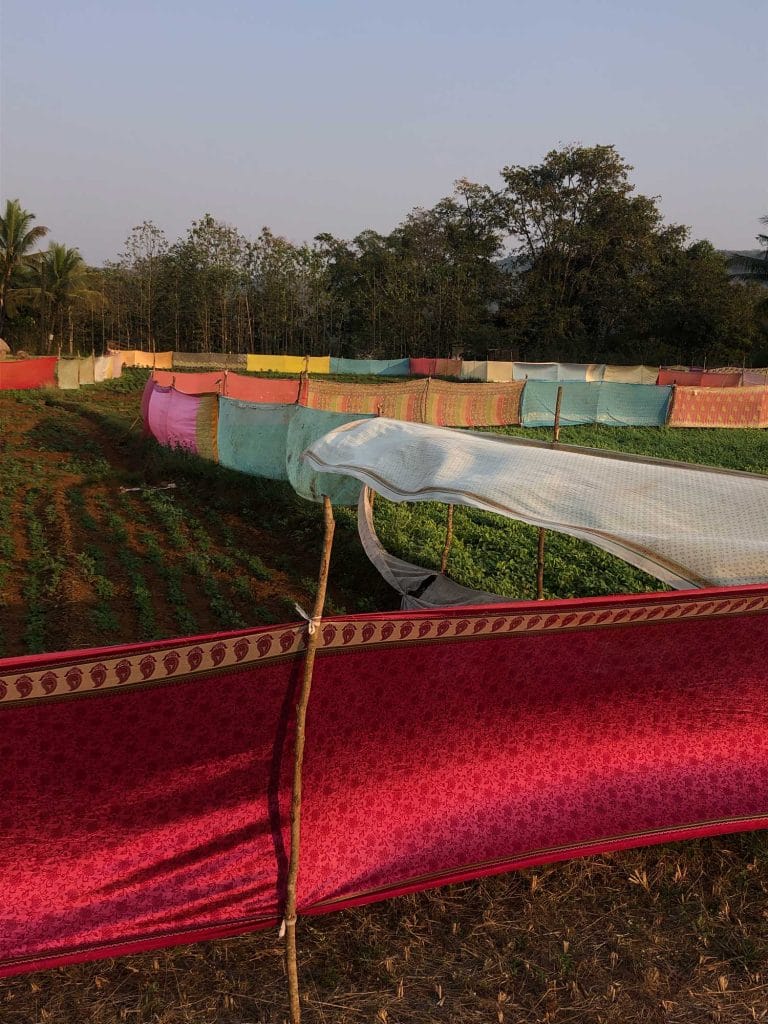
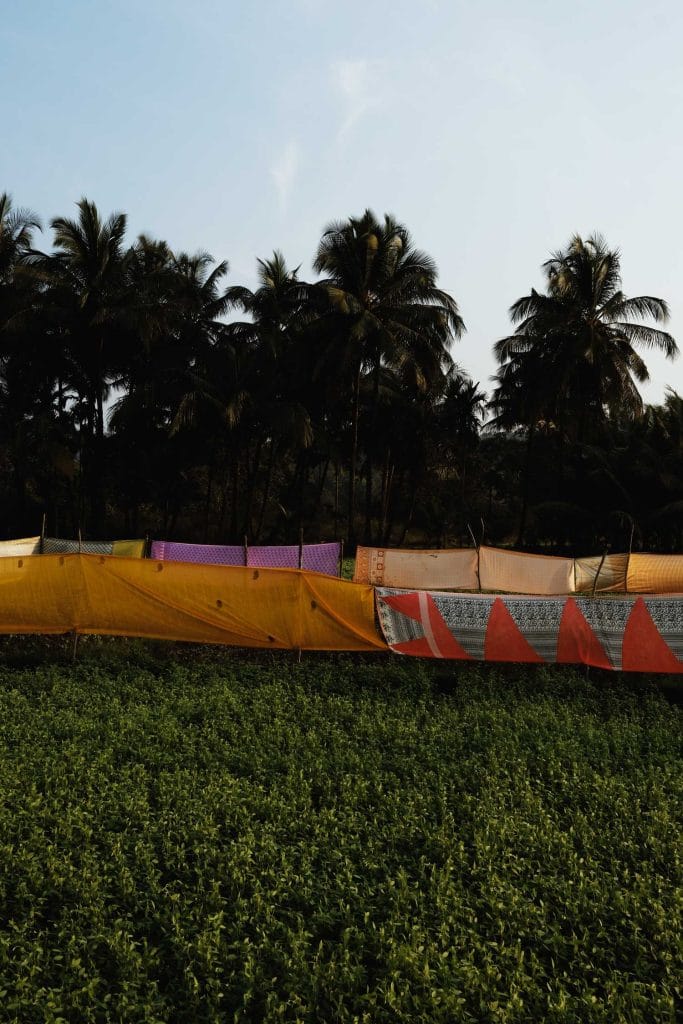
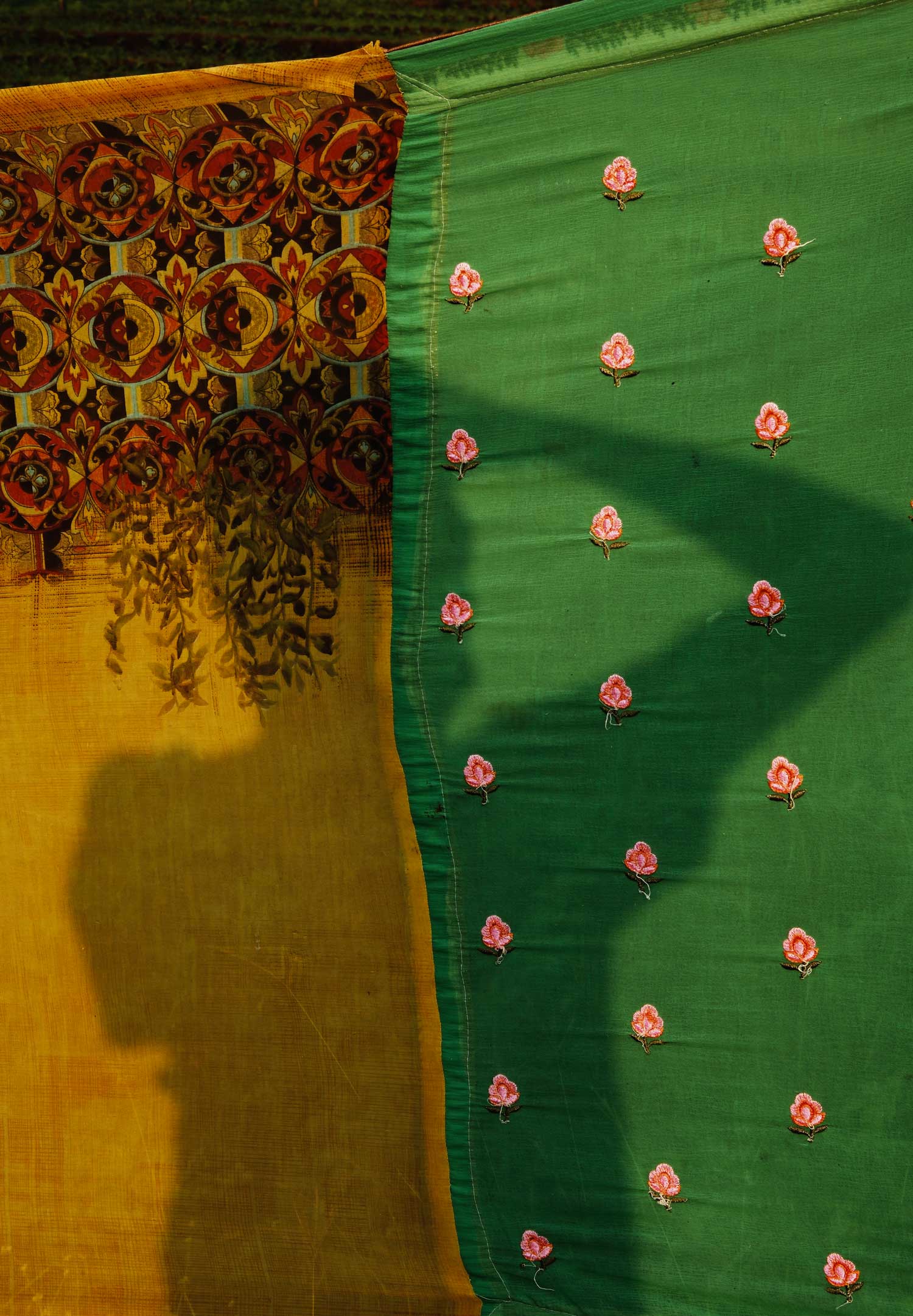
Old saris are finding a new life in the fields of Maharashtra, western India, where farmers are turning the discarded textiles into colorful fences to protect their crops.
Stretched between wooden poles, the bright fabrics distract animals such as bison and wild boar and hide the crops from view.
Indrajit Khambe photographed these fences in his village in Sindhudurg district. His images show ribbons of reds, yellows and blues weaving across the landscape.
The fences are a practical response to a seasonal challenge, Khambe explains. Farmers grow rice during the monsoon, when wild animals have enough food in nearby forests. But in early summer, the forests run out of grass, driving animals toward farms. At this time, farmers typically plant vegetables and groundnuts that need protection.
Sari fences offer an inexpensive solution for the summer months and can be easily removed before the next rice season.
The saris are collected from family members and neighbors, giving the garments a second life while providing farmers with an alternative to manufactured fencing materials.
“What fascinates me most about these fences is how farmers come up with innovative, sustainable and cost-effective solutions,” Khambe says. “I also love how they use their artistic instincts, carefully arranging the different colored saris to create these beautiful barriers.”

Focused on the wonderful world of rewilding, Volume 5 sees us get into the weeds – and go beyond the ferns – with our green-thumbed cover star Zach Galifianakis, walk with wolves in Slovenia, create a wilder world in Denmark, find meaning in fashion, and much, much more.