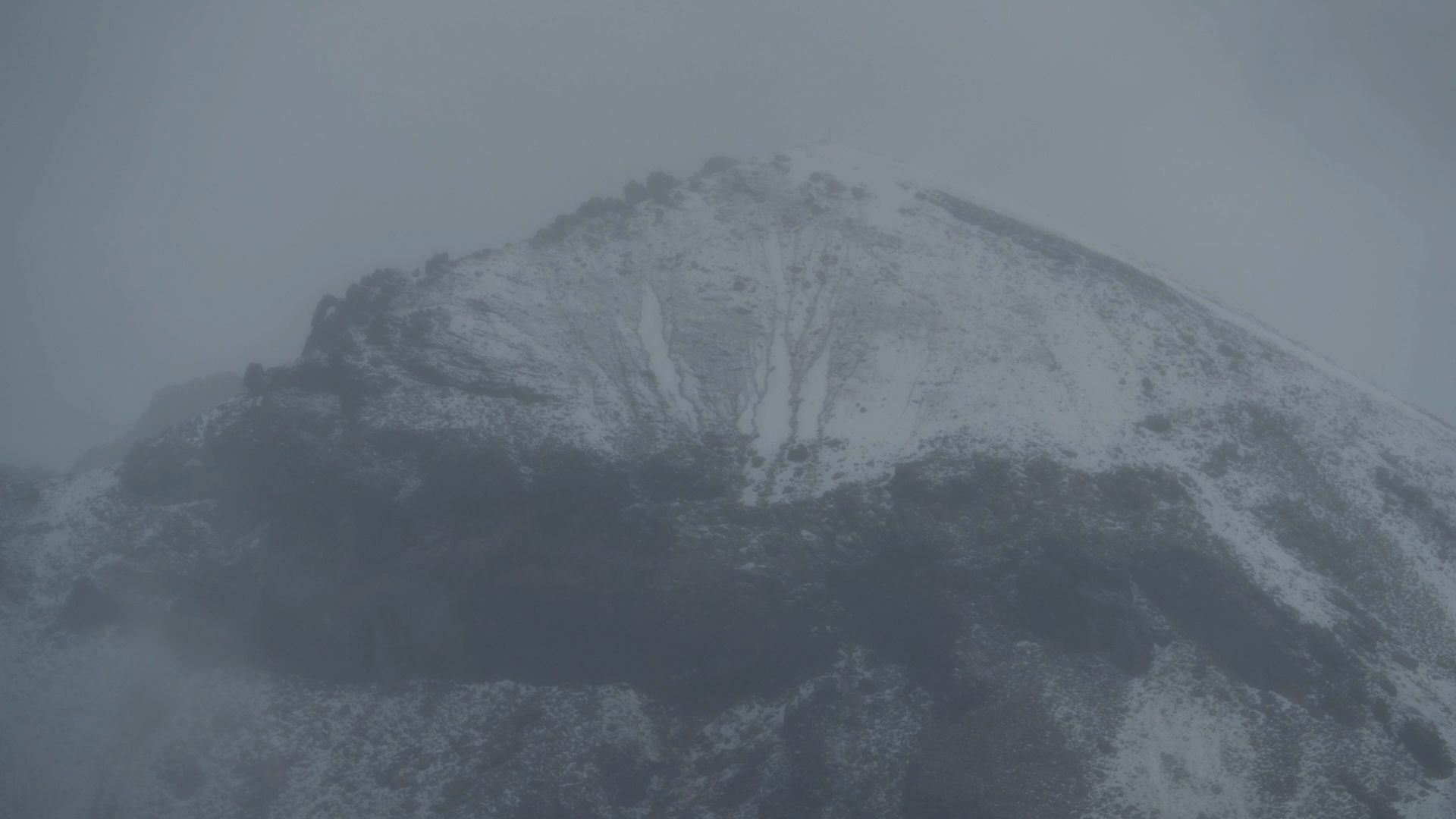
Colombia’s Páramo is home to one of the most biodiverse ecosystems on the planet, but its tropical glaciers are under threat. Now a global community is uniting on the ice to protect them.
“What do you do when you have a terminally ill patient? You accompany them. You look for the best doctors, you look for the symptoms. So we became this team of people… this family,” says Colombian mountain guide Marcela Fernández Barreneche. She’s talking about the country’s glaciers, which are receding rapidly.
When people think of glaciers, most people think of the Northern Hemisphere. Or polar regions. But Colombia is one of the last places on Earth with tropical glaciers. Currently there are six remaining in the region.
And Barrenche is doing all she can to save them. It’s a mission that began when she opened a local newspaper and read that in 30 years, the glaciers would drip their last drop. Glaciers are a part of us, she explains. She wanted to find a way to turn her feelings of sadness at their loss into something more constructive and surrounded herself with experts, ultimately founding Cumbres Blancas, an NGO dedicated to the protection and restoration of mountain ecosystems.
“Glaciers are the thermometers of the Earth”
Marcela Fernández Barreneche
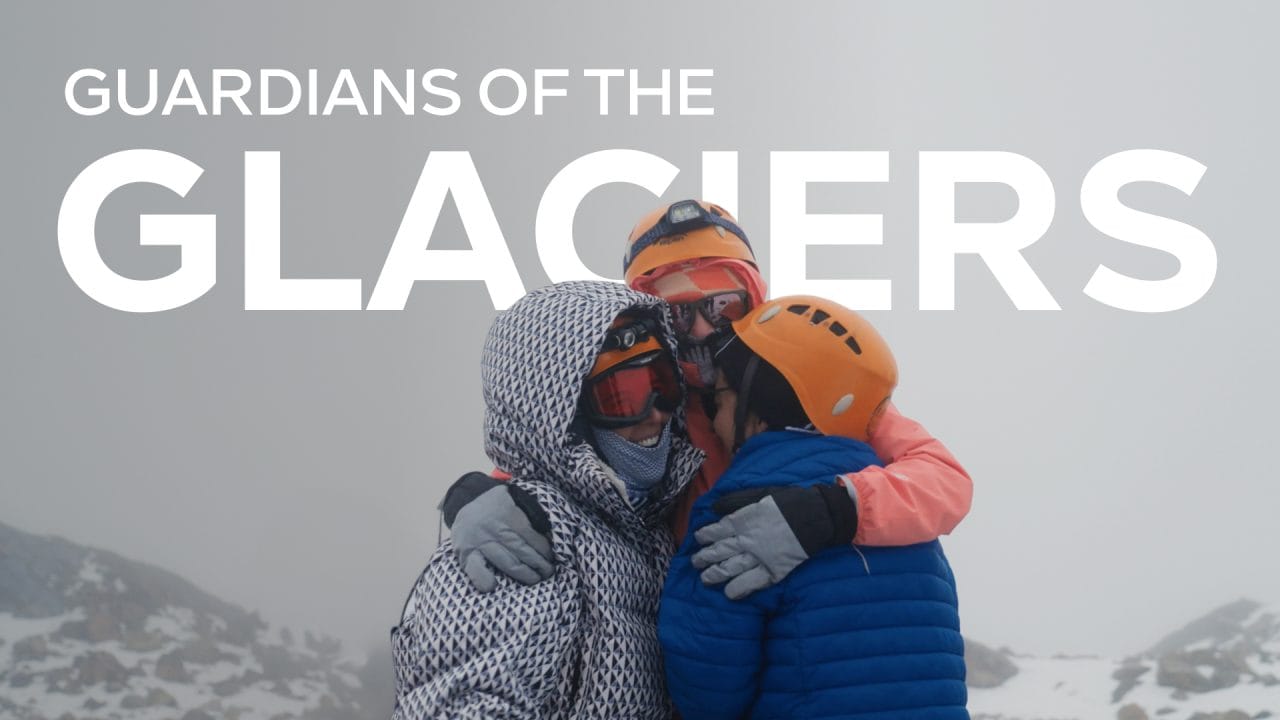
Today she has risen before dawn to lead an expedition up to the Nevado de Santa Isabel glacier, known as Poleka Kasue in the local ancestral language, which translates as ‘Maiden of the Snow’. It’s a special expedition, bringing together scientists, local ecologists, artists, climbing guides and Indigenous leaders from the Amazon to perform a gratitude ceremony giving thanks to the abundance of the glaciers.
It’s an expedition I’m honored to join, as a member of Glacier Nation, the global coalition that thanks to Barreneche’s vision and drive, has grown out of Cumbres Blancas into a worldwide coalition active in 25 countries. The aim is to transfer knowledge, strengthen policy, scale solutions and build connections with other glaciated countries, from Mongolia to Bolivia.
What we share, apart from a love of nature and ice, is a concern for what we see unfolding before us. As a climber in Patagonia, I’ve witnessed the summits moulting, exposing hard interiors of exfoliated granite. A peak today is barely recognizable to the same peak a decade or two ago, as if a person only known with a long white beard presents cleanly shaven.
What will we encounter when we reach Poleka Kasue? There’s a sense of excitement but also trepidation. Is this a greeting or a goodbye? In the chilly twilight we chomp apples and sandwiches with hot tea, don packs with crampons, harness, and helmet, and begin the trek. For hours, we course upstream through shadowed valleys once inhabited by the glacier, passing signposts for where the glacier resided in 1960 and 1990. As the sun rises, it outshines the distant stars and our lanterns, illuminating an incredible panorama of the rolling Páramo landscape, this unique high-altitude mountain biome unlike any other, crowned by the frozen freshwater that is the glacier herself.
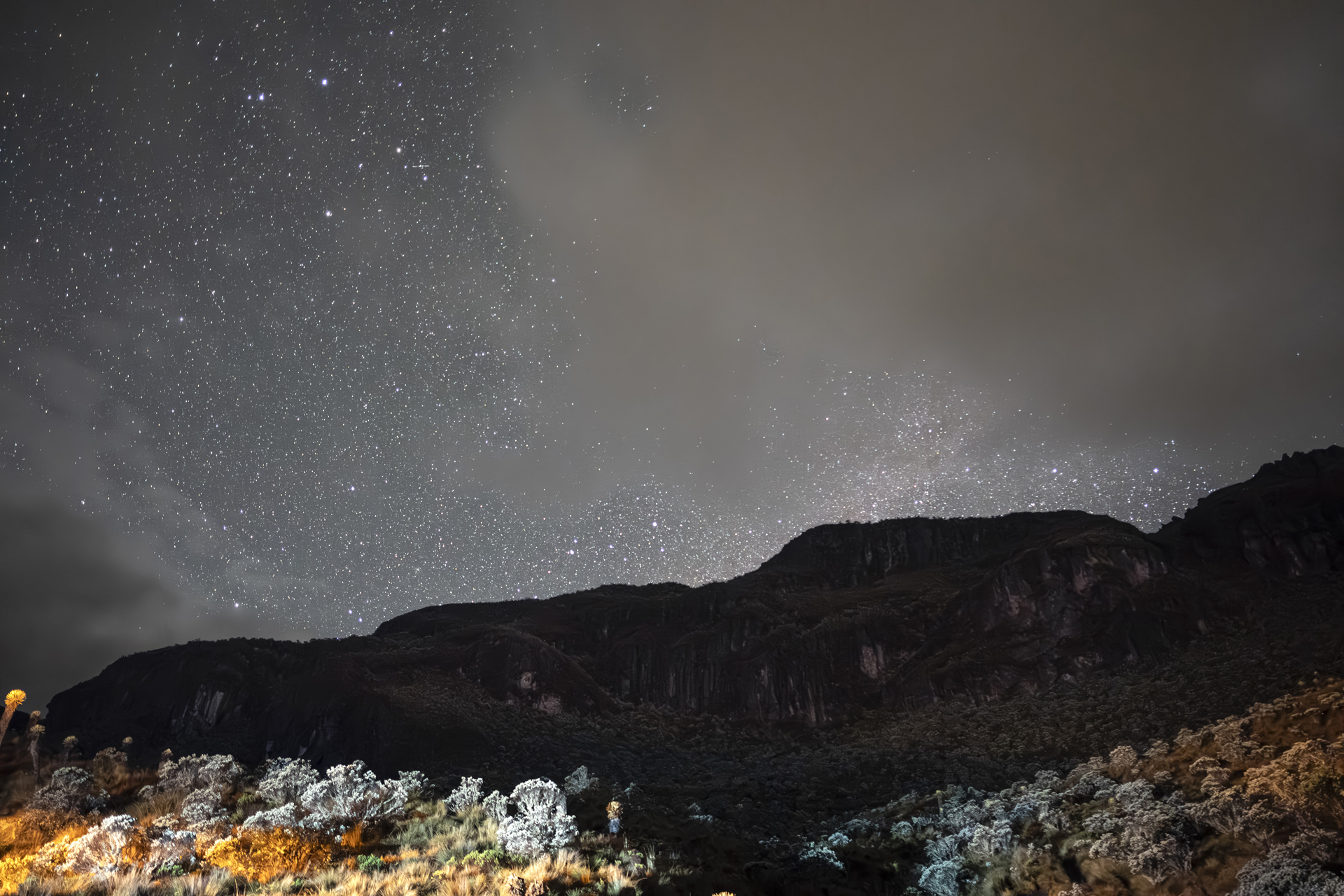
The Páramo ecosystem is one of the richest and most biodiverse ecosystems on the planet, made possible by its location. It’s close to everything, even the sun: it’s equatorial, sandwiched between the Pacific and Atlantic oceans, in the middle of the occidental and oriental branches of the Andes, where flora and fauna have coevolved for millenia.
This glacier is a vital source of water for the entire ecosystem and communities living here. In recognition of this role, in the chilled thin air of this isolated location 5,000 meters above sea level, we share an offering of water collected from 25 countries around the globe, from India’s Ganges River to Greenland, Canada and Mexico. Uniting these waters with this frozen reservoir, we honor its existence, giving thanks for the water and the lessons we can learn from this ancient icy expanse. We also collect meltwater from Poleka Kasue to offer other glaciers around the world in similar ceremonies, such as the Mere du Glace in France, Iceland’s “house of the sun” Sólheimajökull glacier and Mt. Kenya’s tropical Kirinyaga glacier.
Everyone here has a common convergent reason for coming to see this glacier at a watershed in its life, and each of us, from ecologists to spiritual leaders, has different questions and interpretations of the glacier and its ecosystem. Only when we bring our perspectives together into a shared, more whole narrative of what the glaciers – and their disappearances – mean can we fully understand them.
“And this new way of visiting them with reverence, with joy, with hope, I think, is what made us make the shift of what is possible and why we need a global movement for this to happen in the rest of the countries,” says Barreneche.
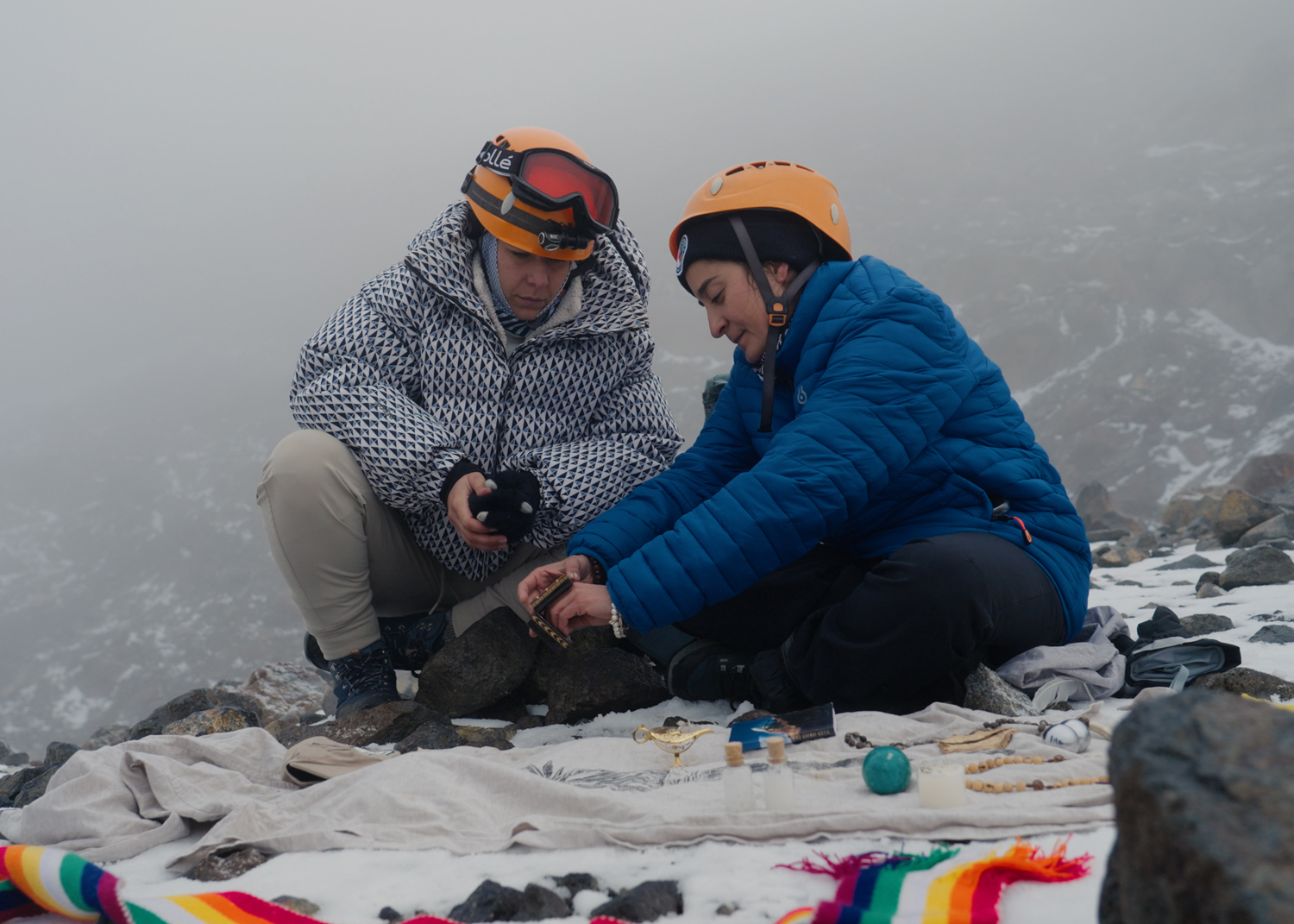
The culmination of the trek: a gratitude ceremony for the glacier. Photo: Prunelle Mathet
She refers to glaciers as the “thermometers of the Earth.” They are responsible not only for the marking of our temperature and climate, but also for regulating the climate. But glaciers disappear when they lose more than they gain each year – it’s an issue of balancing precipitation versus melting. These bodies of ice we call glaciers and ice sheets account for the majority of the world’s freshwater. In the most recent Ice Age 20,000 years ago, they covered 8% of the Earth. In a recession visible from orbit, today only 0.5% of the Earth’s surface has ice coverage.
Along the equator, only seven countries are still glaciated: Uganda, Kenya, Tanzania, New Guinea, Indonesia, Ecuador, and Colombia. Zooming in on Colombia, we see that of the country’s 14 tropical glaciers a century ago, the six that remain are in critical condition. These glaciers and their places have ancestral guardians connected to them, Indigenous Amazon tribe leader Dario Silva says. Locally, in Colombia they are also revered as sacred. They are called apus – ancient spirits. Many Indigenous communities here consider them their God.
As the glacial melt spreads, so, too does news and awareness of the ramifications and costs. As a result, people are coming together to protect the ice. In the words of spiritual leader Abuelo Luz, our “inner and outer glaciers are awakening”.
In the meantime, Barreneche is working locally to restore the ecosystem that supports the glaciers. She realized that a native plant by the name of frailejónes plays a critical role. Known as the ‘sunflowers of the Páramo’, they grow up to three meters tall and with their broad, velvety leaves, they are the ‘waterkeepers’ of the grasslands, sucking humidity from the air and releasing it slowly back into the environment, helping to maintain this high-altitude ecosystem’s function as a ‘water factory’, supplying numerous major rivers.
As our glaciers depart, the frailejónes could help keep the water in the region. To date, Cumbres Blancas and Glacier Nation have built more than a dozen greenhouses to restore the Páramo ecosystem – by planting frailejón seeds.
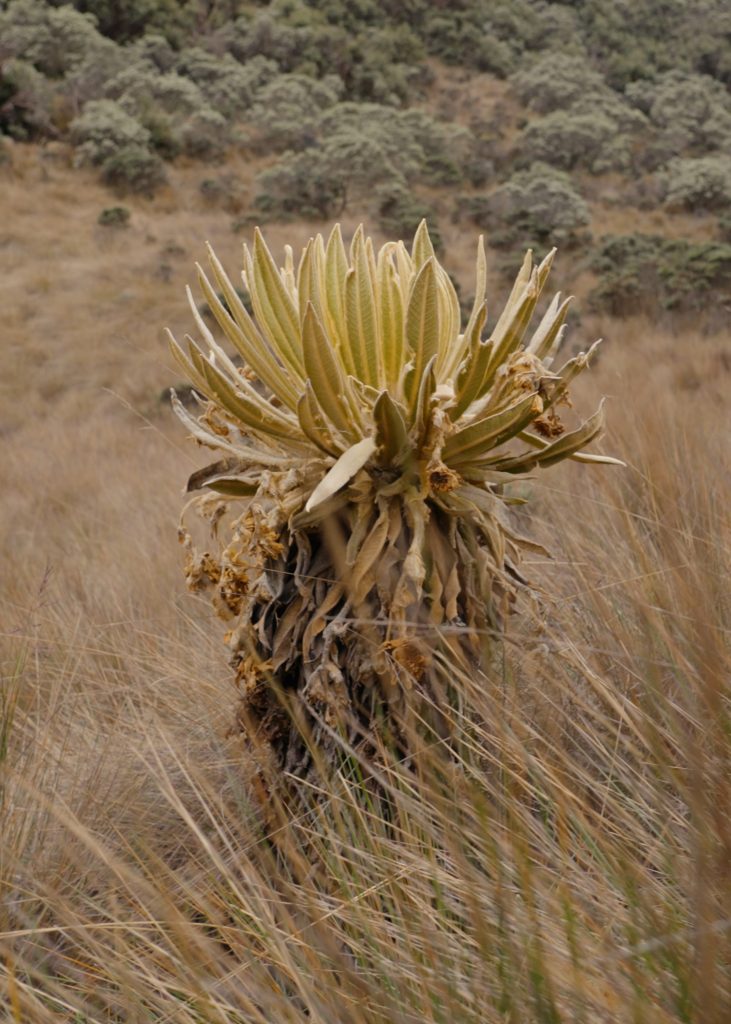
The frailejónes act as a natural water reservoir.
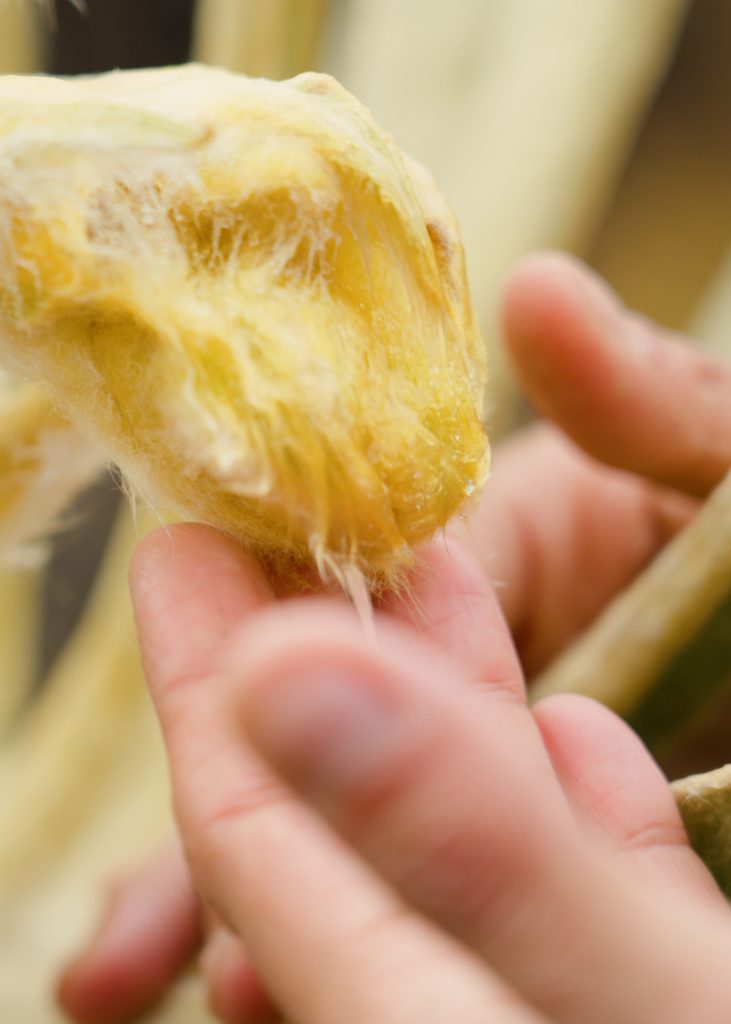
The velvety surface absorbs moisture from the air. Photos: Prunelle Mathet
“It’s the king of the Páramo,” Barreneche says. “We don’t have lions, but we have frailejónes. And he’s a guardian.” If there were more frailejónes, there would be more water, and, at altitude, this water could become the nutrition, the snow the glaciers so desperately need. The frailejónes and the Páramo are natural reservoirs, balancing between Colombia’s cloud forests below and glaciers above. With this in mind, Cumbres Blancas built nurseries for the slow-growing frailejónes, helping them propagate from seeds to seedlings until they’re ready to reintroduce and repopulate in the wild. As Barreneche says, this rewilding will help create “the snow of the future.”
The glaciers are an above-ground freshwater well; a regional A/C unit; and a security deposit for soil and biodiversity. “We need to remember how to be a frailejón,” she says. From the seedling to the Páramo, and from the Páramo back to the glaciers, each seed we plant now breathes new hope.
It’s the same breath of hope we share gathered at Poleka Kasue in the early morning light. This is so much more than a geographical feature. Locked deep in this ancient ice is a mighty presence that has shaped the very land and people around it and continues to do so. Our job now is to keep bearing witness, carrying and amplifying her presence across the globe.
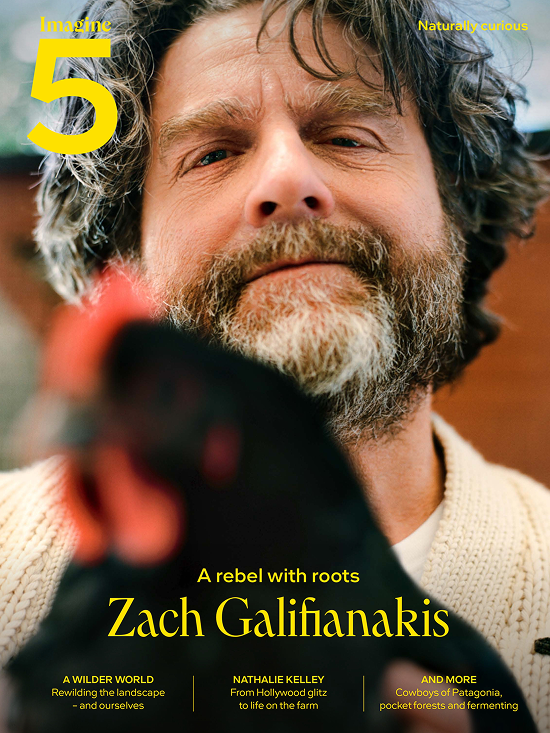
Focused on the wonderful world of rewilding, Volume 5 sees us get into the weeds – and go beyond the ferns – with our green-thumbed cover star Zach Galifianakis, walk with wolves in Slovenia, create a wilder world in Denmark, find meaning in fashion, and much, much more.