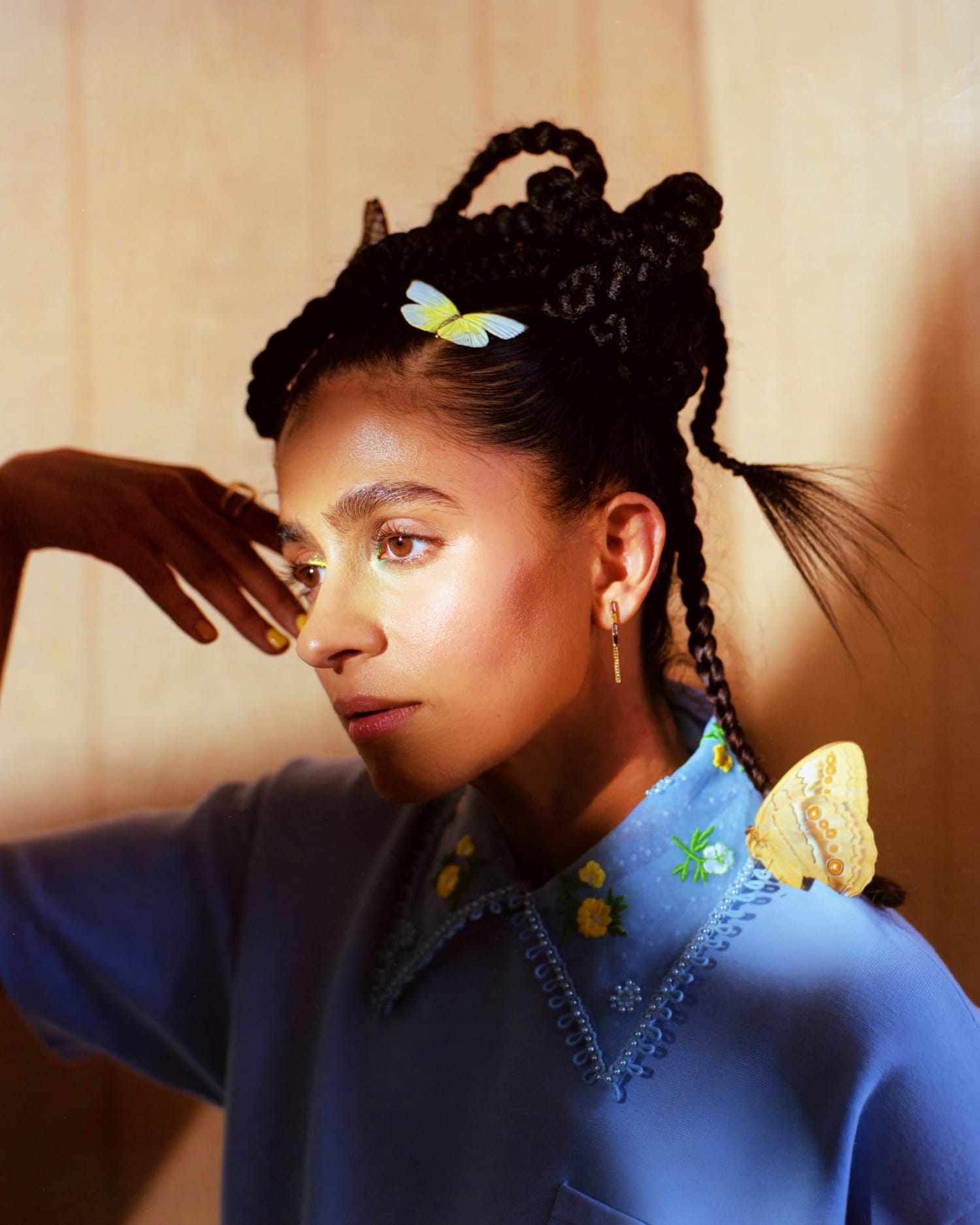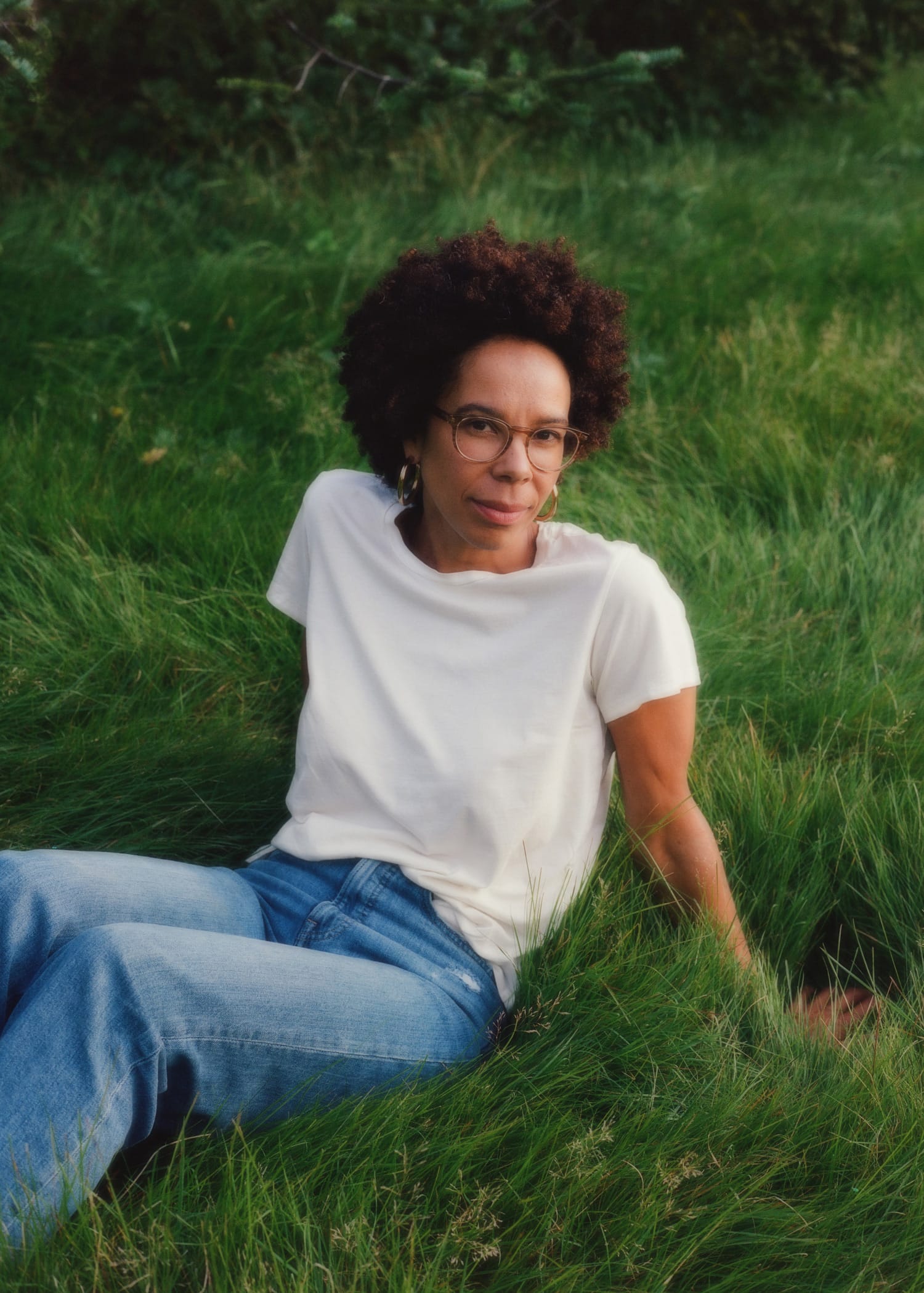
Dr. Ayana Elizabeth Johnson became a marine biologist because she loved the ocean. She started advocating for the climate because she loved the planet. Now in her new book, she has her sights set on the future – a future we can all fall in love with.
The future: two simple words that feel heavy these days. Imbued with the weight of graphs going off the charts. Rising numbers. Record-breaking data points culminating steeply into… into what? The unknown. Action paralysis. It’s all too little, too late, we are told.
But what if, instead of watching this future unfold and giving up on it before it happens, we could imagine a different future? A future where we get it right? What would that future look like? And how could we get there?
These questions open the door to possibility, explains Dr. Ayana Elizabeth Johnson. A sense of possibility that I know I’m desperate for. It’s why I’m so excited to speak to her and find out more about why, as a scientist and environmental policy maker deeply involved in the very data that makes most of us want to hide under a weighted blanket, she’s decided to focus on solutions.
“We’ve had decades of scientists telling us exactly what was going to happen, starting with Exxon’s own scientists in the 70s… that’s valuable information to try to put an emergency brake on, but it doesn’t really tell us where to go from here,” she says.
“It just felt like the scales were tipped toward apocalypse conversations,” instead of being grounded in “making a plan together”. And it’s high time for that plan, because, when it comes to the climate crisis: “We have most of the solutions we need,” she says, adding that this is the most surprising thing she’s learned in the course of writing her book: What If We Get It Right? It’s not something that a lot of people realize, but we don’t first need to master fusion energy to tackle this, she says. It’s an insight that’s equal parts encouraging and frustrating, because if we already have the solutions, why don’t we just go ahead and do what needs doing?
“We know how to write better laws. We know how to enforce them, We know how to shift to clean energy and improve public transit and green our buildings and improve agriculture… it truly is a lack of political will, and a lack of cultural urgency,” Johnson says.
RELATED ARTICLE

But how can you create cultural urgency and political will when people have switched off? When they’re not engaging because they feel there’s nothing they can do anyway? When people can’t envisage a better future, they quit. And quitting is not an option. “Anything else is an option except giving up on the future of life on Earth,” Johnson says. So that means rolling up our sleeves and focusing on the future. Now.
Ultimately this work comes down to love. And by that, she’s eager to specify, she doesn’t mean “a fling with an ecosystem or an infatuation”. Johnson is talking about a different love. “A love grounded in knowing… this sense of knowing the natural world well enough that you feel like you have to do something to protect it.” Because people need to understand that “the climate is everything we love”.
The “knowing” part of that love is proving increasingly difficult however, with people not getting the information they need. When we hear about extreme weather, these days, there’s no connection being made to it being caused by climate change, Johnson is noticing. The fact that CBS has just fired its last environmental news reporter is part of a bigger shift. A shift by design, she says, revealing that American networks ABC, CBS, NBC, and Fox collectively spent less than 13 hours covering climate change in the entirety of 2024.
She has the numbers right in front of her and they speak volumes. Climate coverage is less than 1% of overall news programming, and that’s declining. Under 3% of scripted film and TV episodes are mentioning any sort of climate topic and specifically the term appears in 0.6% of cases. This means that for most people, “it’s almost as if the climate crisis is not even happening”. They’re not encountering it in what they hear and see.
“We’re not connecting the dots very well for people,” she says. And an important way to do that, she discovered, is to talk to those around us. Despite high concern, a recent Yale study that she cites, showed that 60% of Americans rarely or never talk about climate change with their family and friends, which means that people underestimate how much others care about climate change.
“Anyone can be a part of making the world better”
It’s why so much of Johnson’s book features actual conversations she had with others – and in this sense, the format is also the message. In talking, we can educate each other, learn, share and figure things out… together. In the book, she speaks to everyone from farmer and self-described ‘soil nerd’ Leah Penniman, to award-winning climate journalist Kendra Pierre-Louis to environmental lawyer Abigail Dillen, in an ambitious bid to try and connect the dots herself.
Coming from experts and leading voices in so many different areas, together the conversations provide a tantalizing sense of trajectories that can still change. Especially when we rethink our food systems, our economic drivers, empower communities and restore nature. “Fundamentally valuing nature and protecting and restoring ecosystems is one of my favorite things to remind people is a climate solution because we get so caught up in the technical [side],” Johnson says.
The cumulative effect feels hopeful, even though Johnson personally isn’t a fan of the word. Her favorite word is “implementation”. It may not sound sexy, she is the first to acknowledge, but it’s what gets things done.
She encourages us all to try and see what we can contribute, stressing that we don’t need to quit our jobs and work in climate. And we don’t need to be experts: “Anyone can be part of making the world better than it otherwise would have been”. How?
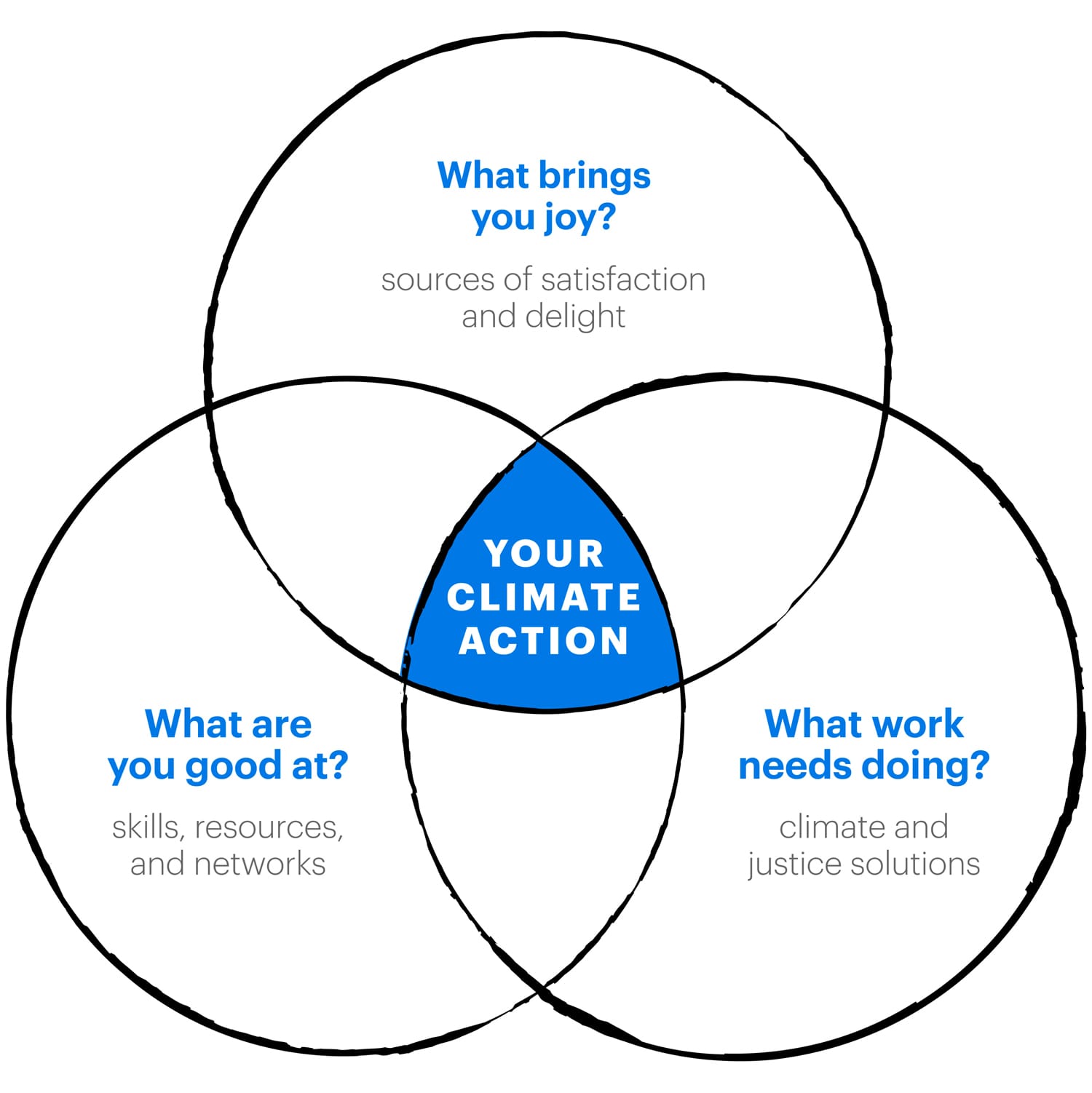
There’s a Venn diagram to help figure that out. It’s made up of three circles, each dedicated to a different question: What are you good at? What work needs doing? What brings you joy? The intersection of those three areas will tell you what you can do for the climate.
A lot of making action more impactful hinges on finding a way to be a part of something bigger than ourselves. So much of the messaging around climate action has to do with individual and household changes, such as composting, taking public transport, using less energy, flying less, eating a plant-based diet, which are “all great stuff to do,” but, Johnson is eager to emphasize, we don’t have to be “out there on our own trying to solve this”. We can also find a local organization or chapter of a national group to slot into and offer our skills. Third Act, the Sierra Club, Surfrider, and Environmental Voter Project are some of her favorites.
As she says towards the end of her book: “There are innumerable possible futures… we each get some say in which future we’ll collectively have, and a chance to help build it.”
And, for those who find themselves flagging at the enormity of it all? She’s created an ‘Anti-Apocalypse’ playlist to help us collectively keep things moving. I know which song I’m starting with. The Bee Gees’ classic: “How deep is your love?”
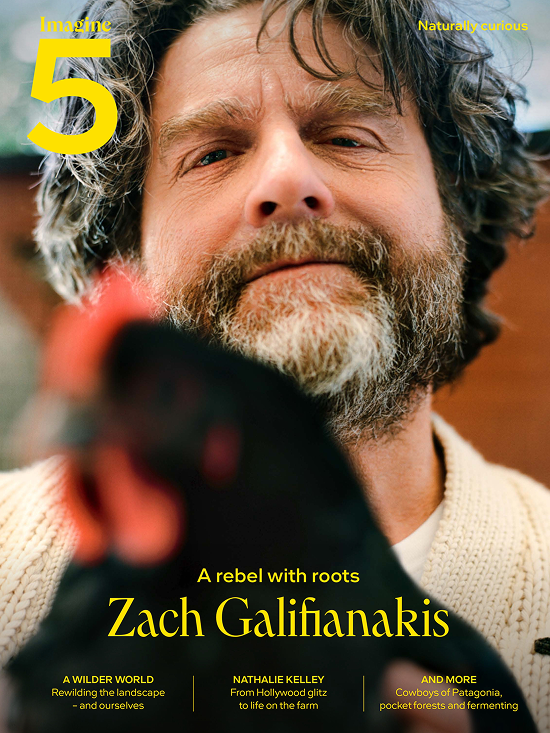
Focused on the wonderful world of rewilding, Volume 5 sees us get into the weeds – and go beyond the ferns – with our green-thumbed cover star Zach Galifianakis, walk with wolves in Slovenia, create a wilder world in Denmark, find meaning in fashion, and much, much more.