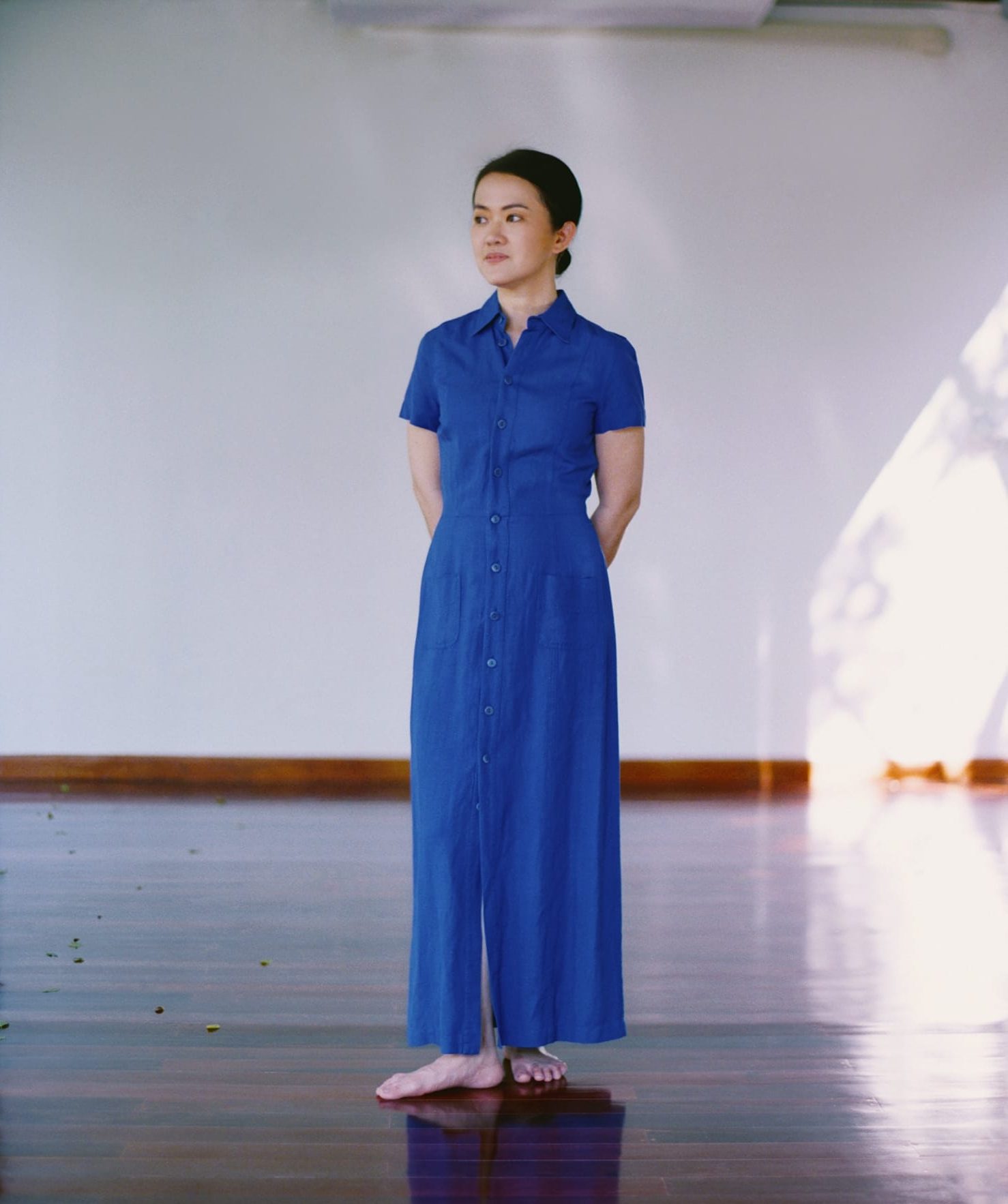
From a park that collects stormwater to Asia’s largest rooftop farm, Kotchakorn Voraakhom is known for visionary projects that rethink how cities adapt to climate change. Based in Bangkok, she blends old knowledge with new tech and always starts with the question: ‘How can we be friendly with the rain?’
What inspired you to become a landscape architect?
My relationship with water goes back to my childhood. I grew up in Bangkok, where seasonal floods were part of life and sometimes even fun. I remember days off school playing in the floodwaters in a boat my father made. That changed during the 2011 floods. My mother was sick, and I saw how vulnerable many people were to contaminated tap water and cut-off roads. Millions were displaced. The experience eventually led me to start Landprocess, my landscape architecture firm focused on climate adaptation.
You’ve spoken about ‘back to the future’ as a design philosophy. What does that mean?
It’s about combining ancient knowledge with modern technology, but also about remembering who we are. Thailand, like much of Southeast Asia, has agrarian roots. In the past, people knew how to live with water through terracing, wetlands and natural drainage. Modern architecture often ignores those principles. I believe we need to return to that way of thinking. In my projects, we use gravity, plants and local solutions, not just to beautify the city but to make it livable again.
That’s why I prefer to talk about climate adaptation rather than resilience or sustainability. Adaptation means understanding what you’re adapting from and to. Adaptation also fits the idea of going back to the future. It respects local knowledge and avoids copy-paste solutions from other places. We are all different, so our responses should be, too.
How do you apply that in your work?
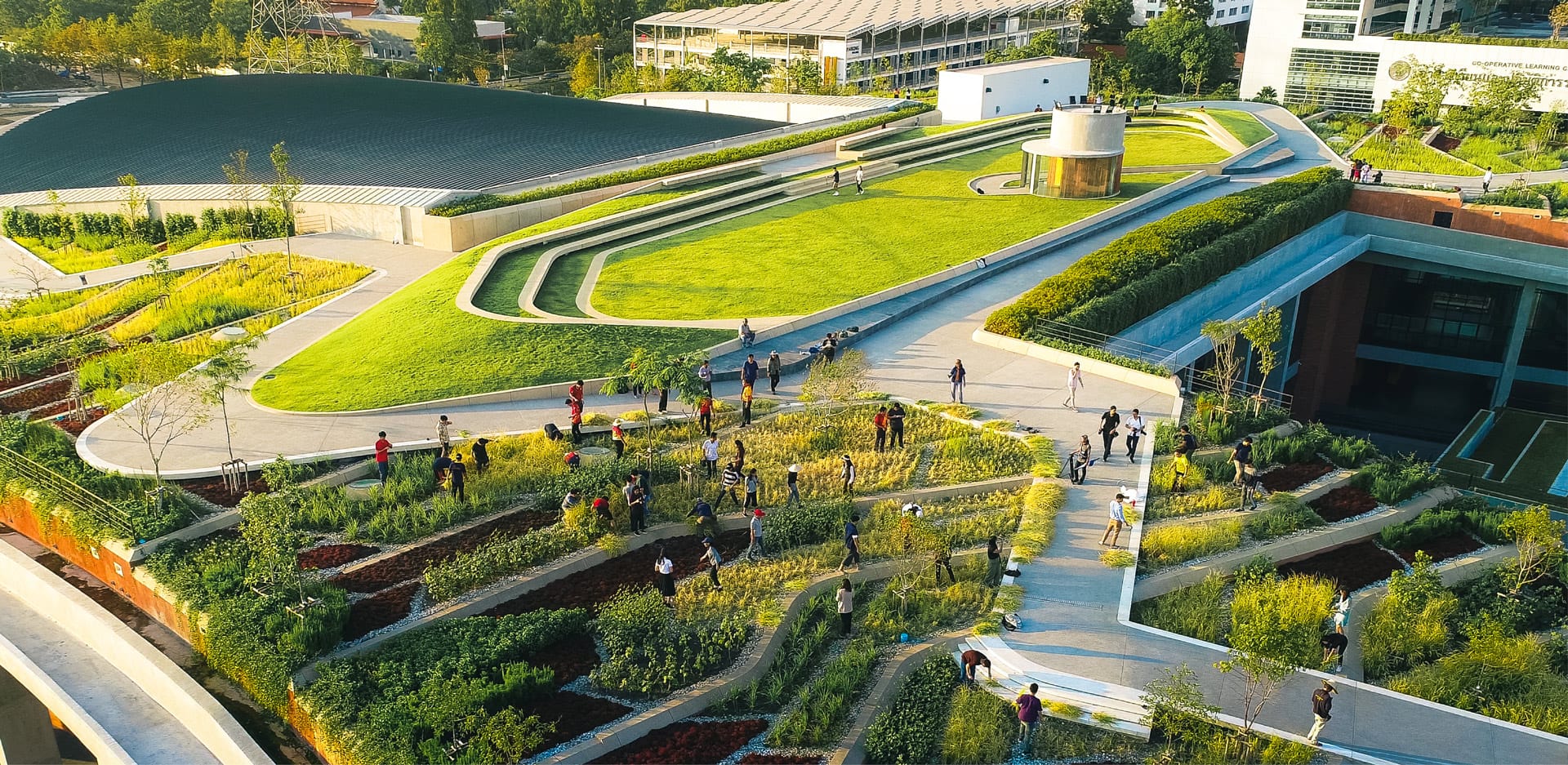
In crowded cities like Bangkok, we have to ‘steal’ space – from rooftops, roads and underused infrastructure. That’s what we did at Thammasat University, where we turned a 22,000-square-meter (237,000 sq. ft.) rooftop into Asia’s largest urban farm. Inspired by traditional rice terraces, the zigzag design slows rain runoff up to 20 times more efficiently than a conventional concrete roof. Rainfall here is often torrential, and runoff is a major cause of flooding because the water can’t be absorbed or drained away fast enough. Four ponds around the building collect the excess water. During dry periods, the water is pumped back up to the roof using solar energy and reused to irrigate crops for the campus. The roof is also publicly accessible, so everyone can enjoy it.
You’ve also designed several parks. What makes them different?
Chulalongkorn Centenary Park was the first new public park in central Bangkok in 30 years. It’s built at a three-degree angle to funnel stormwater through sloped rain gardens into a retention pond that holds 4.5 million liters (a million gallons) of water. Like the rooftop farm, the park helps manage runoff and doubles as a public gathering space. In addition, the slope forms a natural amphitheater – another first in our flat city.
The Chao Phraya Sky Park turned an abandoned rail bridge into a walkway over the river. We had to be creative with the narrow shape, but the bridge now connects communities and provides green space where previously there was none.
Do you have a favorite project?
Yes, the sky bridge at the Thai Government Complex. The original plan was to add more parking spaces to the complex, which houses 29 ministries. But we also proposed linking the site to the new skytrain station. The result is a shaded, plant-lined walkway that manages stormwater and encourages the 37,000 employees to use public transport. It’s an example of infrastructure that’s both functional and human-centered.
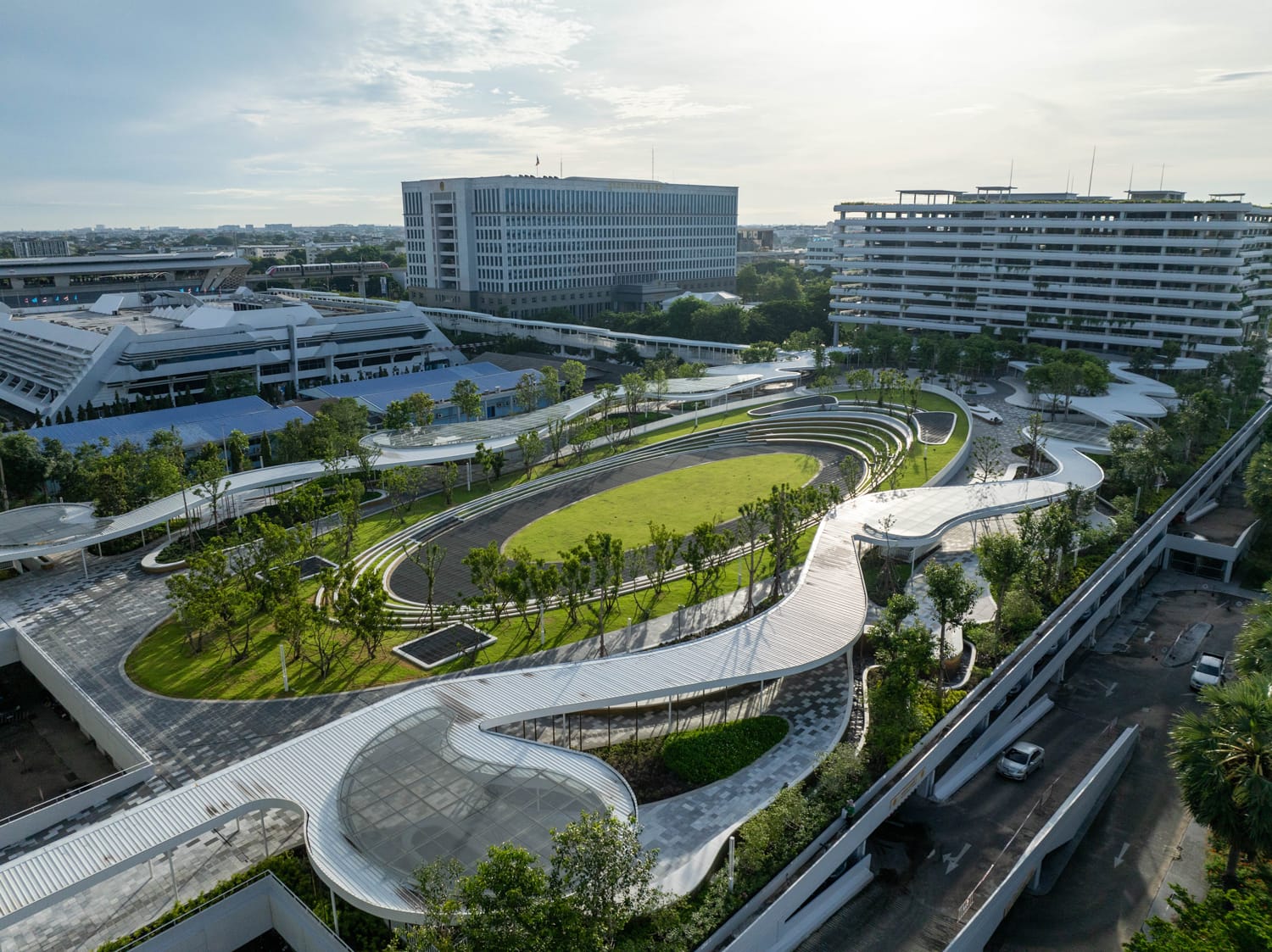
The new Regenerative Government Complex not only adds vital green space, it supports sustainable travel by connecting to a skytrain station. Photo courtesy of Landprocess
What’s one change you’d like to see in Bangkok?
Our canals were once our lifelines, but many are now paved over or polluted. If I could change one thing, I’d restore the canal system. It would improve drainage, reduce flooding, create green corridors and reconnect people with nature and each other. If we reimagine canals as public space and ecological networks, we could shift the entire urban fabric of the city. That’s my dream: not to fight water but to find ways to be friendly with it.
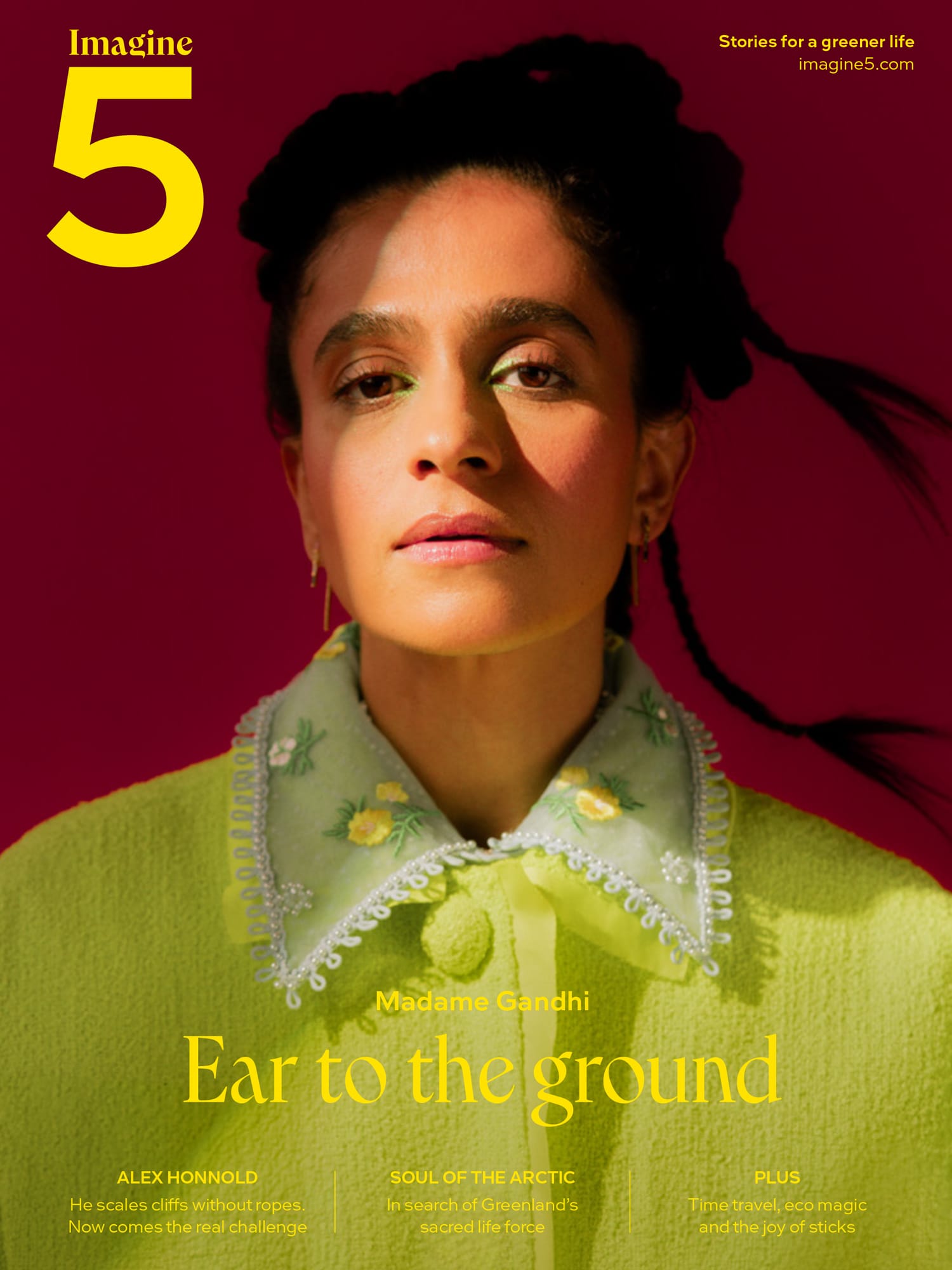
Cover star Madame Gandhi on the sounds of the Antarctic, free climber Alex Honnold reveals his biggest challenge yet, actor Rainn Wilson embraces his soulful side and much much more!
CLIMATE TECH