In the wilds of southern Utah is a sprawling forest of 40,000 trees that together are actually one being. This is Pando, an ancient and massive grove of aspen trees – believed to be the world’s largest organism. What can we learn when we realise that like Pando, instead of one, we are many?
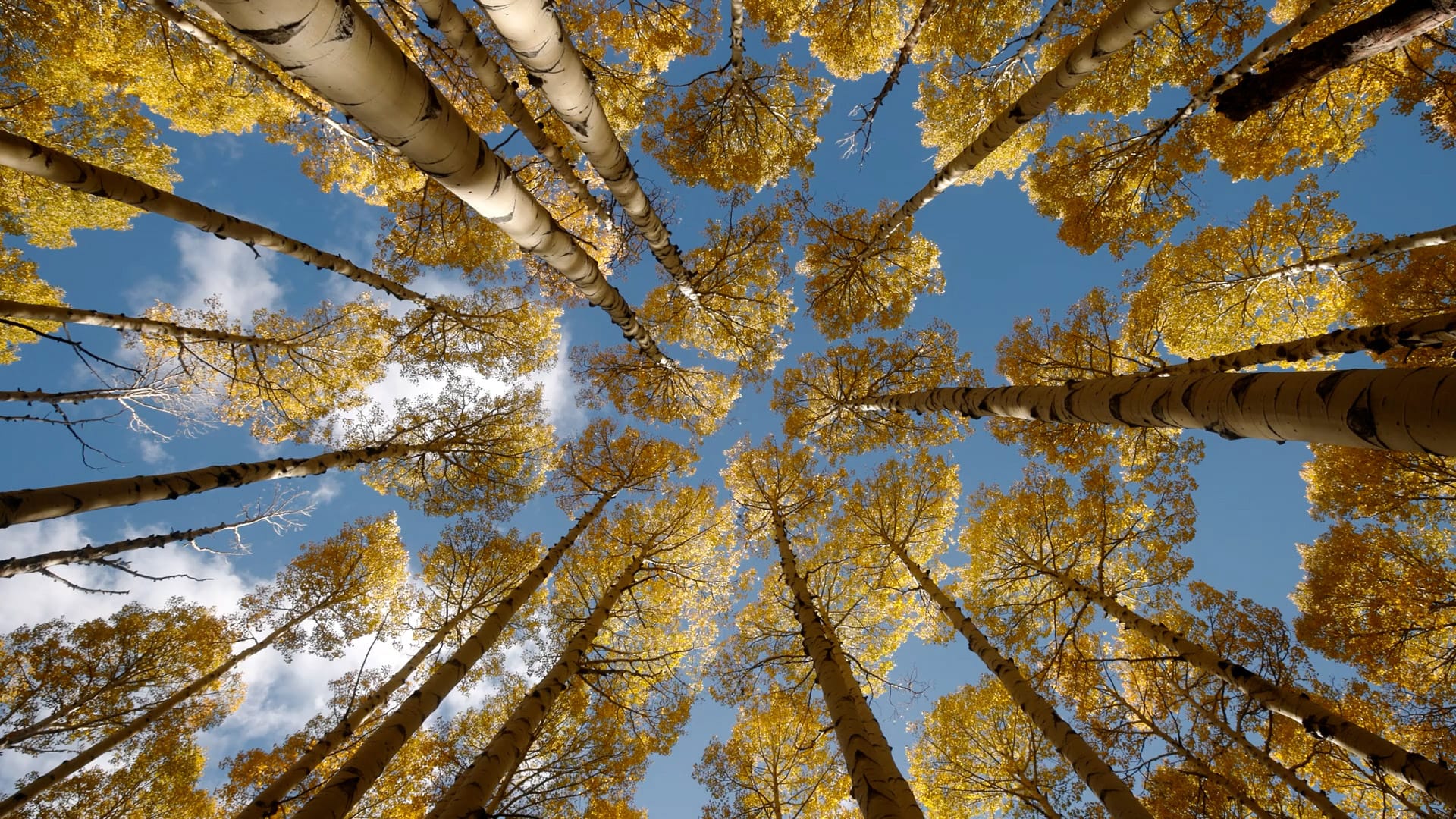
The Pando aspen grove welcomes me as an old friend, though I have never been here before. Sun filters through the airy canopy, the fluttering leaves set to chattering by the tickle of a breeze. It is music I know well. The trees’ white trunks draw me to them, inviting my touch. Unlike the rough trunks of mountain pines, Aspen bark is soft, the cheek of a grandmother. My palms and fingers come away yellow with the aspen dust I know is the detritus of bark cells but that I grew up calling fairy dust. I streak my fingers across my cheeks, slide my hands down my bare arms. My childhood self remembers the magic, remembers games hiding among the trees with my sisters and cousins, transformed to a yellow-hued woodland sprite. My memories are from a different aspen grove, in my home state of Colorado, yet visiting this living monument in the mountains of Utah, I have come home.
“The trees appear to be individuals but are actually one being”
Earth journeys near to the summer solstice the day I visit. The sun draws song from the birds as surely as it draws new aspen shoots from the ground. It is these aspen shoots that are the vitality, the wonder, the mystery of Pando, for this grove of trees is not what it seems. The quaking aspen, named for the way its leaves rustle in the breeze, grows not just from wind-dispersed seeds but from roots that spread silently and unseen beneath the ground, sending up new trees toward the sun like scouts. A single aspen can spread into a vast grove of clones, all outposts of the same mothership, until it covers many acres. The trees appear to be individuals but are actually one being, one community. One that is many.
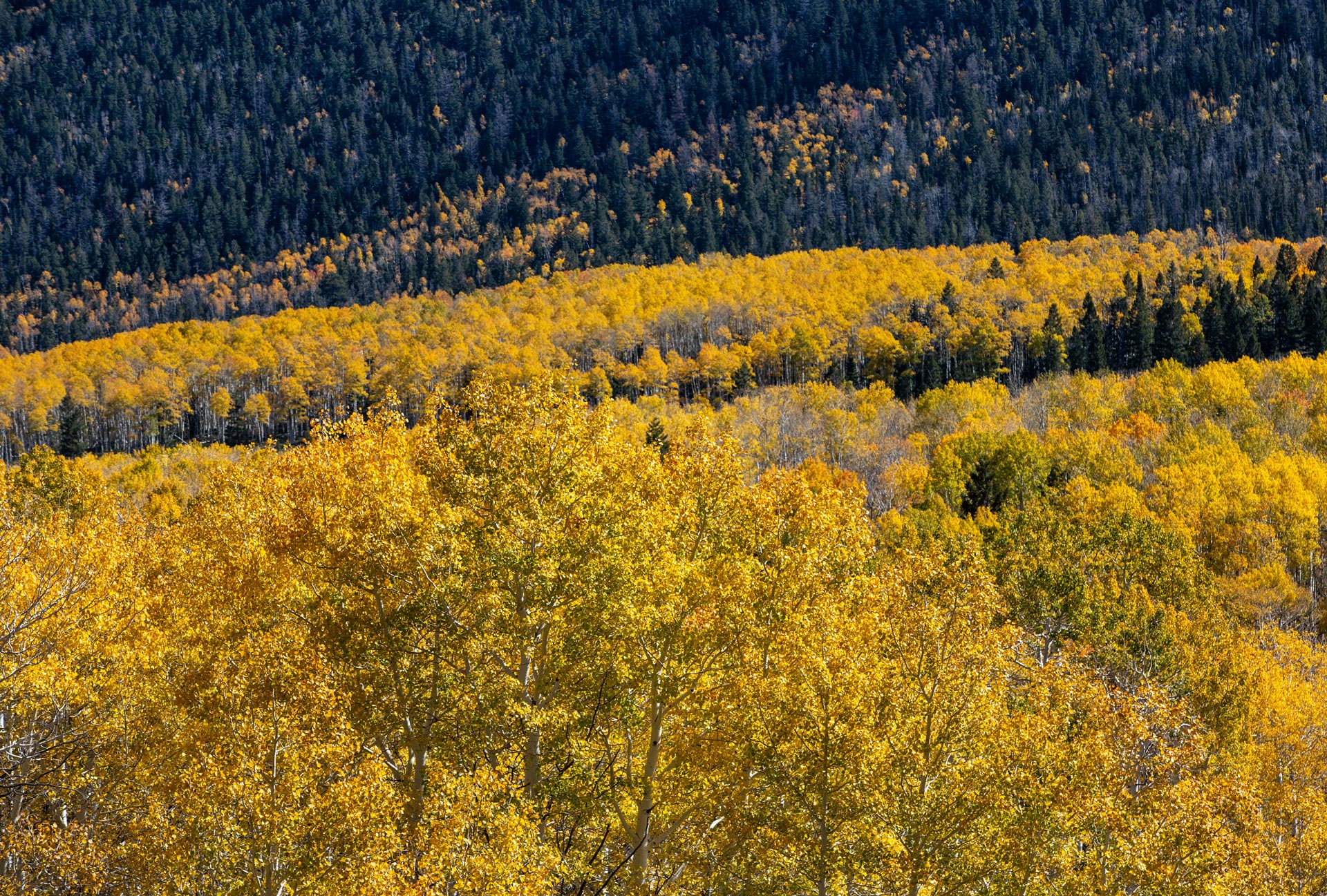
40,000 trees, one organism
In this way, the Pando aspen grove has been growing for at least 10,000 years. Its estimated 40,000 individual trunks spread from a single root system across 106 acres. Nothing of the founding tree remains, but its genetics continue across centuries, an immortal. A living thing that has endured fire and storm, the onslaught of insects and disease, of browsing wildlife and human action since the end of the last Ice Age. Pando is considered the largest organism, with a lattice of roots and stems thought to stretch 12,000 miles or, halfway around the world.
The name Pando is Latin for “I spread”, and in naming it, we give it an identity. It becomes more than a place, but also a friend, an elder, a guide.
Whispered wisdom
Along a trail through the Pando grove, I follow a deer’s heart-shaped footprints. White trunks reflect a leaf-filtered light tinged faintly green. The humic smell of soil, new growth, and the earthy perfume of aspen is in the air. Around me, the trees of Pando enclose me in a comforting embrace as the aspen begin to speak. Susss, susss. I lean my head close to the quivering leaves to hear their words, this dialect I do not speak yet somehow understand.
“What could humans overcome if we stood together and acted as one?”
The oldest trees tower 80 feet above me, ranks of elders swaying in the breeze, their oval leaves whispering urgently. In the ground beneath my feet, the Pando’s complex tendrils of roots spread. Through these roots, Pando shares water and nutrients among its many trees. If one part of the whole has abundant water, Pando’s roots carry that resource to drier stems. If a tree begins to die, the mother roots birth new shoots to replace it. A paved road runs through the middle of Pando yet the roots persist beneath, new trees popping up either side of this intrusion. We will not be stopped, Pando shows us. I wonder, what could humans overcome if we stood together and acted as one?
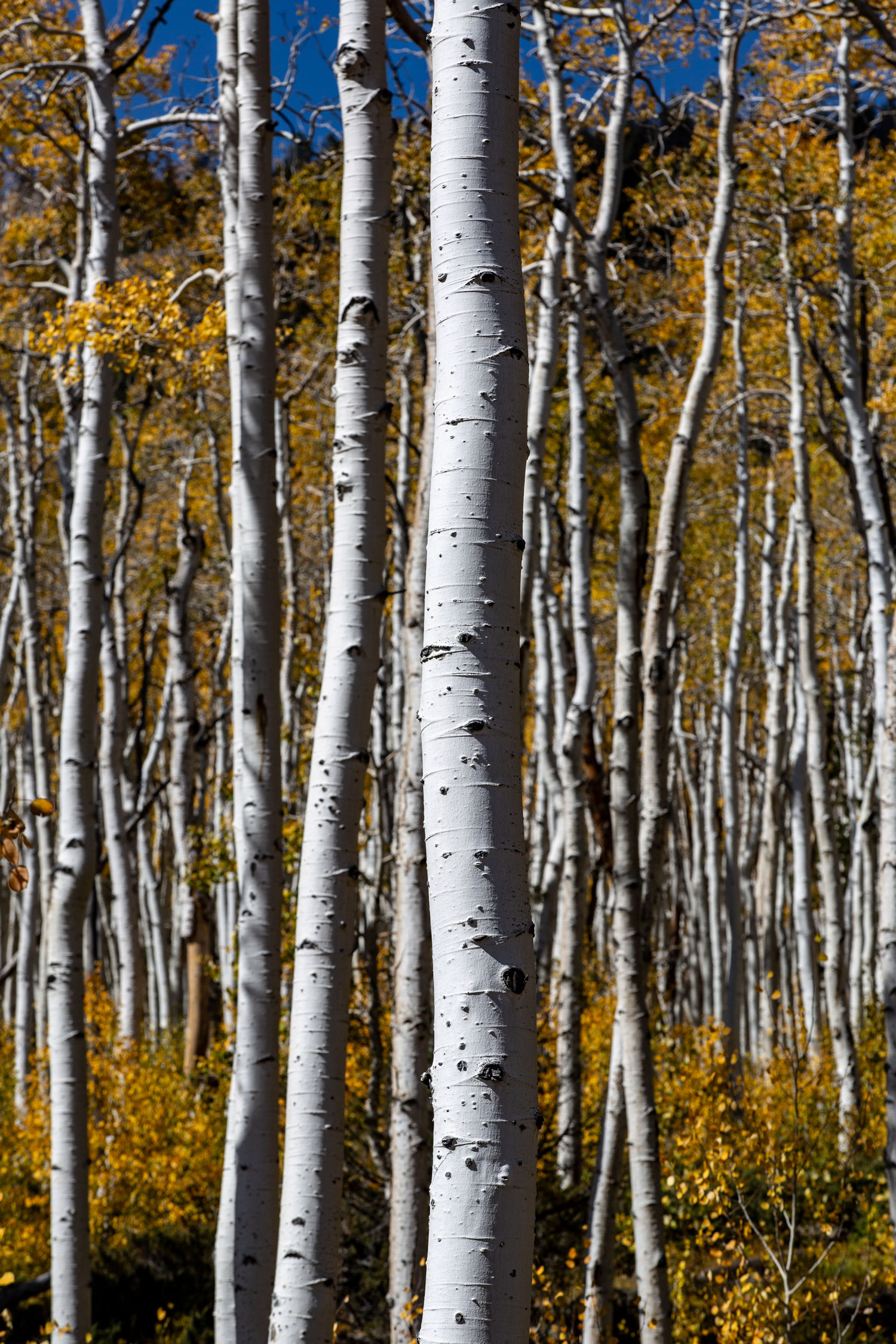
Apen trees are known for their tall, slender stems and smooth white bark. Photo: George Rose / Getty Images
Sharing, communication, renewal. This is how Pando has survived for so very long. Is this not what defines community? All things here are connected, not just the aspen but the plants and flowers that thrive in its shade, the bees and butterflies that feed on them. The birds nesting in its boughs. The fungal mycelia entwined in its roots. Can we embrace that the natural world is our community too, that our survival depends on its vitality?
Birds, bees and butterflies
A boulder beckons, offering a seat speckled with green and orange lichen like a Jackson Pollock painting. I settle on it and take everything in. A swallowtail butterfly teeters above the wildflowers with just an occasional wing flap. I hear the rasping voice of a house wren, a robin’s cheery song, the chatter of swallows carving loops overhead and the fluting voices of Cassin’s finches. The spicy scent of sagebrush teases my nose. Beneath the trees, wild rose, serviceberry, lupine, holly grape with purple berries. Blue butterflies kiss the bell-shaped blooms of penstemon as if absorbing the blue of the flower along with its nectar. A bumblebee, so heavily laden with pollen its legs wear wooly yellow trousers, drones over fuzzy pussytoes, moving blossom to blossom. A beetle, black-shelled, alights on my leg and explores the landscape of my hiking pants. It gleams iridescent green and copper, a tiny prince. Then it flicks open its wing covers and motors off to more interesting terrain.
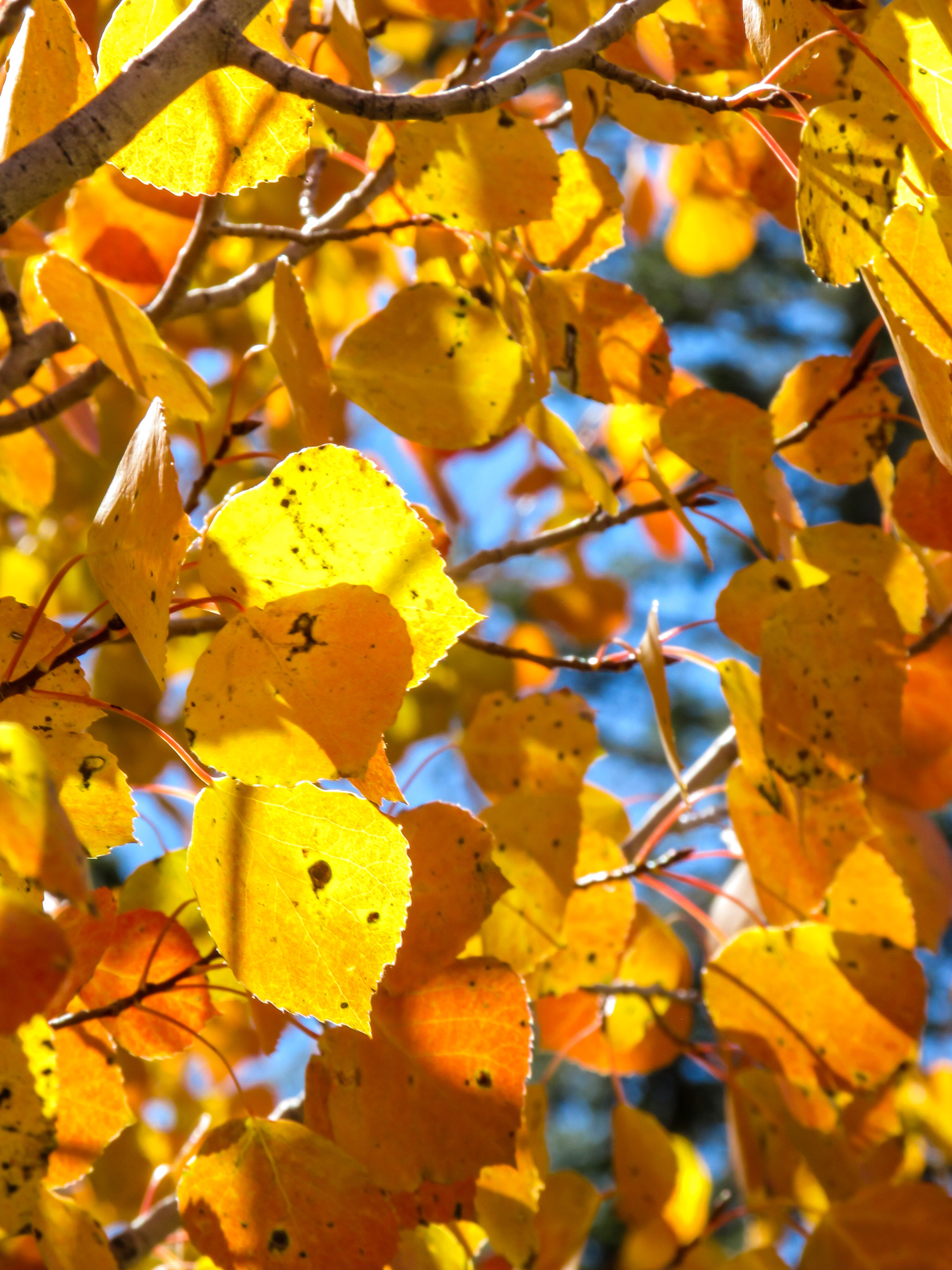
The leaves tremble in the wind, which is why this species is also called ‘the quaking aspen’. Photo: Marieke Peche via Getty Images
How many nests hide among these pale barked trees, fostered within the womb of this single massive tree? I sense the heartbeat of Pando among its many stems and quivering leaves. Do I also feel a humming from the roots below me? From deeper in the grove, the loud, hollow drum of a red-naped sapsucker surprises me – two deep, somber notes followed by a rapid drumming. Then the scream of a red-tailed hawk from beyond the trees. And always, behind the other voices, the susss of aspen.
Under assault
Deer and elk wander the aspen as well, the signs of their browsing marking the soft trunks. They are part of the community too, and have always been. But in the past, wolves and cougars kept their numbers down naturally. Today a decline in these predators means there are more deer and elk nibbling down new shoots and tender twigs, stunting the growth of new generations. They strip the soft bark from the trunks and rub their antlers on the trees. The gashes and wounds leave the trees open to infection and invasion by insects. In 1992, a section of Pando was enclosed by fencing to keep out deer. But what grows within is a toothpick forest, hundreds of closely-packed trees with trunks no more than four inches in diameter. Limited light penetrates the canopy and little grows beneath the trees. The toothpick forest is devoid of birdsong, of the buzz of bees. It shows us the consequences of human action to address a single threat without understanding the complexity of a community. The many toothpick trunks are protected from the browsing of deer. They are nearly unblemished, white, pure. But they stand in a silent grove.
Even unfenced, Pando is under threat. Aspen forests throughout the West are under assault. As temperatures rise with climate change, there is less rainfall. Hotter days and lack of water stress the trees. They grow weaker, less able to fight off insects and disease. Young aspen struggle. The elders tower above them, a century old, but they stand above a forest that struggles to replace them.
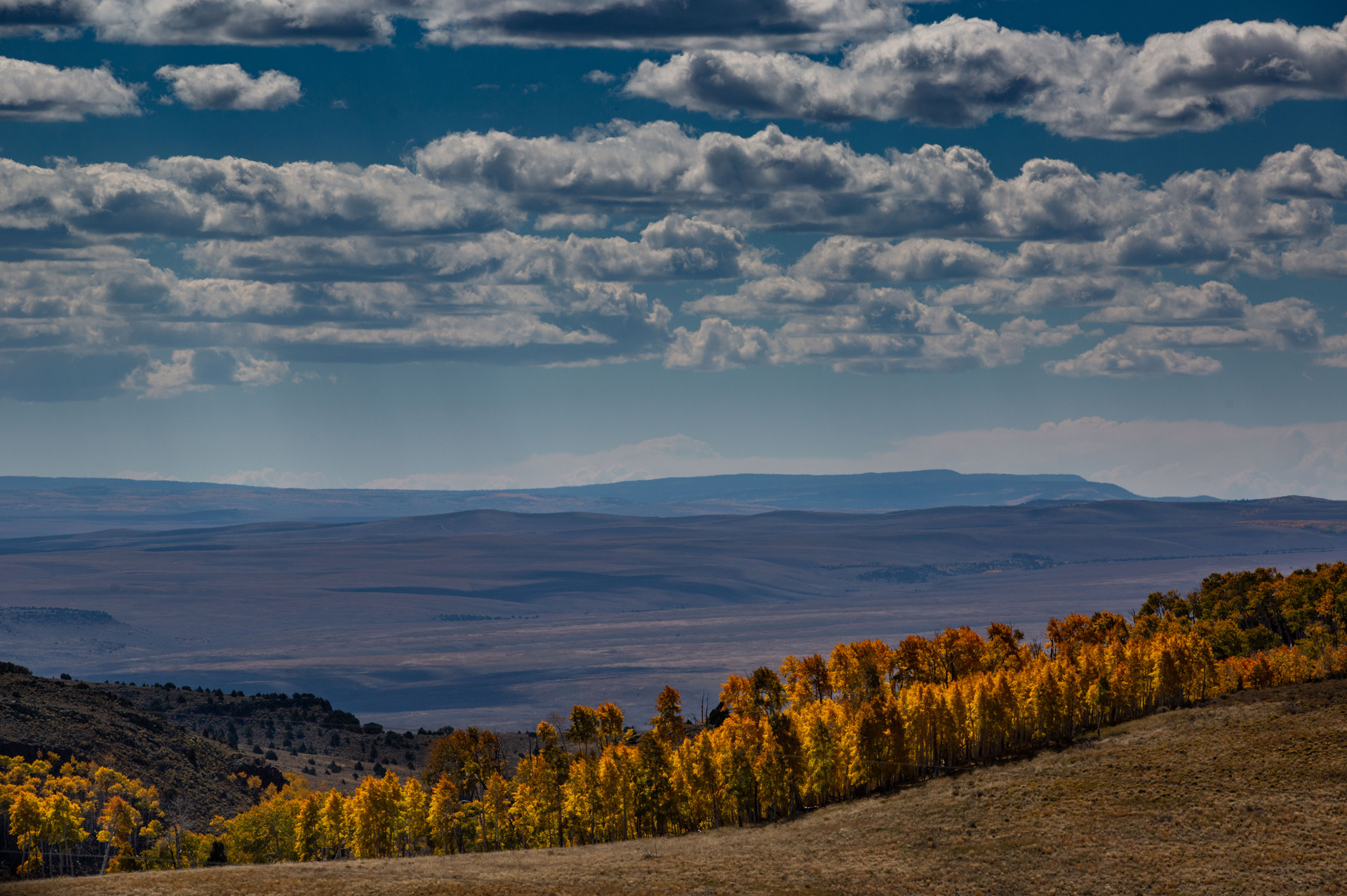
With summer on its way, a very real, climate-fueled danger encroaches upon Pando. Fire. A year ago, the 72,000-acre Monroe Canyon fire came within five miles of Pando’s western edge. Wildfires are a natural force, but climate change makes them fiercer – roaring larger and hotter than before. But Pando has survived countless wildfires over thousands of years because it has a secret weapon. Community. While a fire rages through the visible forest, the throbbing heart of Pando lies safe beneath the ground in its roots. Even as they are dying, the burned-over trees begin the community’s healing, sending chemical signals through the mother root system that trigger new stems pushing up through the destruction.
Listening to this ancient tree-that-is-many, I hear the wisdom in its whispers. There is power in community. Stay connected, work with others, share resources, communicate with those around you. Don’t give up. Be resilient. Rebuild. Serious threats will come but if your community is prepared, you can survive. In these whispers we can find strength and resolve. It will keep sending up new shoots, reaching for the sky. And so must we.
Focused on the wonderful world of rewilding, Volume 5 sees us get into the weeds – and go beyond the ferns – with our green-thumbed cover star Zach Galifianakis, walk with wolves in Slovenia, create a wilder world in Denmark, find meaning in fashion, and much, much more.