We spoke to vegans, vegetarians and omnivores around the world about how their diets impact their romantic lives – and what it has taught them about love.
Sophie was fed up. The 25-year-old stopped eating meat in 2018 – for environmental reasons and because, as a student, it made financial sense. She had no idea that becoming a vegetarian would impact her romantic life.
Talking to dates about her dietary decisions never seemed to go easily, Sophie says. People were either “taken aback”, or they made “really ill-informed comments”, like not understanding the difference between veganism and vegetarianism. “How do you not know this?” she remembers thinking, and “why is this such an alien concept to you?”
Eventually, Sophie got into a relationship with a man who “couldn’t fathom a meal without meat” – which meant they never cooked together. She wasn’t fussy about meat being cooked near her meals, but a no-meat, no-meal stance was just annoying. “It’s just a bit of an eye roll,” she said. “Why is this so difficult?”
Dating while vegan
What we eat intersects with so much of our daily lives, so it’s no surprise that dietary differences can impact relationships. It’s also a reflection of our values and ethics, since eating less meat is one of the simplest and most impactful things an individual can do to fight climate change – and prevent harm to animals. Beef, in particular, has around 20 times the climate-heating impact of plant-based proteins.
The reddit forum r/vegan is filled with stories about the struggles of dating while vegan – the loneliness of searching for connection in an already difficult dating landscape, or relationships breaking down because of non-negotiable beliefs being sidelined and misunderstood.
But spare a thought for the meat eaters too. There are plenty who are open to dating people with all kinds of dietary preferences, but don’t want to be judged for their own. While some omnivores view their dietary requirements as an obstacle to finding love, others are excited by the prospect of sharing their beliefs and intricate understanding of food and flavor with lovers.
“I would have a really hard time being with somebody who wasn’t vegan,” says Coco, a 25-year-old entrepreneur who lives in the US and is passionate about environmental justice. She’s been single for about four months, after parting ways with her ex-boyfriend, who was also vegan. “After being in that relationship, it showed me how much of a need it is,” she says. “It’s not even about just eating the same food,” but rather: “do we have ethical and moral alignments in how we see the world and our impact on it?”
A dish made for sharing
For centuries, food and love have been closely intertwined. The sensory pleasure of eating lends itself to intimacy and allurement.
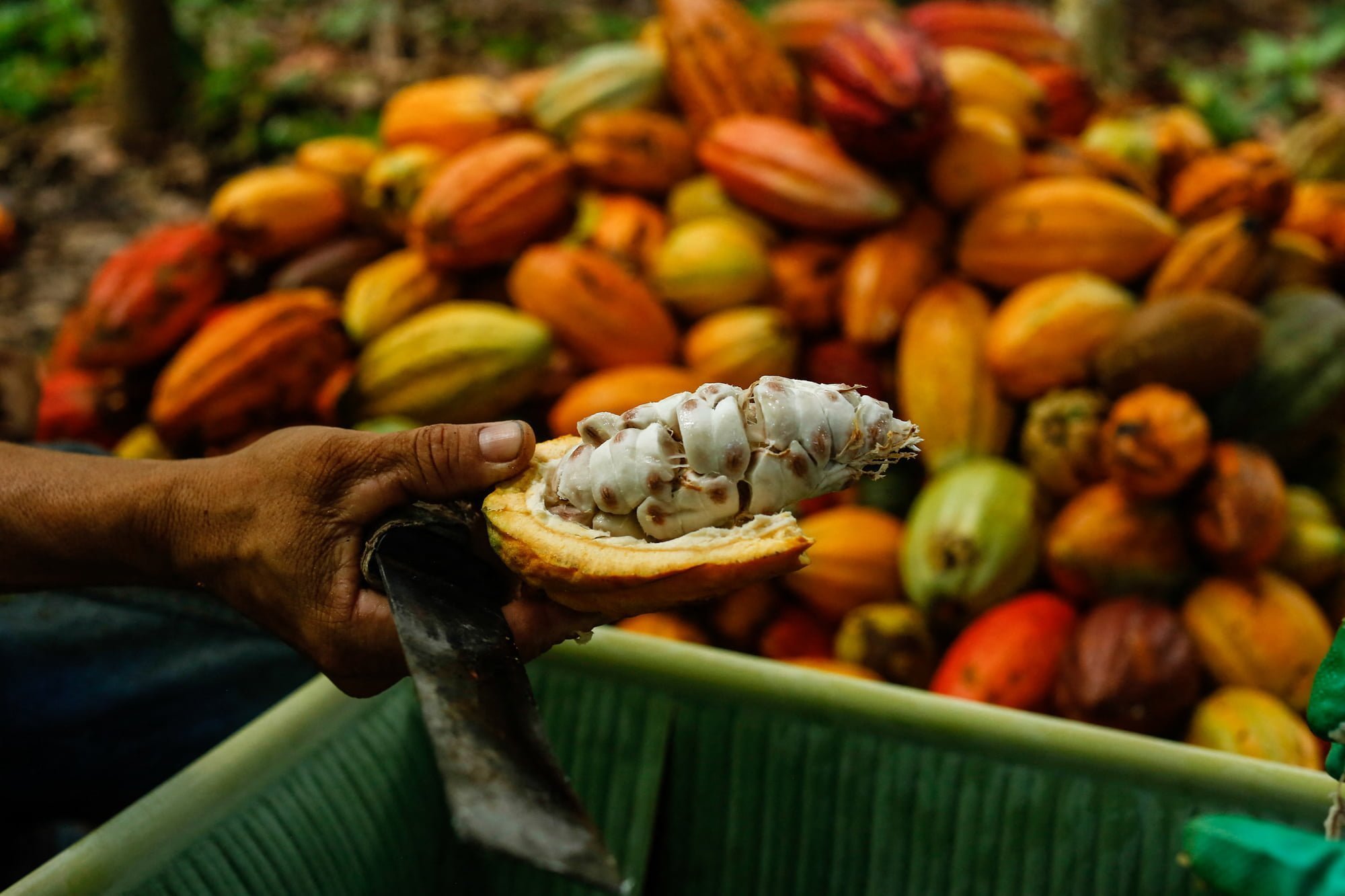
It’s said that the ancient Aztec ruler Moctezuma sipped over 50 cups of chocolate ahead of visiting his harem, while the 18th century adventurer Giacomo Casanova slurped oysters for breakfast – and praised their seductive qualities in his diary. The familiar modern courtship ritual of ‘wining and dining’ conjures up images of rich, gluttonous meals like lobsters and sizzling steaks. But according to vegans, plant-based sushi bowls can be just as romantic.
“We both got our sad, cheeseless pizzas, and I was like, ‘aw this is so nice’”
Hope, 28
Since becoming vegan, Coco has developed a microscopic appreciation of spices and nutrients – and she wants to share it. It “opens up this whole new genre of cooking,” she says, “You’re understanding the food itself.” She recently started dating another vegan who whipped up two bowls of ramen for them during a date, and they both got excited by the meatless chicken he put in the broth. “It’s just such a beautiful point of bonding because you also get to explore nutrition in a new way,” Coco says, “There’s this new creativity that’s unlocked.”
Evidence supports the idea that enjoying food together does us real good. Married couples who dine together are more likely to report maximum happiness in their relationship, and the more meals eaten with others, the more satisfied people are with their lives.
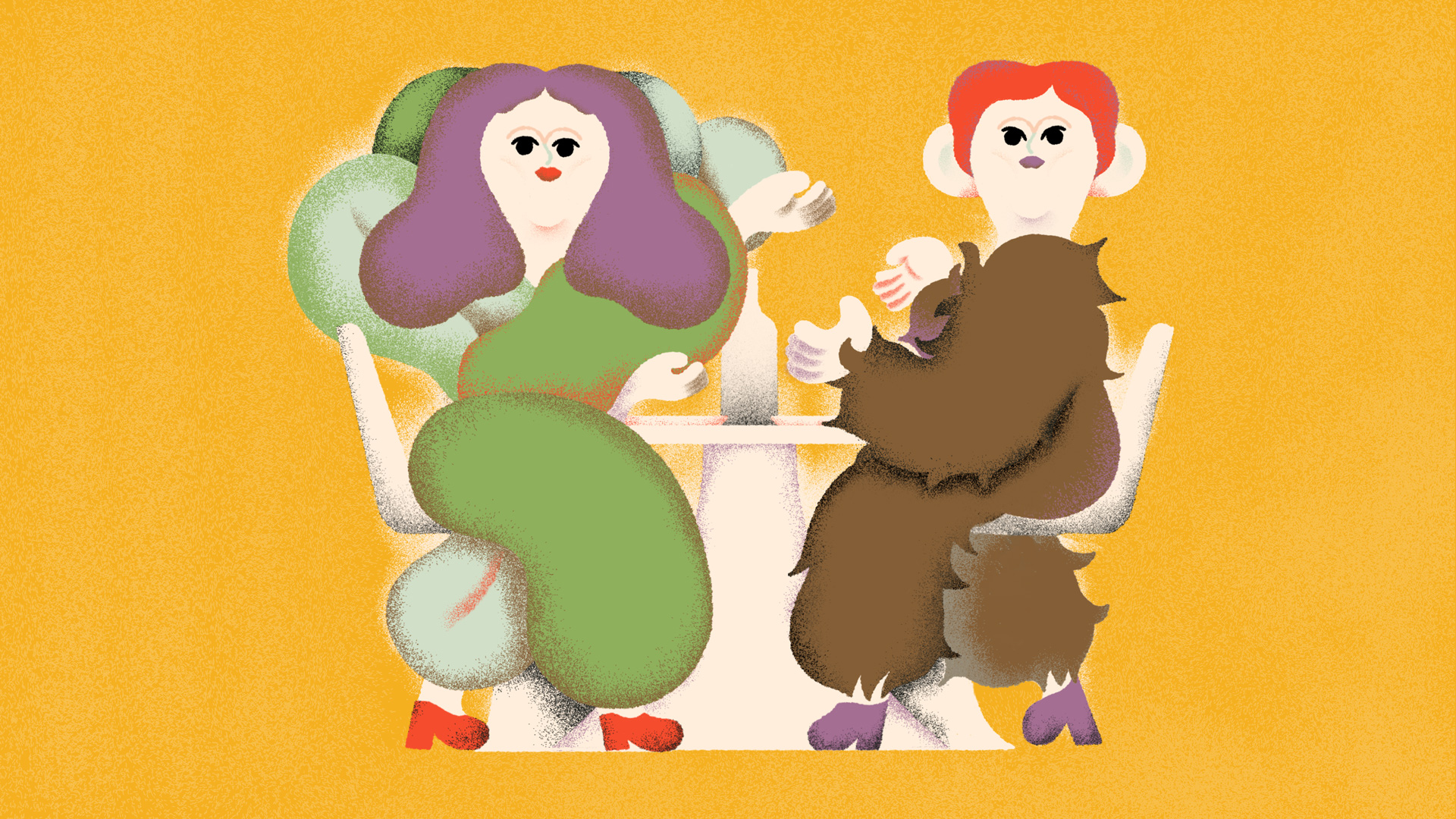
“It’s really nice being able to try loads of different things together,” says Hope, a 28-year-old civil servant, who has been vegan for about nine years and has been in a relationship with a vegan for nearly a year and a half. The couple met on Hinge and realized that they were both vegan on their first date. “We both got our sad, cheeseless pizzas, and I was like, ‘aw this is so nice,’” Hope laughs. These days, the pair cook a vibrant array of dishes together, from tabbouleh to ramen to ful medames (an Egyptian fava bean stew). “Cooking is such a big way that I unwind,” Hope says, “being able to do that with someone that has the same outlook as you is important.”
The meaning of meat
For other vegans, however, being able to eat the same dinner as their partner is low down their priority list for love. Poppy, a 39-year-old entrepreneur and events producer, was married to a meat eater for ten years, and says that in Brazil, where she is from, heavy meat diets are the norm. “People always want to explain themselves, like how much meat they eat,” she says, “I really don’t care. You can do whatever the hell you do. I just don’t believe in preaching.”
Several vegans we spoke to mentioned feeling particularly affronted by ‘gym bros’ who were obsessed with protein intake and would grill them about their diets. Poppy sometimes feels like they judge her for not eating meat. “I’m always having to explain myself. No one asks, like, ‘wow, you eat meat?’, but they ask, ‘why are you vegan?’ as if you have a disease,” she says.
Almost everywhere in the world, there are fewer male vegans and vegetarians than there are females, with meat consumption typically linked to signs of masculinity, strength and dominance. In particular, research suggests that younger men are eating more and more meat. In a study by UK environmental charity Hubbub, men were cited saying things like, “No one wants to be the guy in the pub ordering a veggie burger,” and, “The more meat you eat, the more masculine you’re going to be,” in their research. Although Poppy isn’t concerned what her partner eats, if anyone would judge her for her own choices, she’d see it as a handy red flag that could save everyone time and hassle. If they say something like, ‘I would never date a vegan’, “I immediately know you’re not the person for me, which is almost like a good filter,” she says.
A little give and take
For some meat eaters who don’t want to date vegans, the reasons are not what you might expect. Lola, a 26-year-old living in London, was once vegan herself. But when she got into a relationship with a man who ate meat, she ended up allowing animal products back into her diet. With time she began to look back on her teenage decision to go vegan, and see it as linked to her disordered eating. It was the perfect excuse to say no to cake and biscuits. When Lola and her boyfriend broke up, she continued eating meat, and nowadays she doesn’t think she could easily date a vegan. “The idea of suddenly now being like, ‘okay, now you have to give up everything,’ I would find quite triggering,” she admitted. “It’s so connected to me being a depressed teenager who wanted to lose weight that I actually don’t know if I could ever have a relationship to veganism.”
For some people, like Jazz, a 29-year-old lighting technician in Berlin, being vegan in a relationship with a meat eater is a continual exercise in empathy – of recognizing someone else’s unique needs as separate to their own. Jazz advocates for their partner, who is anaemic, to eat meat. “I knew it was a pure love when, for the first time since being vegan, I cooked meatballs for them,” Jazz said. Recently, the couple were eating a takeaway, when they realized that Jazz’s partner had accidentally ordered chicken instead of a vegan alternative. Jazz said that their partner was more upset than they were. “You can’t be hard and fast about those rules. You have to be willing to have exceptions or be willing to make compromises,” they said.
Sophie has also found romance in the gives and takes. Last summer, she’d virtually given up on dating apps when she came across a man on Hinge who caught her eye. He’d put ‘pick our first date’ as one of his prompts, with an array of options, including a picnic where he would provide the snacks. Nearly a year and a half later, they’re still together – despite the fact that he brought a charcuterie board along to that first date. Sophie has introduced fish back into her diet, while her boyfriend enjoys eating more plant-based meals. “He even said, maybe six months into our relationship… ‘you’ve actually opened my mind a lot,’” Sophie says. A healthy relationship is always an act of compromise, and for many meat-eating and non-meat-eating couples, negotiating diet is a way of understanding each other’s values and get into each others’ rhythms. Whether it’s learning how to make a vegan mac and cheese or picking a restaurant with plenty of vegetarian options, dietary differences are just another opportunity to recognize each other and perform acts of love.
Some names have been changed
Cover star Madame Gandhi on the sounds of the Antarctic, free climber Alex Honnold reveals his biggest challenge yet, actor Rainn Wilson embraces his soulful side and much much more!
FANTASTIC FOOD