Known for her uplifting electro vibe, Madame Gandhi has a new muse – nature herself. She’s even sourcing her own organic sounds to help us all tune in and engage with the climate.
When I meet Kiran Gandhi, the 36-year-old musician and activist who performs under the stage name Madame Gandhi, I’m anticipating someone to float into the room like an earthy goddess. There’s that name, after all, not to mention the resume. This is a woman who once ran the London Marathon while free-bleeding, to make a point about menstrual stigma. She’s the kind of socially minded poly-hyphenate who drums, Djs and is always finding new ways to show up for the climate.
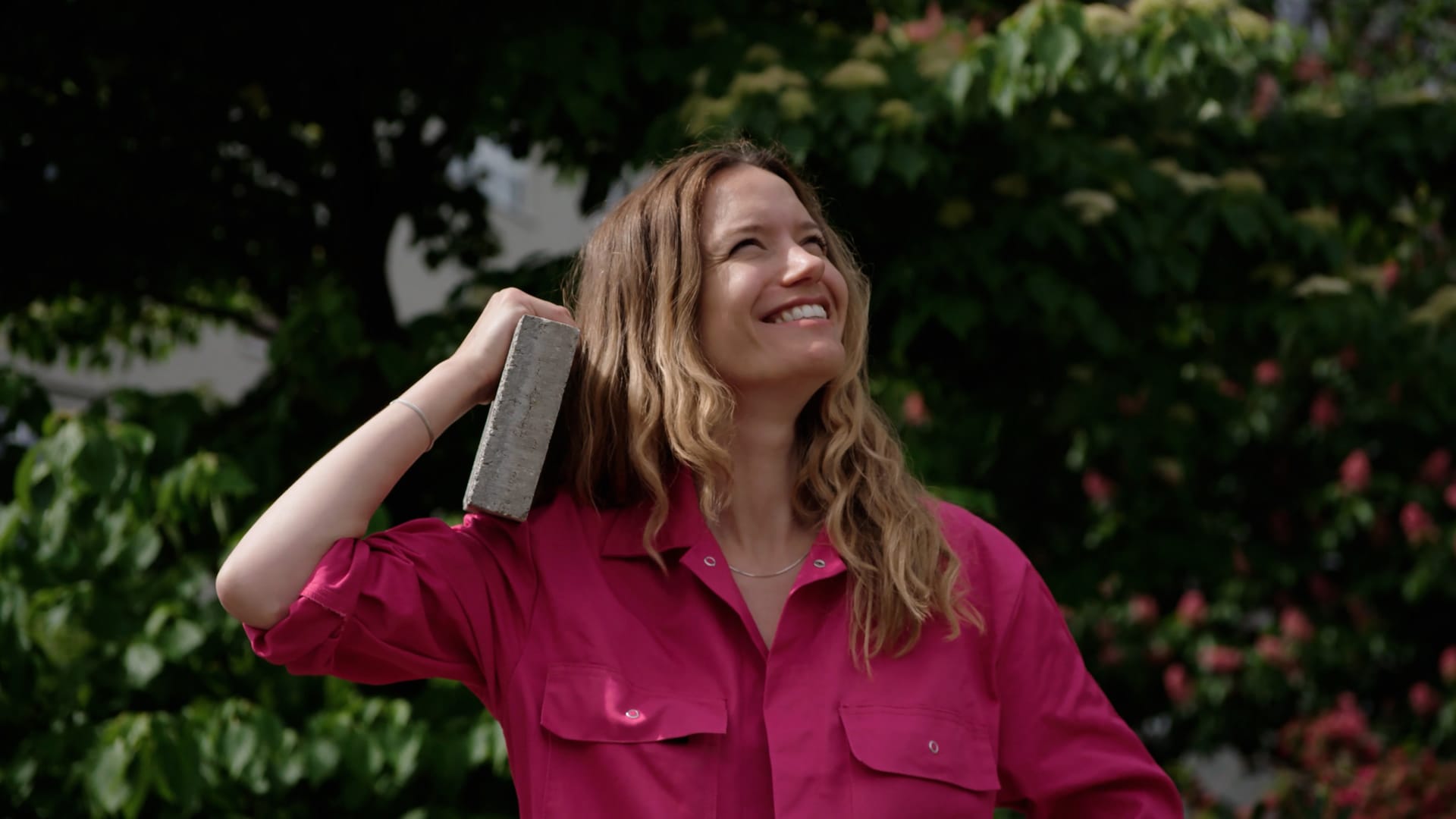
So when she greets me in the lobby of her hotel in Williamsburg, where she is staying as she preps for a gig at the Brooklyn Bowl, I am surprised to see that she is more glam than granola, exuding urban cool in sunglasses and head-to-toe Gucci.
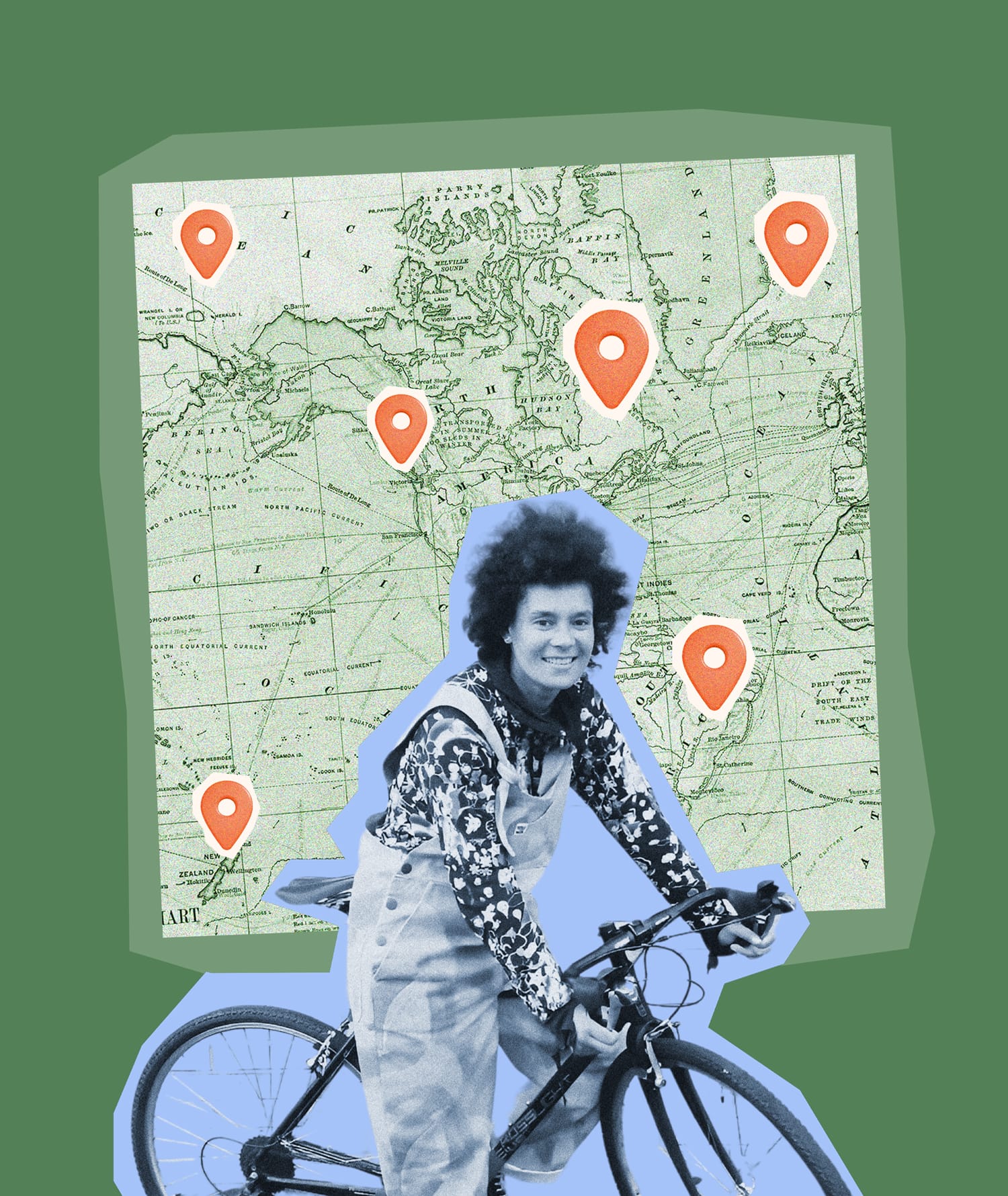
But Gandhi’s not interested in the high life. She had a taste of it a decade ago, traveling the globe as M.I.A.’s touring drummer, in a world of big labels and the relentless pace of the music industry. Instead, she made a conscious choice to remain independent, able to pursue offbeat projects, and releasing music or performing shows when they can make an impact. Such as the field recordings she took during a trip to Antarctica in 2022, with a microphone as her witness. “The sound of the glaciers melting is the most beautiful and tragic sound at the same time. There’s this chemical process that happens… the sound underneath is the air bubbles being released,” she says. “That ended up being sort of the identity of the music I’ve been making.”
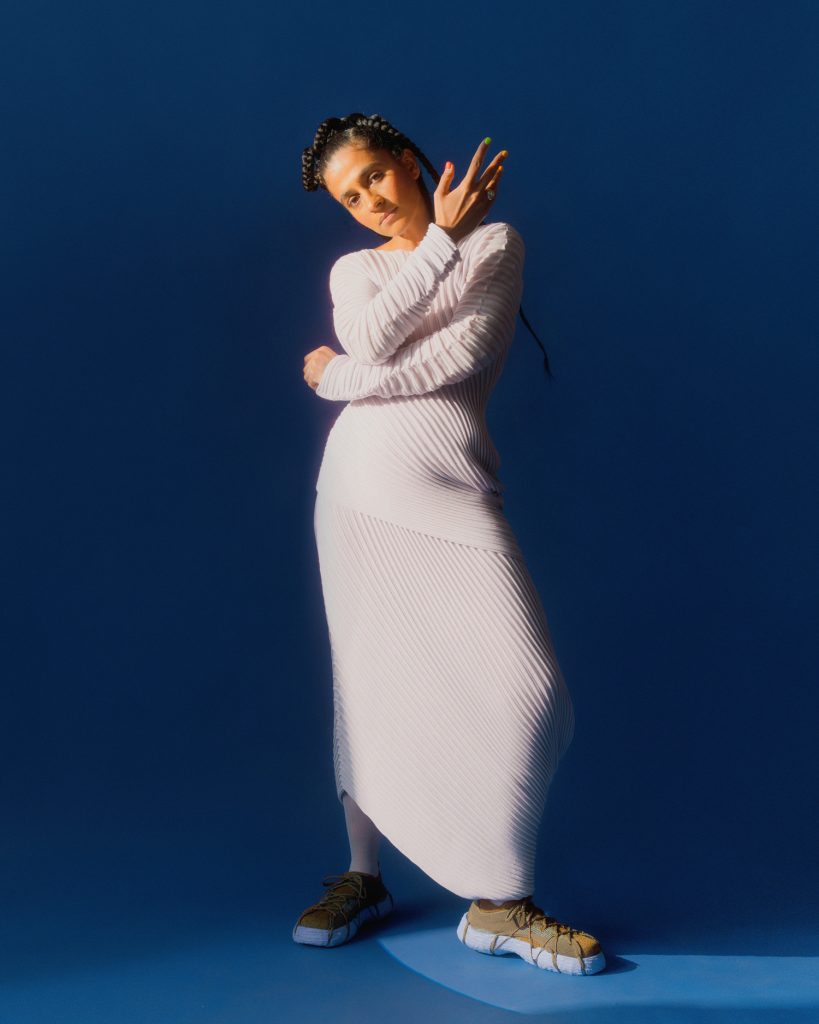
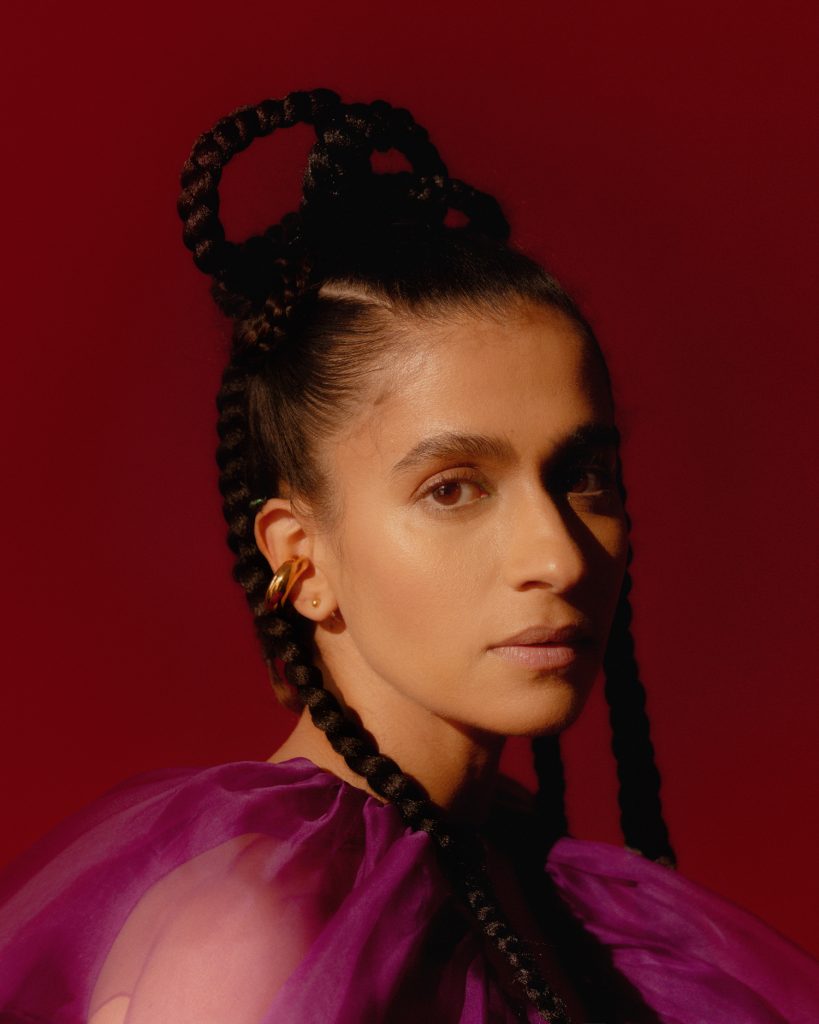
It’s an encounter that has stuck with her and continues to infuse the choices she’s making – artistic and personal – even years later. “That trip was absolutely transformative,” she says. “I’ll never forget the full moon in Antarctica. The whole place glistens in the nighttime.”
Rather than hoard these experiences for her own music, Gandhi released a pack of more than 250 sounds from the trip for others to use in their music too. These are sounds straight from the frontlines of climate change and include gentoo penguin squawks, seal growls and Antarctic winds. They’re freely available on sample-sharing platform Splice. Why share this hard-won material? She’s eager to amplify her impact: “As a musician, can I use my gift, my talent, my passion, to create empathy and awareness around climate change and can it inspire climate action?” she asks herself in a video documenting during the trip.
Sounds from her Antarctic adventure are also interwoven into the title track of her new album, Let Me Be Water, which she says “celebrates nature and humanity’s role in the environment”. An invigorating statement of purpose and adrenaline that goes against the grain: brief and eclectic, the album is both high-voltage and meditative, designed to shift listeners into new gears through spoken-word interludes and effervescent production. “It’s like a podcast musical speech – uplifting, motivational. You can put it on in the morning to get the day going,” she explains.
One of the opening singles, Pisces Knockout, is a tapestry of influences and references that weaves together beats made from the sound of the sitar, autotune, and a narrative incorporating two seemingly opposing traits – a fighting spirit and the zen of a yogi: “Pray with mind’s eye/ Namaste,” Gandhi says in the intro. “Hit the boxing gym/1-2-3, hook/Keep a fight on it.” It’s a mentality she is putting to good use in the causes she advocates for, where poetry has the power to move but persistence gets you in the ring and ensures your message hits home.

Not nature but nurture?
Considering her intimate collaboration with nature, Gandhi’s affinity for it came late, not until adulthood. She was raised in Manhattan in the 1990s and 2000s, a time and place where people rejected all things outdoorsy with pride. “We grew up ordering food as a flex… the fact that we could exist in the city 24-7 and call a cab at any moment,” she remembers. “It was such a wonderful time, but I had no desire to be in nature. I just used to find it abysmal. Central Park was our nature.”
It wasn’t until Gandhi moved to Los Angeles in her 20s that she began her gradual friendship with the natural world. At one point, she dated someone who introduced her to the practice of urban farming. When she went to business school at Harvard, she discovered that her newfound hobby made her an outlier. “I had a whole bunker of kale and spinach I was growing myself, and the HBS students didn’t understand the gift I was giving them,” she says. “I was like, I grew this myself – enjoy it.”

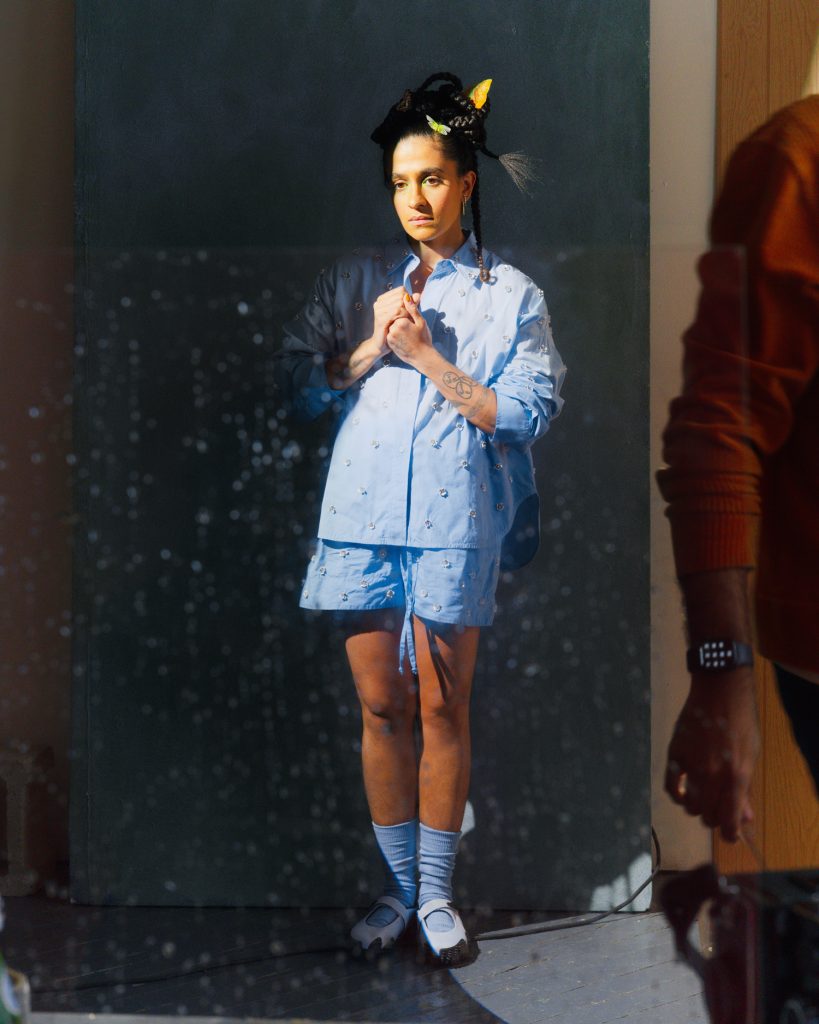
During the pandemic, Gandhi forged a more spiritual connection with this planet that she slowly came to realize she’s a part of, ultimately raising her awareness around climate issues on a primal, personal level. She was trapped in downtown Los Angeles during lockdown. “Take away the humans during a pandemic, and it’s one of the ugliest places to be,” she remembers. She would visit the roof of her loft apartment for relief. “The moon was there, and I would cry and meditate and do personal clearing and cleansing,” she says. “The only place we could exist safely was nature. I felt like I was talking to the moon and talking to trees, and they would listen. It was private and non-judgmental.”
She spent the rest of the pandemic in California’s Topanga Canyon, recording a record, eating clean and plant-based, avoiding alcohol and experimenting with psychedelics. “Al these different transformation- al experiences really helped me.”

Those experiences also helped her reframe her idea of nature – not as a fixed thing, but as a living entity with whom she has a symbiotic relationship. “So then of course, as a thank you, we all want to be in service of something that has helped us so dramatically,” she says. In the wake of these revelations, Gandhi enrolled in Stanford’s renowned Center for Computer Research in Music and Acoustics (CCRMA), where she learned how to build underwater microphones in her first week – which helped plant the seeds for her trip to Antarctica.
Enough trash to fill a jar
Leaning in and embracing opportunities for new insights is an ongoing theme and it’s why Gandhi accepted an invitation to the graduation at the Green School in Bali, an unorthodox private institution where kids’ education is infused with ideas about sustainability and a connection to nature.
There, Gandhi found out about the “closed loop” of consumption the school has adopted: “They are planting seeds, and that’s what the kids are eating,” she tells me. “And then they have waste that becomes biodegradable. For one student’s final project, she showed that every piece of trash she’d accumulated for the year fit into a jar.”

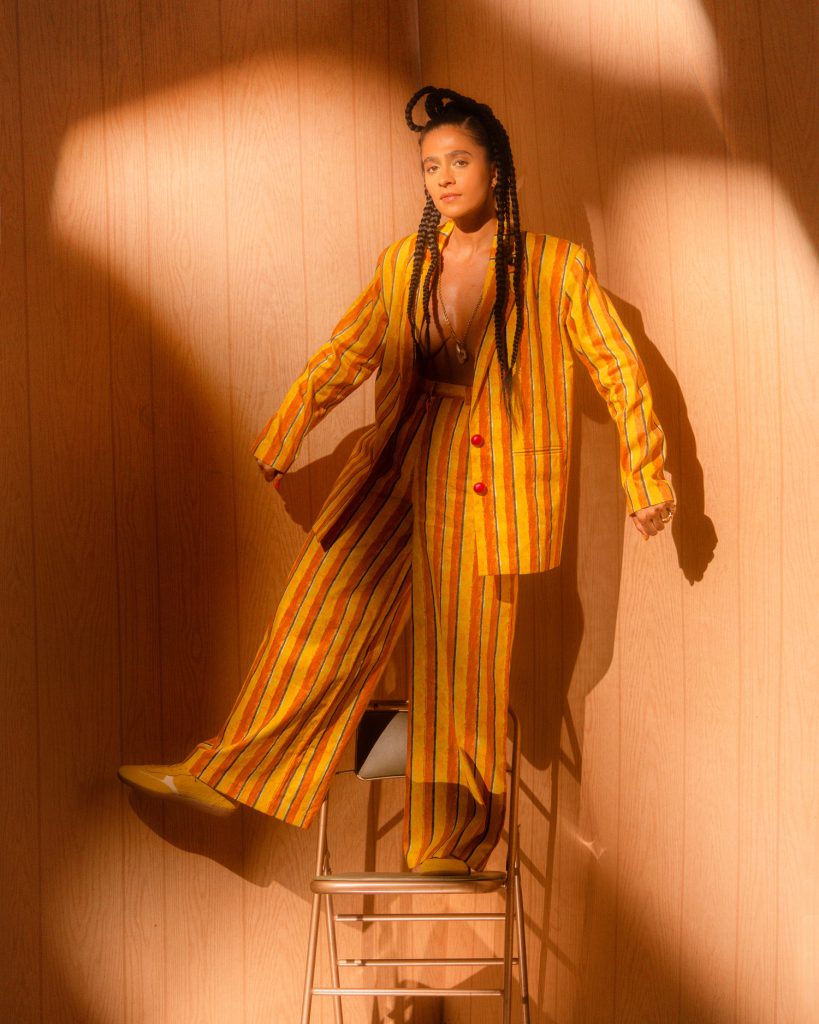
The visual of this jar opened her eyes to the way Western culture, the United States in particular, creates waste. “If we order something on the internet, waste. If we order food from a delivery service, waste,” she says. “For how intelligent we humans are as a species, I think it’s incredibly sad how much garbage there is in every corner of the planet.”
Gandhi spends most of her time in London now, and being overseas, particularly in the EU, has illuminated her to an alternative path. “They have a lot of consciousness around packaging, and a lot of laws and a legal framework around waste. It’s humbling to see that.”
Mumbai and mantras
Having lived in Mumbai as a child, Gandhi is also looking forward to reconnecting with her cultural roots, and has plans to visit Rishikesh. “I imagine recording the musical textures of my home country,” she says. “My family’s roots are from that part of India – my grandfather grew up bathing in the Ganges River that people worldwide come to experience.”
The Hindu concept of the mantra – a phrase that takes on a spiritual value when repeated over and over again, affirming focus and personal growth – resonates deeply with Gandhi. She hopes her lyrics can have a similar effect, as “subtle, joyful mantras that make each person who listens to my music walk with just a little bit more personal power, more desire to make the world a better place,” she told the Creative Independent.
“There’s no false positivity… I have to genuinely feel hopeful and optimistic”
How does this work? It’s tangible in one of her new songs, Rise!, where Gandhi chants: “Keep my heart open/Move with awareness/Bravely and wisely, lay down my roots.” Almost like a personal meditation, it’s as if she’s reminding herself of these principles as much as the listener, which is highly possible because, for Gandhi, taking care of herself is central to translating her ideas and dreams for a better world to her audiences.
Over the years, Gandhi’s discovered that she is most effective when she’s coming from a place of personal uplift. “I think hope and positivity is how we relay [our messages],” she says. “I have my own anger and sorrow, but I privately work on that, such that when I come onto the stage, I’m light. There’s no false positivity or toxic sunshine, or any of these things that are in the cultural rhetoric right now. For me, it’s very sincere – I have to genuinely feel hopeful and optimistic.”
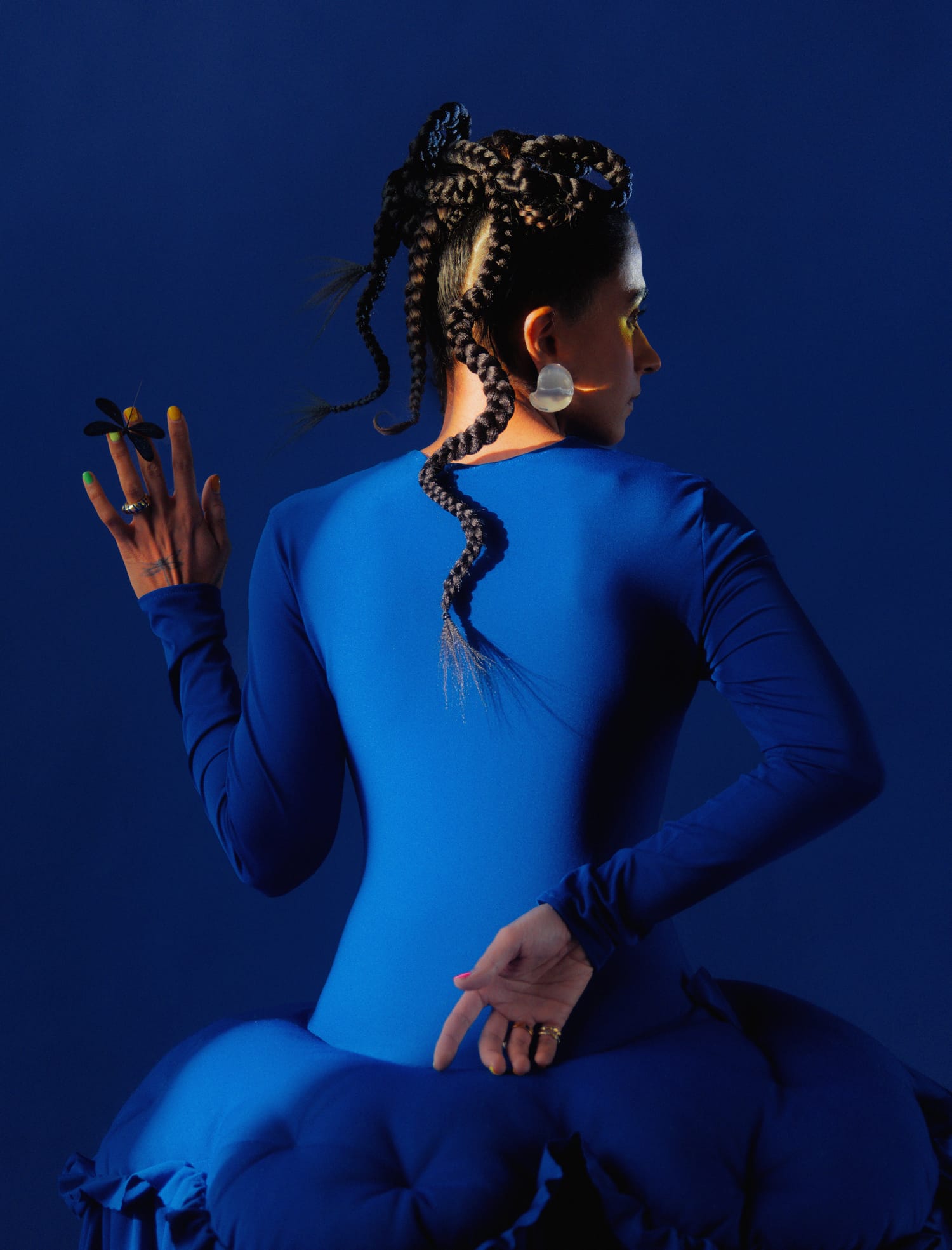
Luckily for Gandhi, there are ample opportunities to tap into fresh sources of positivity and enlightenment this year. Such as the festival circuit in the wake of the release of Let Me Be Water. She’s avoiding the traditional rotation of festivals with predictable lineups and endless lists of brand activations. Instead she’s chosen events that offer something more, like Boom Festival in rural Portugal and Fengaros Festival in Cyprus. “All these festivals have thoughts and care – the programmers aren’t doing it for the money; they’re bringing people like me with different perspectives, in a safe, positive environment,” she says. “I’m excited to design my own career. You can be thoughtful and in service of something higher.”



Cover star Madame Gandhi on the sounds of the Antarctic, free climber Alex Honnold reveals his biggest challenge yet, actor Rainn Wilson embraces his soulful side and much much more!