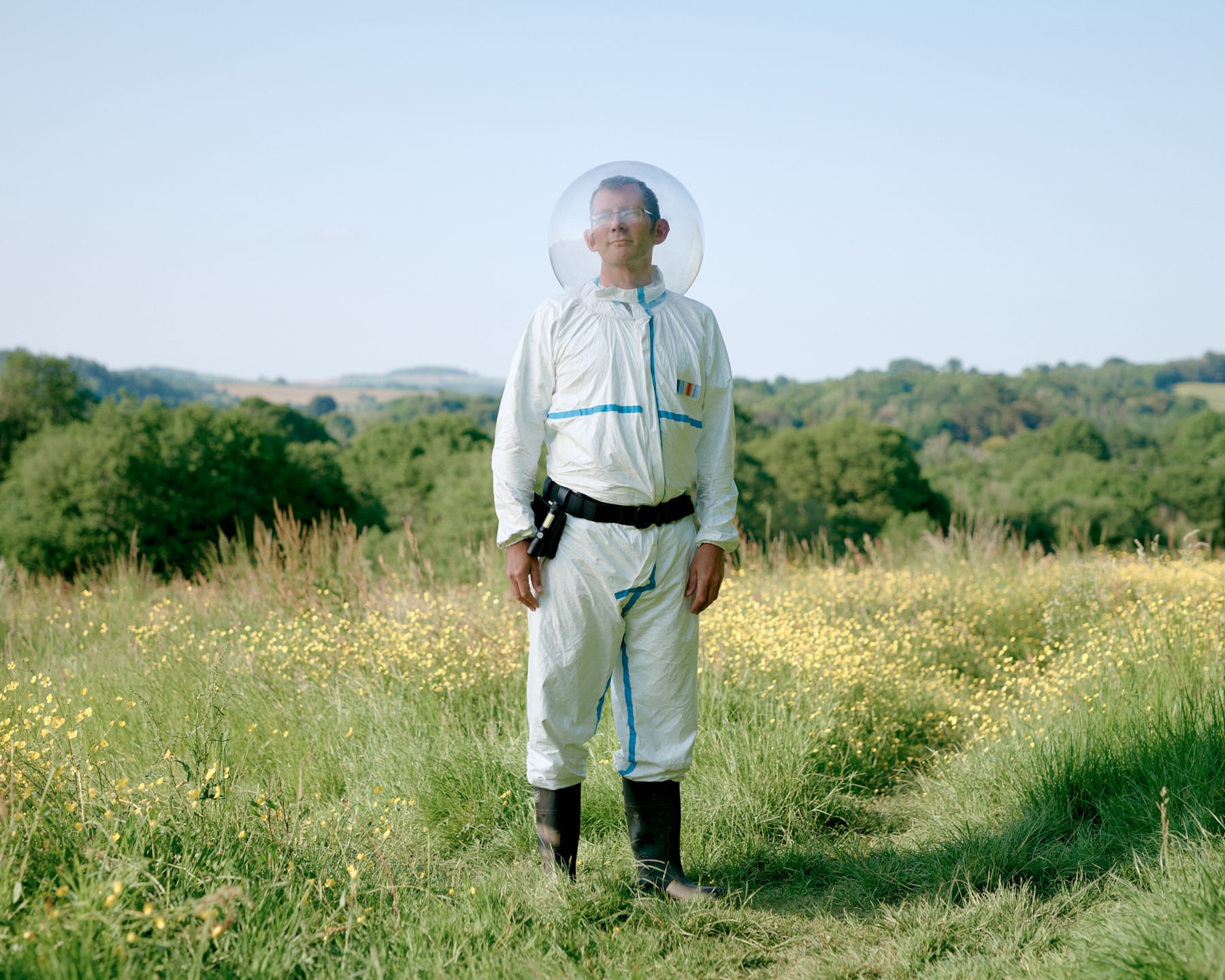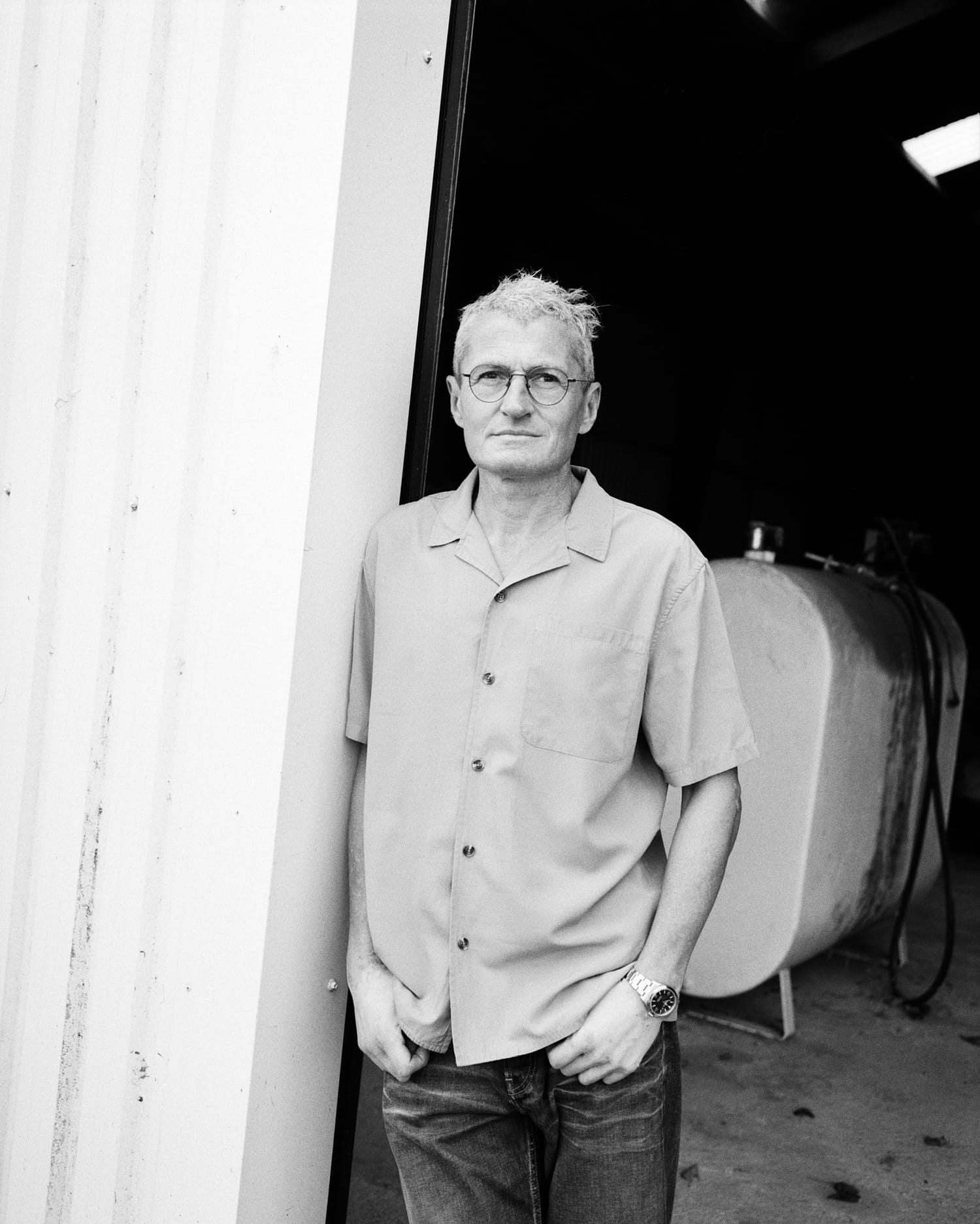
Jacob Jelsing got tired of waiting for Denmark’s politicians and farmers to start restoring nature, and decided to have a go for himself.
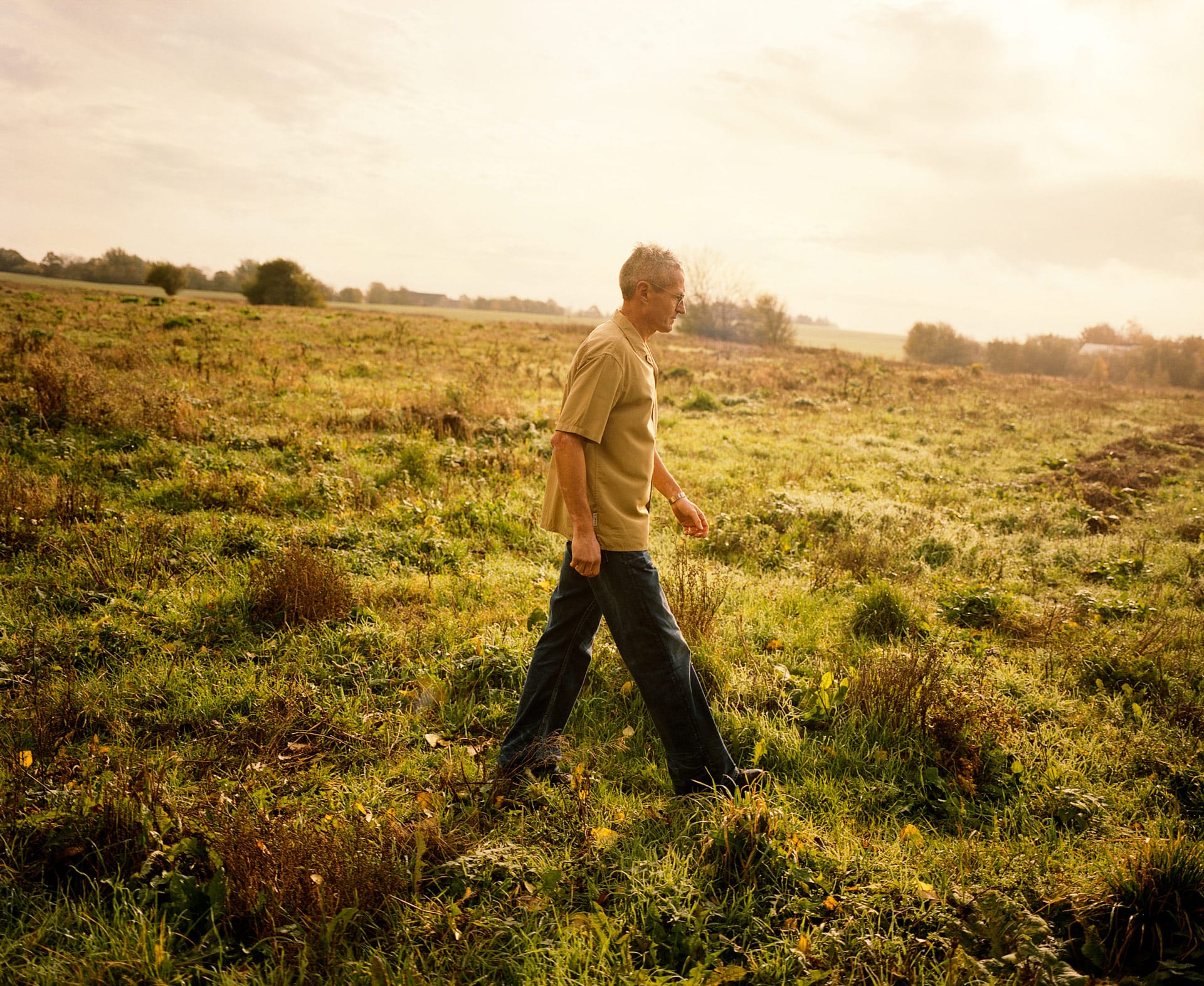
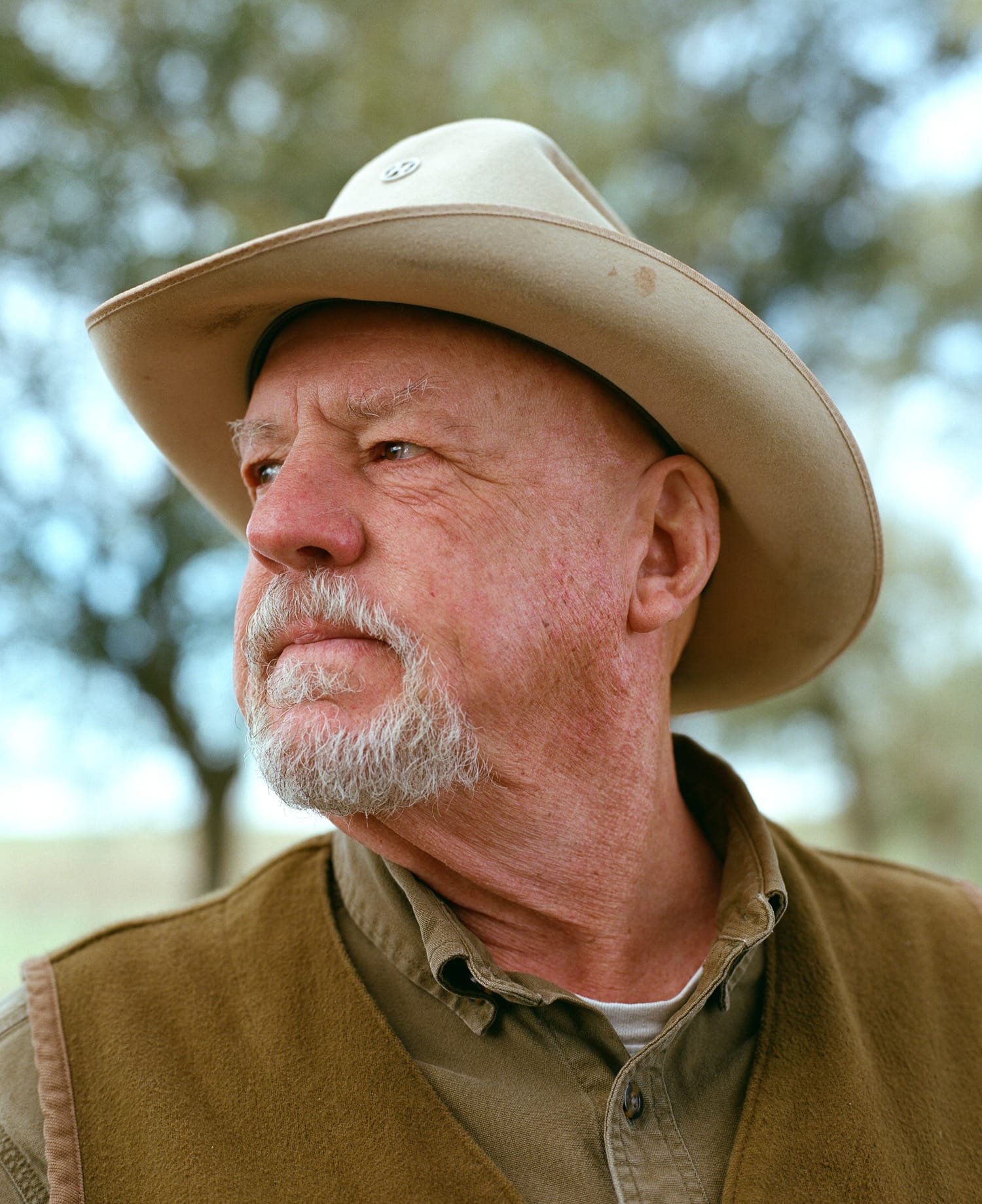
On a bright afternoon at the cusp of autumn and winter, I find Jacob Jelsing at his farm in the northeast of Denmark.
In every direction, fields stretch out over the gently rolling hills. We spend a moment admiring the view. But what Jelsing really wants to show me are the problems. The roadblocks. The tasks not yet begun.
Jelsing is a multimillionaire who bought this property at the start of 2025 for about €7 million – but he’s not here to play at being a farmer, or to make more money. All he wants to do is to return it to nature.
Once, this place was busy with cattle producing milk. Now it’s quiet. Five-hundred acres (200 hectares) of stubbly fields, a cluster of buildings – some still with cattle stalls and milking equipment – and a large concrete tank.
Jelsing’s vision is very different: ponds, a stream, trees, horses, flowers, birds, bees. It sounds idyllic, and it would be a big win for the environment. But it’s not as easy as you might think.
“I’m learning stuff the hard way,” says Jelsing. “And I’m hitting my head against the wall sometimes.”
Murky waters
The shocking impact of intensive farming on Denmark’s nature has grown more apparent than ever.
In April 2024 a group gathered on the banks of Vejle Fjord around a strange coffin. The glass casket contained murky water from the fjord, which environmental campaigners declared “dead”. They invited local residents and sport fishers to join them in mourning it. The cause of death? Fertilizer from fields.
As a trained marine biologist, Jacob Jelsing understands the devastating effects of fertilizer on marine ecosystems. Dirty, lifeless fjords, collapsing fish populations and polluted drinking water are the price Denmark is paying for its highly industrialized livestock farming sector, which uses half the country’s total area to grow grain that is fed to pigs and cows, churning out bacon, butter and beef.
More than a billion euros in subsidies go to Denmark’s farms each year, despite the harm caused by this kind of agriculture, which on top of the nitrogen pollution, emits vast amounts of the heat-trapping gasses that cause climate change.
“I find it so terrible that such a huge part of the water around Denmark is completely dead,” says Jelsing. “I can’t even put words on it. Why did we let that happen?”
He’s angry at farmers who soak up the subsidies and keep polluting, but he’s even angrier at the system that rewards them for doing so.
“Of course we need things to eat,” says Jelsing, who grew up surrounded by farmland in northern Jutland. “I just think we have far too much farmland in Denmark and I think we are producing the wrong things. We could feed ten times as many people if we moved away from animal production to vegetable production. When we pour ten kilos of grain into a pig, we only get one kilo of meat. So it’s actually not that complicated.”
Vision and reality
As concern grew over the state of Denmark’s waters, in 2024 the government unveiled its big plan to set agriculture on a greener path.
Depending who you ask, the plan is either a stunning world-first, or a tragic wasted opportunity. It includes a carbon tariff on animal agriculture – unique in the world – but initial proposals were watered down under pressure from the farming lobby, so the impact on the cost of producing meat and dairy products will be less than campaigners hoped.
As for reducing the amount of farmed land, it’s all carrot, no stick. There’s a €5 billion fund and an ambitious target to transform 15% of the country’s farmland to woods, wetlands and meadows (the equivalent of more than 100 football fields a day over the next five years). Local committees across the country have already marked out the areas of land with the most potential, but now it’s down to the farmers to take the land out of use in exchange for subsidies, or sell it. All while they watch land prices go up, up, up.
Not good enough, says Jelsing. “I was so frustrated when I read that the farmers should give up their land ‘voluntarily’,” he says. “I just knew right away that was never going to happen.” The government says plans are in place and progress is being made. But Jelsing fears things turning out the way they did when farmers were asked to voluntarily stop using pesticides near Danish waterways: that was seven years ago, and yet recent tests of water sources found pesticides at record levels.
He would love to see tougher rules, higher tariffs and smarter subsidies, to make sure that environmentally unsustainable farms are also economically unsustainable. But waiting for that to happen would require patience.
And he doesn’t have any.
“I will never have a huge revenue on this. But can we make it, like, zero?”
Jacob Jelsing
Awkward moments
Being a multimillionaire isn’t something that comes naturally to Jacob Jelsing.
He made his money from the biotech research firm Gubra, which he co-founded with two others in 2008. Among their clients was the pharma giant Novo Nordisk, and Gubra’s work supported the development of the phenomenally successful weight loss drugs Ozempic and Wegovy. Thanks to this and other wins, when Gubra went public in 2023, its value soon reached more than a billion euro.
It’s a pretty stunning success story – which Jelsing recounts in a matter-of-fact way, as if it happened to someone else. When he reaches the part where he realized he was worth over €300 million, he pauses and adds: “So that was awkward.”
It wasn’t the money that motivated Jelsing, then.
What did motivate him was the chance to help the environment. Gubra has invested huge amounts in green measures, such as providing staff with electric bikes and plant-based food, and supports nature restoration schemes designed to compensate – many times over – for the carbon emissions of the company over its entire lifetime.
Jelsing saw his newfound wealth and freedom as a chance to continue this work, and when he found himself disappointed by the government’s agriculture policy, he decided to start returning land to nature himself. Together with his wife Camilla Voigt Zacho, Jelsing set up a company called Earthbreak, and the site where we meet is one of its first acquisitions.
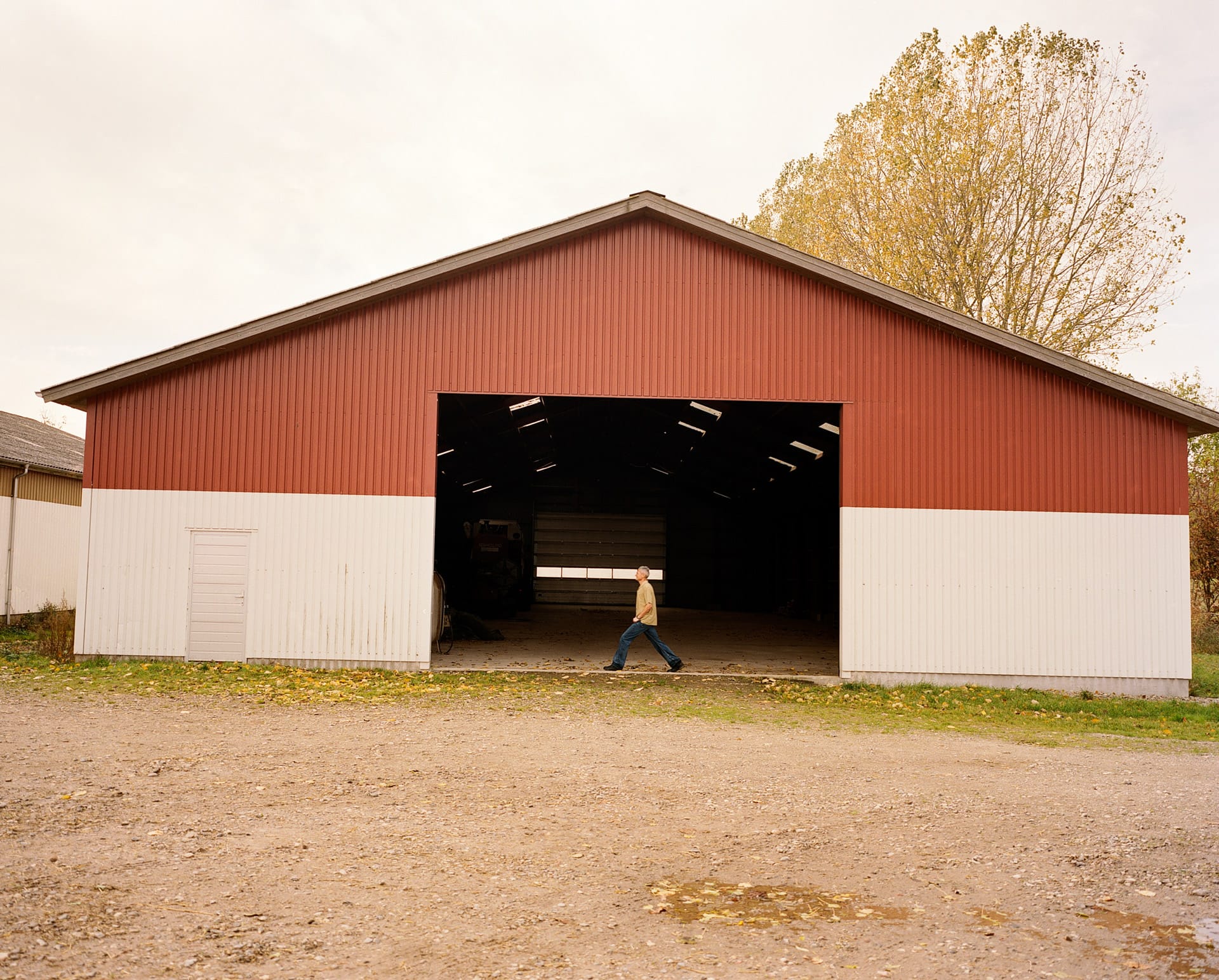
This all used to be fields
So how are things going at the farm? Slowly, is the answer.
Jelsing knows that if he wanted to start working the land again – pumping out chemicals, perpetuating the pollution of coastal waters and fueling climate change – he could pretty much start tomorrow. But letting it go wild is another question. “We haven’t done anything yet, to be honest,” he says wearily.
A key first step will be to take out the drainage channels – but he can’t, in case it creates problems for other farms upstream. On that question he awaits an answer from the municipality.
He also wants to scrape away earth in low-lying spots, to prevent fertilizer left in the soil from polluting new ponds – but the local museum insists he must first conduct an archaeological survey of the whole site, in case it conceals anything of interest.
Then he wants to plant trees – but that requires a dispensation from the municipality, which he has been told could take a year. Having animals graze among the trees would require yet further approvals.
At another of its former farms, Earthbreak was recently denied permission to plant trees within 500 feet (150 meters) of a stream. The reason, according to the local municipality, was that trees would interrupt the landscape of cultivated fields (which, of course, was sort of the point). If he wanted to, Jelsing could spray the land with pesticides, and yet trees are a no-no.
Nature restoration projects like these are supposed to be at the heart of the country’s new agricultural policy, and the government claims it is working on making it easier to take farmland out of use. From the bureaucracy he’s facing, you’d never know it, says Jelsing. “Doing something just for biodiversity is more or less impossible. They just expect everything to be harvested in some way,” he says. Neighboring farmers have been cordial, Jelsing says, but they wonder why he doesn’t just farm the land.
Then there’s the question of whether the site can ever pay for itself. Could the buildings become vacation rentals? Could he benefit from some kind of carbon or biodiversity credits? “I will never have a huge revenue on this,” Jelsing concedes. “But can we make it, like, zero? Can we make two per cent? Wouldn’t that be fine?”
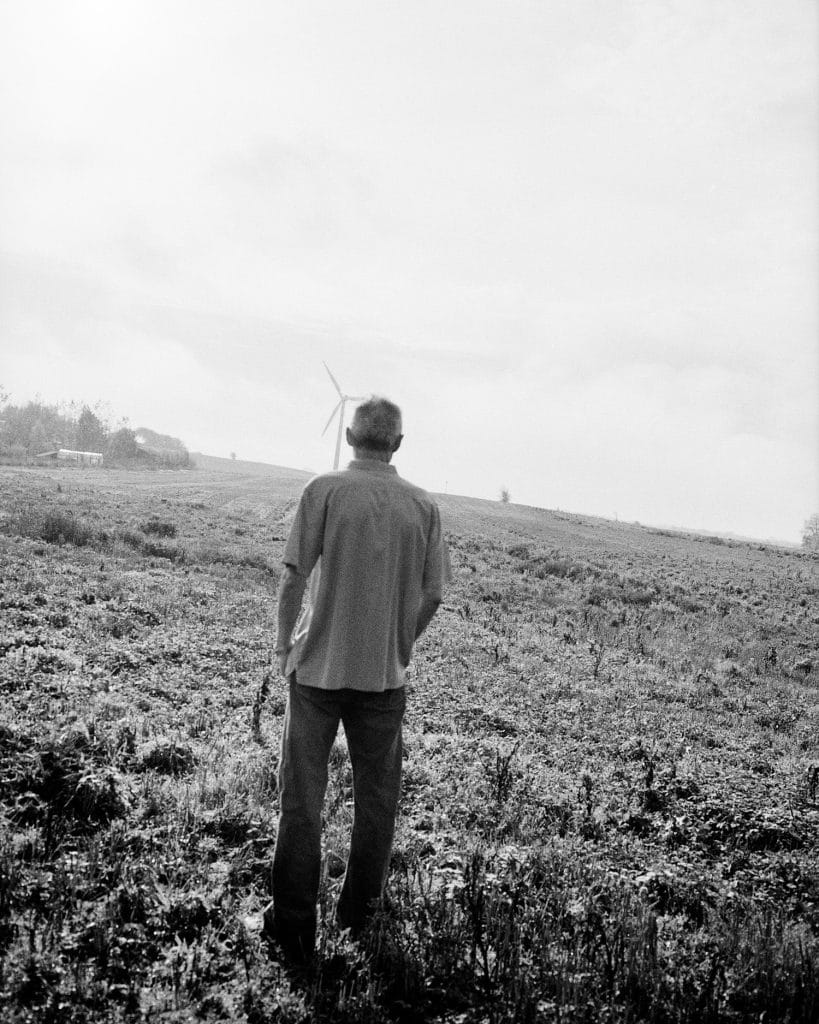
We all have a responsibility to the environment around us, Jelsing believes.
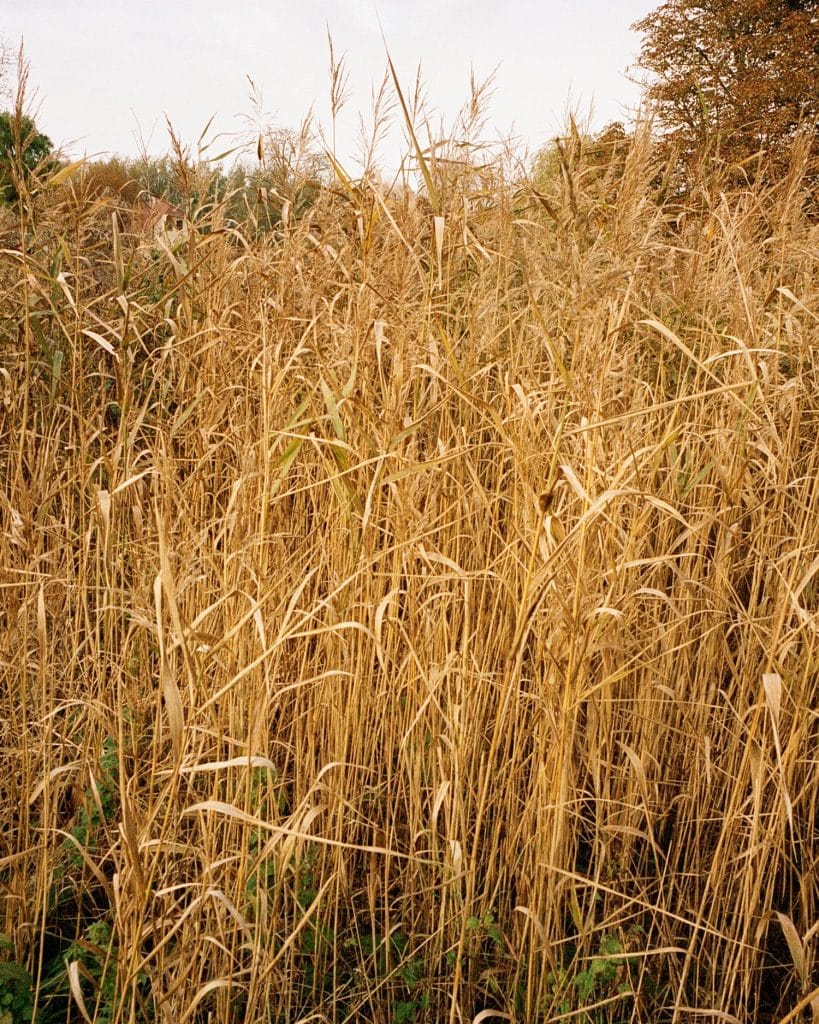
Proving what’s possible
It’s not as if Jelsing’s vision is radical. “I would like to help restore nature and biodiversity, and support a better way of making food,” he says. “I hope that we will come to a point where we find value in nature and that we will be back to 20% or 30% [of land set aside for conservation]. And that we again have normal oxygen levels in the waters surrounding us.”
Even more than he is a nature lover, Jelsing is a problem solver. “I can see what’s wrong but nobody’s doing anything about it,” he says. His own contribution is small, he acknowledges, compared to the amount of nature we must restore to meet environmental goals.
But this project is also about proving a point. It’s about showing what’s possible, and what – until something changes – is not.
It’s also about showing that changing the system requires changing ourselves. “If people didn’t buy the pork, the farmers would not produce all those pigs,” he says. “We have to change the way we live, what we eat, buy, how we travel. We have to reach those social tipping points. I hope that in 10 years’ time or 15 years’ time, we will be sitting around saying, ‘Why did we eat all that meat? Why did we accept that 25,000 piglets were dying every day in Denmark? Why did we accept that five to seven thousand Danes owned 60% of Denmark, and they were killing our shores and our sea? Why?”
He’s particularly tough on those who, like himself, have the money to make a sizeable impact. “There’s a lot of wealth in Danish society,” he says. “But the hundred richest Danes… they’re more focused on whether they can move up that stupid ladder instead of actually doing something good with their money.”
The future will no doubt bring more walls for Jelsing to bang his head against. But at the same time, he’s helping build a community. Since starting to buy up land and talk about it publicly, Jelsing says he has “been overwhelmed by positive people”.
When he sent out an invite to an open day at the farm, “I hoped 50 people would come, and by the end there were more than 300,” he says. ”I’ve received so many nice words, emails and posts on LinkedIn. And besides that, I’ve had the opportunity to meet some of the organizations who are doing things. There’s actually a lot of people who are supporting this.
“Hopefully I can make it into something beautiful.”
Cover star Madame Gandhi on the sounds of the Antarctic, free climber Alex Honnold reveals his biggest challenge yet, actor Rainn Wilson embraces his soulful side and much much more!
FARMING


INTERVIEWS