Lauren Bravo on the clothes that get passed from child to child to child, and that love that goes with them.
Snow-white sleepsuits. Personalized blankets. Impossibly tiny socks. In these wildly consumerist times, few life events or calendar occasions are allowed to pass without a slew of associated shopping opportunities, and having a baby is no exception. But when our daughter was born, hands down the best gifts we received (besides food) were the hand-me-downs.
We cooed gratefully over all of it, of course, old and new. But it was the preloved clothes, outgrown by other people’s children, that brought the most joy.
I guess it’s one of the perks of starting a family relatively late, when lots of your friends have decided that theirs is complete (another is sending 3am photos captioned “is this normal??”). Bags and boxes and sacks of clothes were passed on. Some in person, some sent in the post with handwritten notes attached to favorite pieces; all with the sense that the givers were as happy to be making those cherished clothes a part of our family as they were to be freeing up space in their houses.
And so, dressing our squirming newborn each day became an act of community. The hand-me-downs felt like our version of the ‘village’ so often mourned in modern childrearing. That loving, hyper-local support network that once sustained new parents, but is fast becoming extinct – here in the UK at least, where the prohibitive cost of property and childcare has forced so many of my generation to move miles away from their friends.
During those wild, woolly-headed days of early parenthood, when it’s so easy to feel isolated, her outfits were tactile proof that we did have support; if not on the same street, or even always in the same city, then at least the end of a phone. With each jiffy bag of tiny jumpers that arrived in the post, came a reminder that our village was out there, wanting to help.
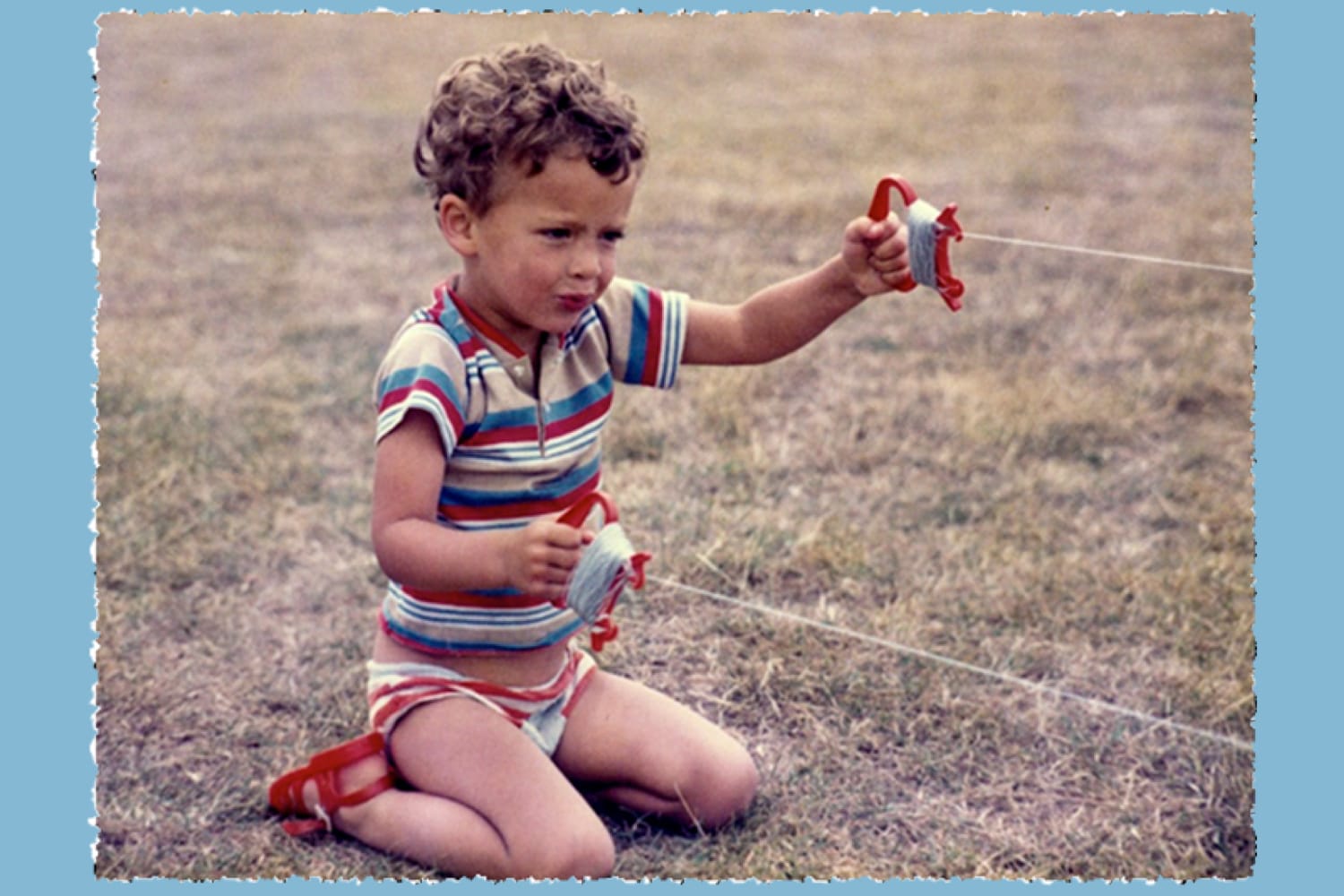
The joy of sharing
Of course, this is nothing new. The tradition of sharing used clothes within families and social groups is virtually as old as clothing itself, practiced across continents and cultures. But while hand-me-downs have sometimes been a source of stigma or shame – the youngest child in their siblings’ too-big cast-offs, the poor relation forced to wear a borrowed dress to the ball – I like to think a new generation is reclaiming the beauty and romance in the thrift bag.
Certainly we’re becoming less squeamish about buying secondhand, especially for our kids. Childrenswear is the fastest-growing resale category, projected to grow by 83% by 2030 – a boom facilitated by the meteoric rise of apps like Vinted, the Lithuanian resale marketplace launched in 2008, which now has 65 million users globally and a value of €5 billion ($5.7 billion). The pool of shared resources has widened beyond family and friends, to encompass whole countries and beyond.
RELATED ARTICLE
Whether you’re selling them or gifting them, a sharing economy for childrenswear makes sense on so many levels. New clothes are pricey and babies famously love to grow out of things, often before you’ve even had time to take the tags off. It solves the tricky question of what to do with outgrown clothes, when time is scarce and you have your hands full scraping food off the furniture. And, crucially, it keeps all those tiny outfits in circulation, reducing the need to make more.
Millions of garments, billions of tons
The climate cost of our clothes is no longer a secret, but it always bears repeating. One of the most polluting industries on the planet, clothing and footwear production releases 3.9 billion tons of CO2 equivalent annually, representing eight to ten percent of total global CO2 emissions. And fashion waste is an ongoing ethical and environmental disaster, choking landscapes and local textile economies in countries like Ghana, where 15 million pieces of cast-off clothing are imported each week. Though the focus is usually on adult fashion and the relentless trend cycle, we can’t pretend the smallest members of society don’t contribute. An estimated 183 million items of childrenswear go to landfill every year in the UK alone.
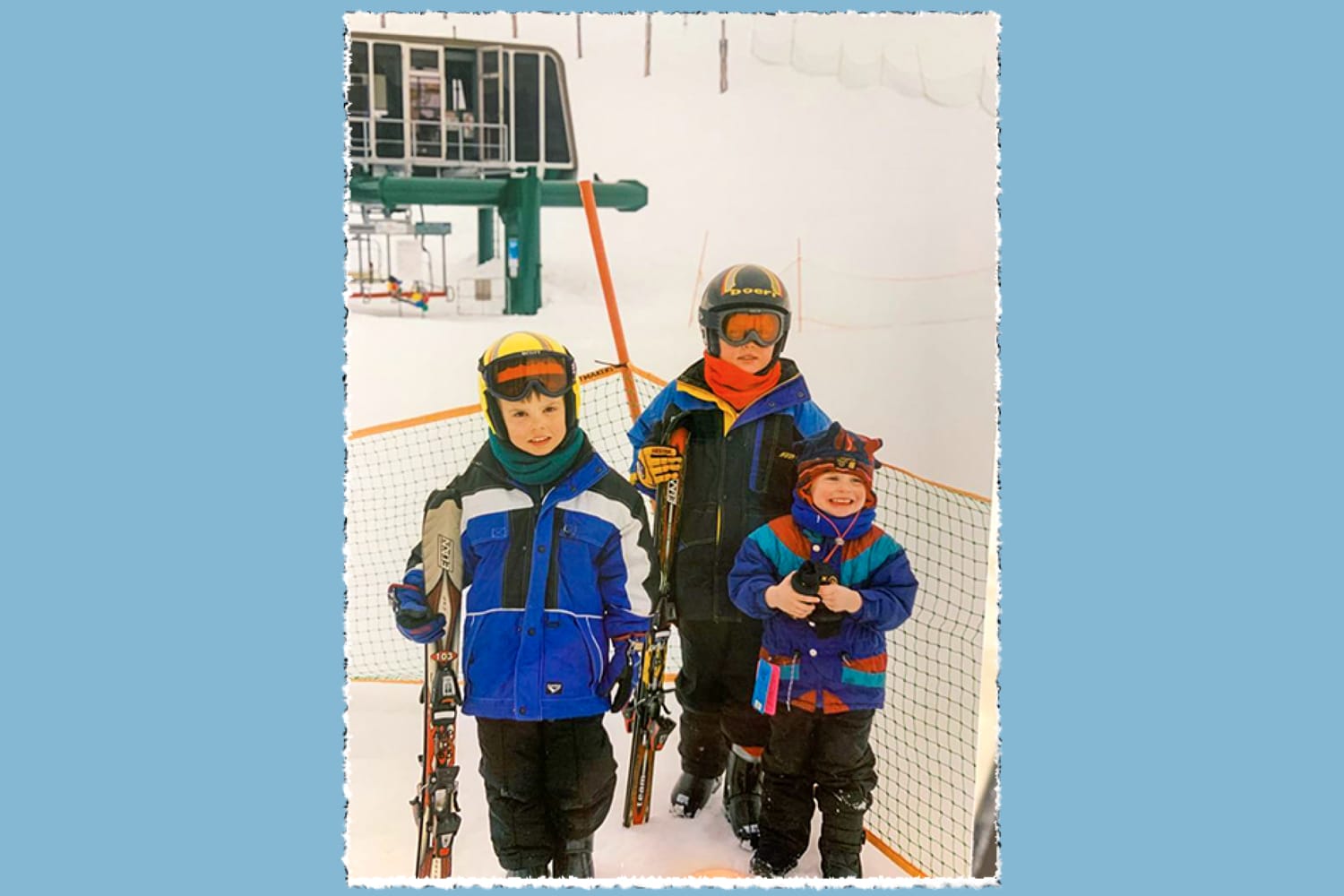
Yes, a proportion of those will be rendered unwearable by the messy business of being an infant – but plenty could live to climb another tree, or smear another breakfast on the wall. Judging by the volumes of brand-new clothing on resale sites, many well-meaning gifts and clothes saved “for best” never even get a first outing. I know I’m not the only new parent who got excited about tiny party dresses and miniature pairs of jeans, only to discover you’ll mostly both be wearing pyjamas for the first three months (cough, six).
Designing a better system
More thoughtful design could help slow down the churn. Brands such as Frugi and Petit Pli are leading the way, with adaptable clothing that extends as children grow, mimicking the generous seam allowance and at-home alterations that used to be standard in days gone by. Even British high street giant Marks & Spencer boasts that its children’s clothing is of “handmedownable” quality, with labels that have spaces for multiple names and the instruction to “Please pass me on”. Though with a fast fashion business model that relies on adults buying more than they need, you have to question how sincerely they mean it.
But while we dismantle capitalism, there’s the grassroots solution we’ve always had: share the love, and clear out your loft while you’re at it.
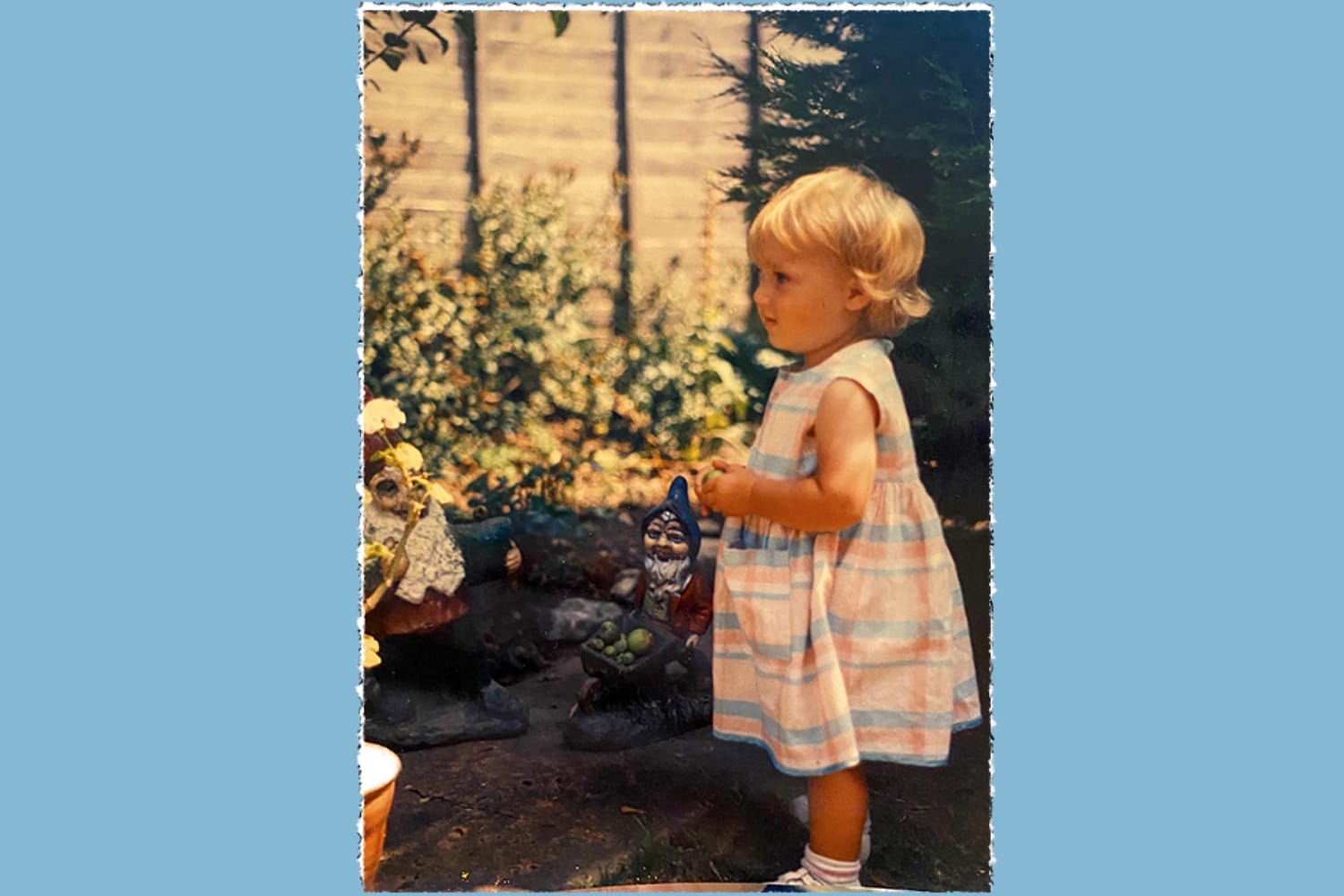
Pay it forward
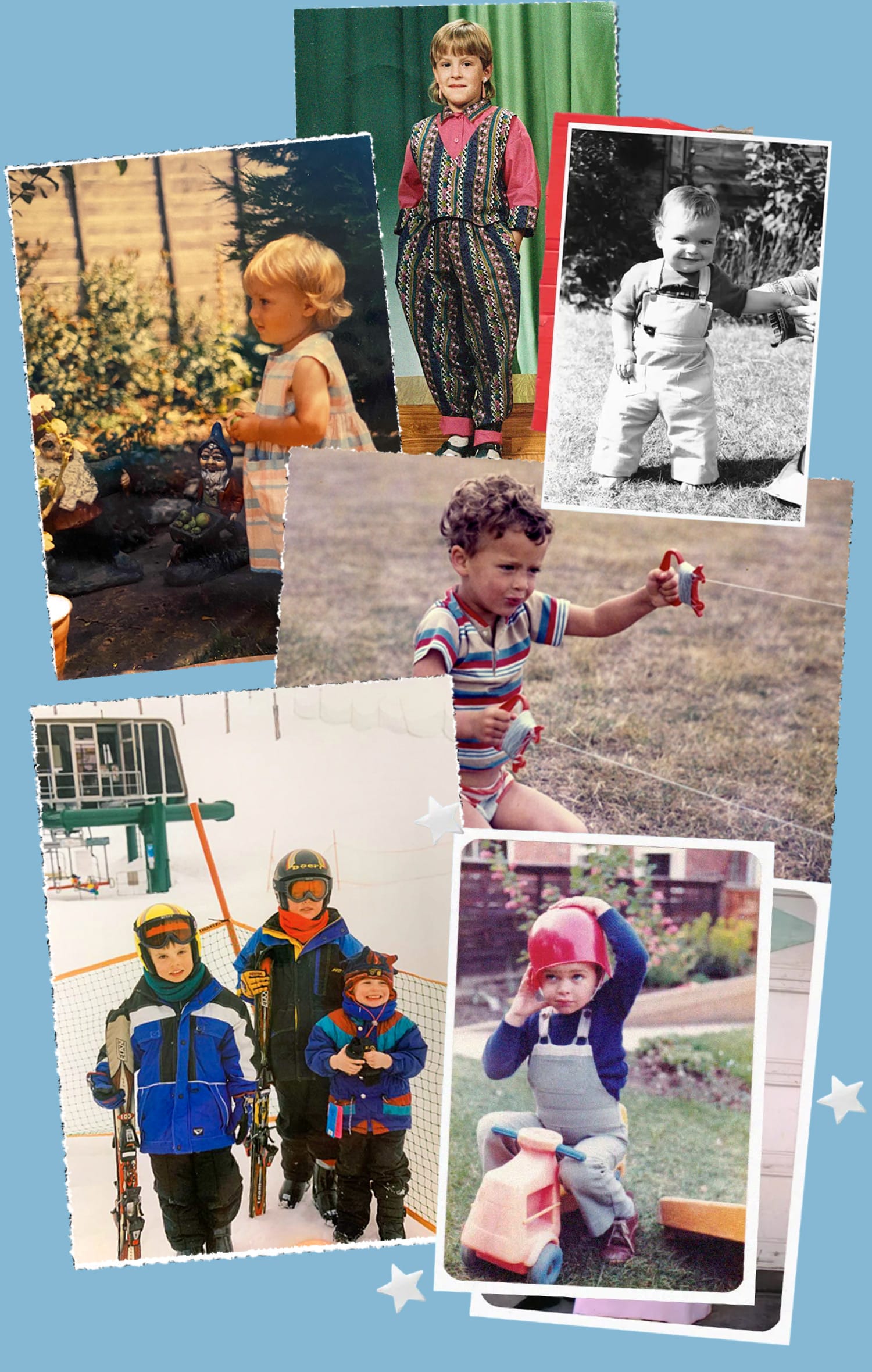
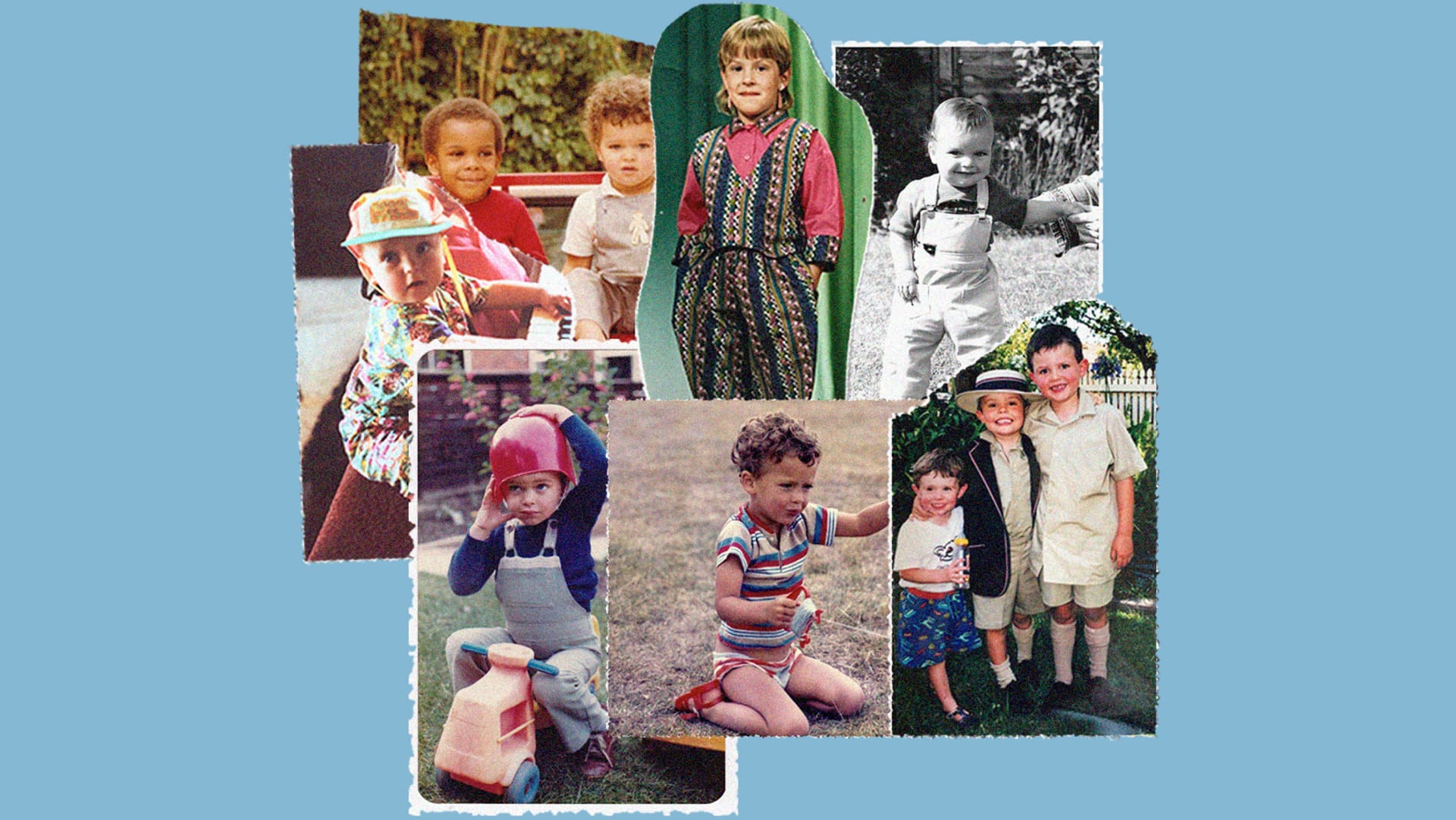
Beyond the carbon savings, hand-me-downs also took away some of the decision fatigue of new parenthood. Zero energy wasted deciding what our baby’s ‘aesthetic’ should be – we’d just go to the drawer and see what we had. No #sadbeigebaby here; it was a glorious, gender-fluid lucky dip of colors, styles and motifs, her wardrobe already storied and sentimental in a way that shop-bought clothes never could be. Naturally, it helps that our friends have great taste. One especially cool Marimekko onesie has been worn by three different babies (so far), and we loved comparing photos of them all in it, each tiny, wrinkled face unmistakable as the child we know now.
There have been family heirlooms too, old and new. Lovingly handknitted cardigans. A jumper covered in helicopters, last worn by her dad as a baby in 1985. A dress made by my mum, with groovy 1960s fabric inherited from my grandmother (she made me a top in the same fabric, and I rejoiced in the chance for mother-daughter twinning while it lasted). Another dress made by one of my best friend’s mothers, from material left behind by her late niece. Each piece is a connecting thread to someone special, and a way to preserve memories of people no longer here. Even the scrappiest play clothes become something to cherish.
But hand-me-downs are also a reminder not to be too precious about clothes. Kids’ clothes especially, which are destined to lead a life of heavy service. “Are you sure you don’t want to keep it? Or sell it?” I’ve asked on more than one occasion, picturing the inevitable nappy explosions and blueberry stains, the guilt I’d feel if they ever change their mind and ask for it back. But the answer is always the same: “I’d rather it gets worn.”
RELATED ARTICLE
Worn they were, and still are. The clothes have kept on arriving, long after the food parcels and unsolicited advice stopped. And it is that rare and beautiful thing: a good deed that results in mutual joy for both parties. Our friends and their children love the nostalgia rush of seeing our daughter in their hand-me-downs, and we love the fact we’ve barely had to set foot in a kids’ department since she was born. If only the same could be said for soft play.
Please take
Of course, not everyone can be in our lucky position. If we’d had our baby a few years earlier, we would probably have had to buy a lot more new. But beyond our immediate social circles, there are growing communities dedicated to swapping and sharing resources on a larger scale. The Buy Nothing movement now has 11 million global members, with countless Facebook pages, volunteer-run swap shops and other hyper-local groups all aiming to help thy neighbor and give consumerism the swerve. Our daughter’s nursery has a table for clothes donations in reception, with a sign. ‘Please take!’
Now she is two, fiercely opinionated, and the days of being able to dictate her outfits are slipping away like playground sand. But she still chooses clothes in the morning by asking for “Nellie’s trousers”, “Mabel’s boots” or “Milo’s trousers”, proudly explaining the provenance of each item to anyone who admires it at the park. I like to think this is instilling a love of secondhand clothes that might protect her from the lure of Shein and Boohoo, for a few more years at least.
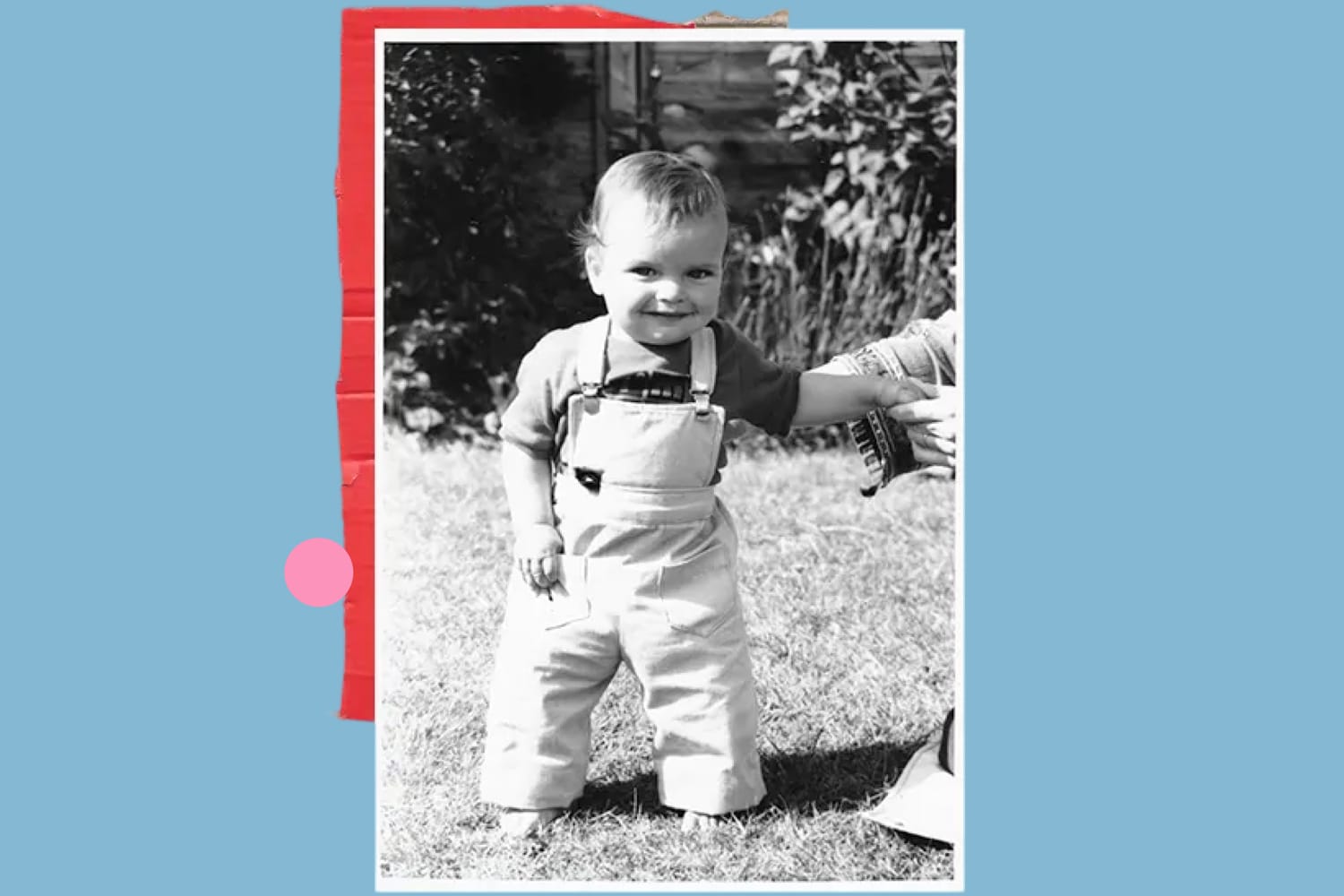
Meanwhile we’re taking better care of things than we might have otherwise – hoping that with a little luck and a lot of stain remover, we’ll be able to pay it forward and pass on a few of our cast-off-cast-offs in time.
But for now, here’s my one and only piece of unsolicited parenting advice: your baby does not need a wardrobe of brand-new clothes.
A good support network, however? That’s invaluable.
Lauren Bravo is the author of Probably Nothing, Preloved, How To Break Up With Fast Fashion and What Would the Spice Girls Do?
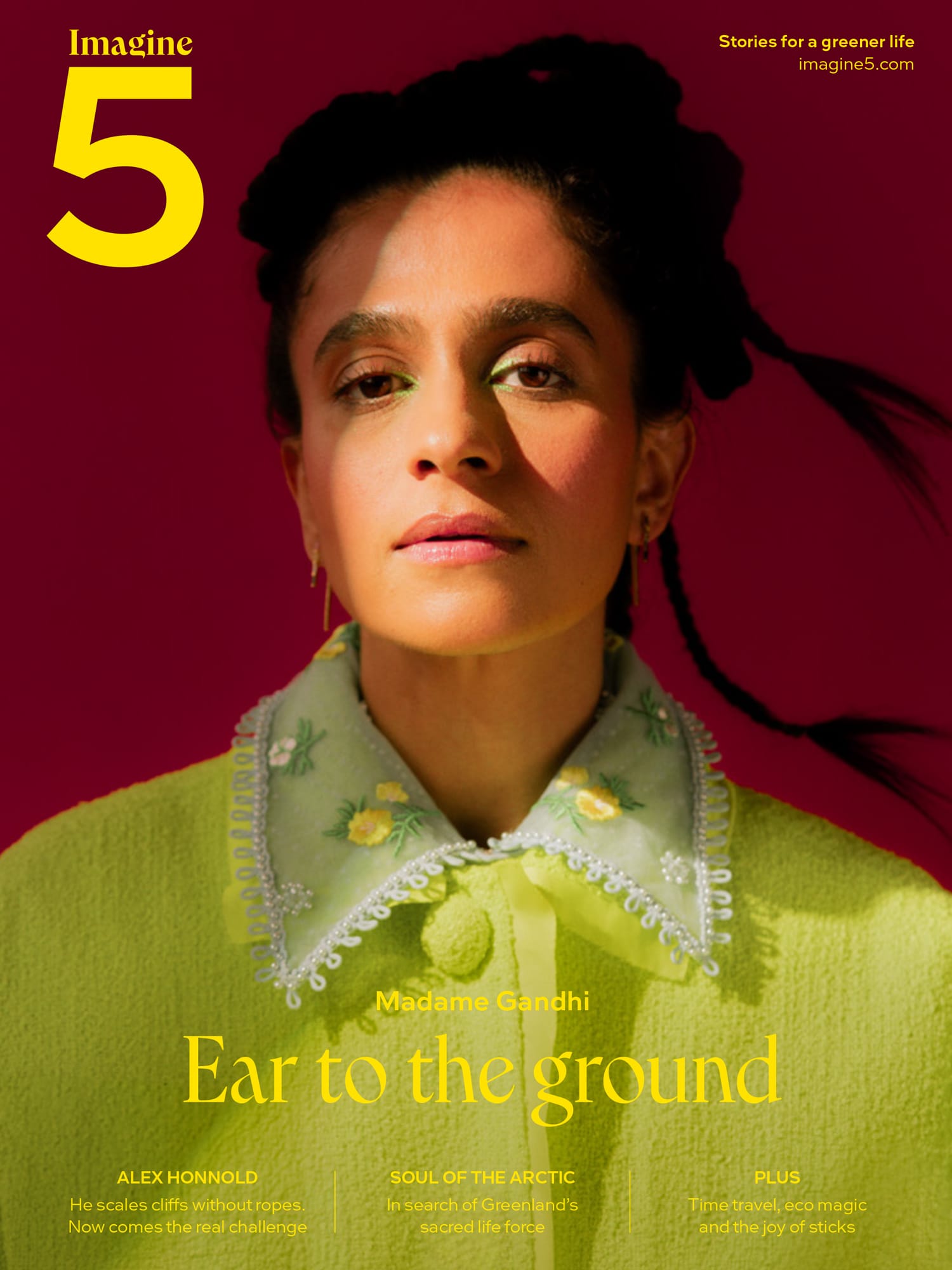
Cover star Madame Gandhi on the sounds of the Antarctic, free climber Alex Honnold reveals his biggest challenge yet, actor Rainn Wilson embraces his soulful side and much much more!