What happens when you ask scientists to use their imagination and picture a future where things have turned out right? It turns out to be transformational.
It’s 2049 and I’m 78 years old. I’ve come to this hill overlooking Copenhagen, and I’m filled with joy as I watch my grandchild’s eyes widen as we take in the sight before us. What we’re looking at may seem ordinary to others – just another building on the skyline. But inside that structure, something revolutionary is happening: hydrogen atoms are being fused together at temperatures hotter than the core of stars, in turn releasing enormous amounts of clean energy. This isn’t science fiction, it’s Denmark’s first fusion power plant, and it’s helping make our society carbon-negative. It’s 2049, and the most striking thing about Copenhagen isn’t how much has changed – it’s how much hasn’t.
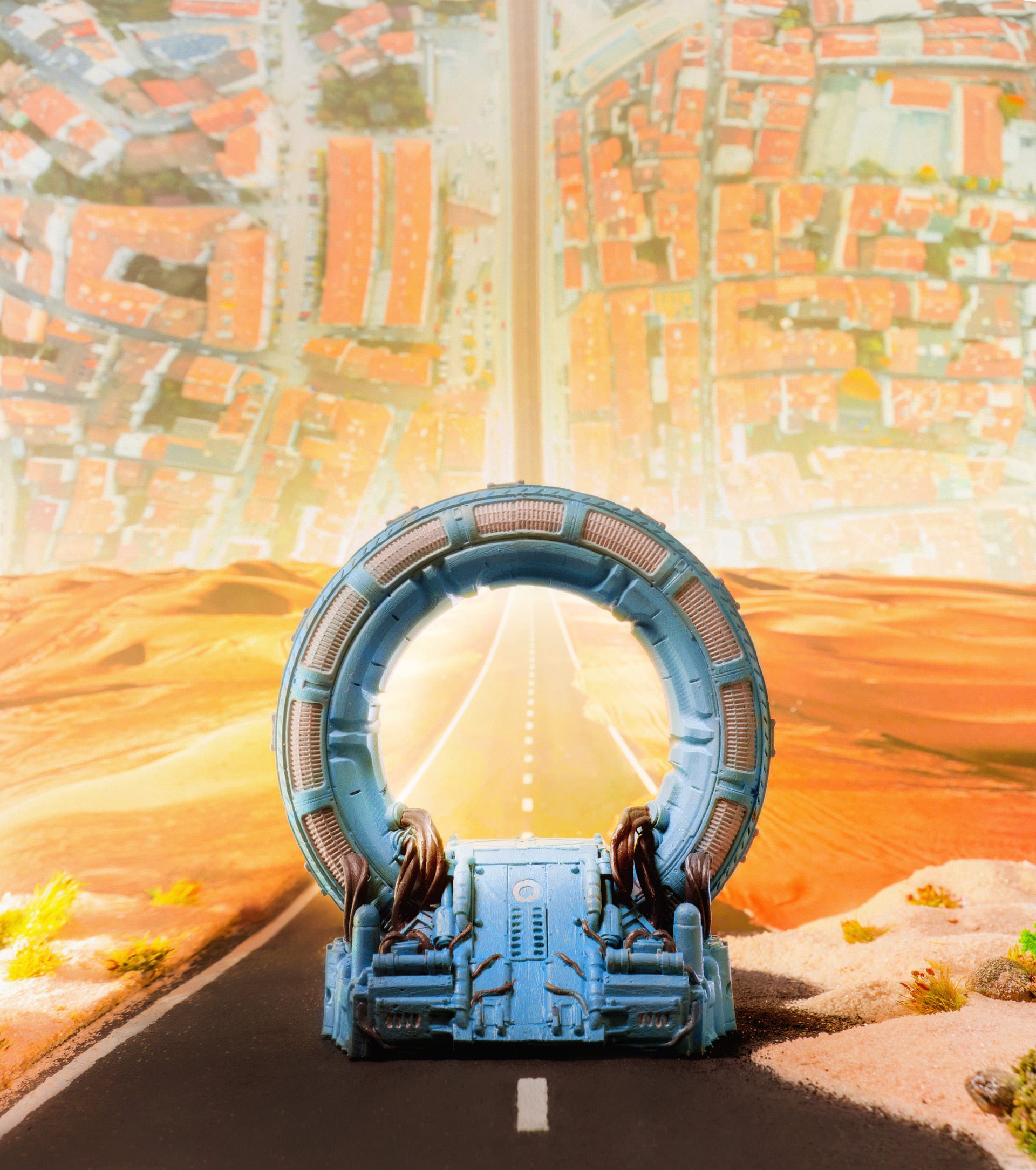
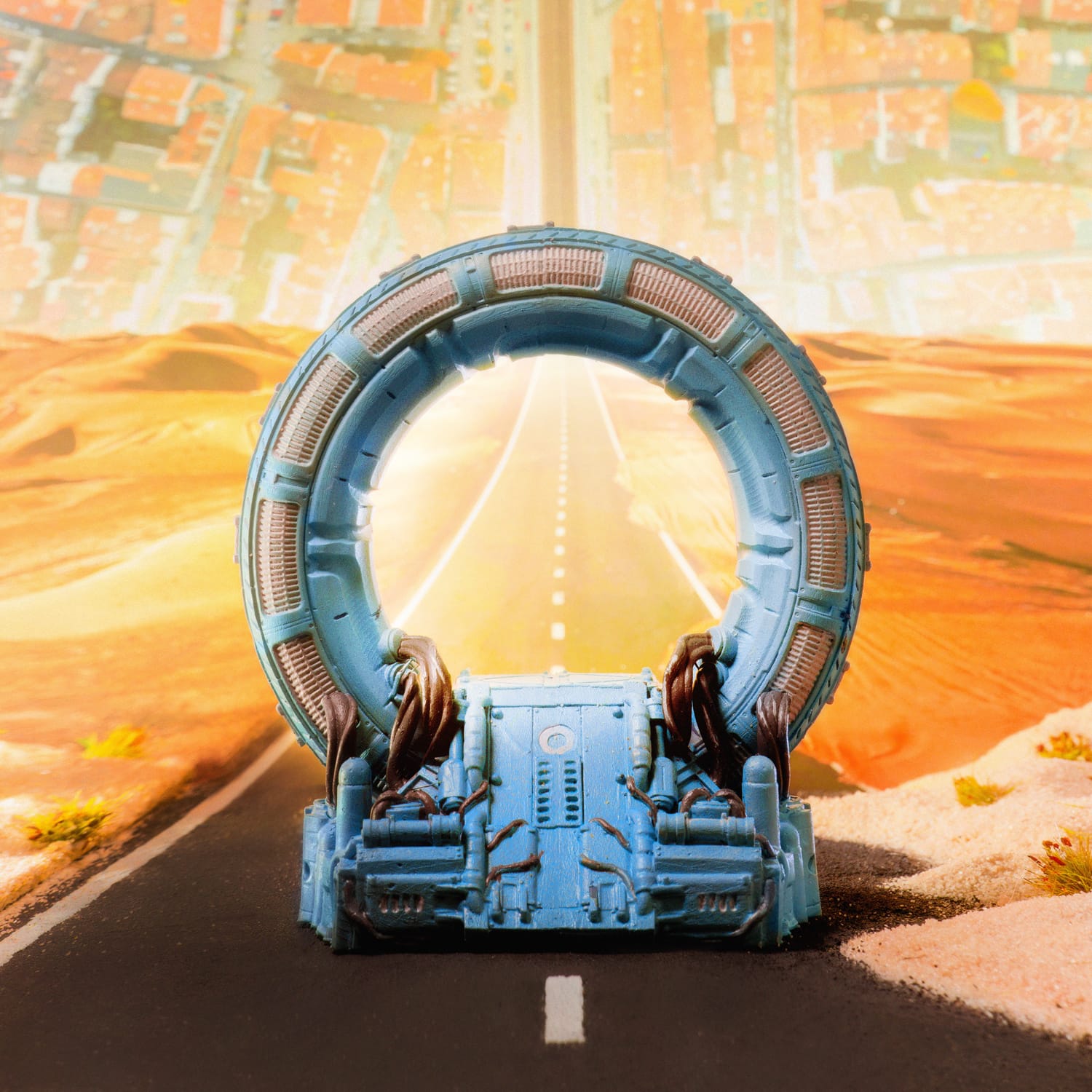
This scene unfolded during the first episode of 2049, a podcast series from Third Ear Studio where my producer Brit Jensen and I got to ask some of the brightest minds working on climate solutions, to envision a version of the year 2049 in which their life’s work has succeeded.
The idea is that it’s a sort of mental gym where we exercise our capacity for optimism by imagining – not predicting, just imagining – what a sustainable future could actually look like.
“Something magical can happen when scientists dream big, even just for a moment”
Our journey began one afternoon at the Technical University of Denmark, where we met with Søren Bang Korsholm, a senior scientist in plasma physics and fusion energy. Our request was unusual: please set aside your knowledge of current scientific limitations and foreseeable funding gaps. Instead, use your mind’s eye to leap into a future where all those unsolved hurdles have been overcome.
Getting scientists to play make-believe like this isn’t easy – these are evidence-based minds who deal in facts, and to many, pretending feels like a waste of time, if not outright irresponsible. It really does take an effort to get people into that headspace.
But through 24 episodes of time-traveling we realized that something magical can happen when scientists dream big, even just for a moment.
A mental gym for optimism
We spoke with a political scientist studying democracy, a neuroscientist specialized in psychedelic therapy, a marine biologist restoring ocean ecosystems, and many others – each imagined a world where their work has reached its goals.
Why 2049? It’s the year before that big milestone we keep hearing about – 2050, when governments and companies promise to reach net-zero emissions. But we weren’t interested in just any version of 2049. We wanted to visit the one where we did it right, where we actually made good on those promises. Not because it’s guaranteed – but because glimpsing that future helps us remember why all our current efforts matter. After all, it’s easier to build something when you can picture what you’re building toward.
As for me? You might call me a professional optimist. I’ve made it my job to seek out radical advancements in technology, science and global development that point to better futures for humanity, then share those stories in ways that make people feel excited about – rather than overwhelmed by – our changing world. And this became the perfect opportunity to do so.
RELATED ARTICLE
The moment I realized it works
Quantum physicist Sofie Lindskov Hansen imagined how quantum computers would transform the work of scientists focusing on the green transition. “Looking back at the 2020s, it’s like… we were working with abacuses, almost,” she said.
Entrepreneur and climate activist Anders Morgenthaler saw major economic shocks on the path ahead to a better world, but pictured a 2049 world where “everything we consume, receive, and use is integrated into global circular systems. Finally.”
We were recording the fourth episode of the series when Ida Ebbensgaard, a fellow in AI journalism at the University of Southern Denmark, returned from her journey to 2049 crying. “It makes me incredibly proud to see how the generations after me have transformed journalism,” Ida said. “I feel so proud. We’re in a different place now. This is how it should be.”
This was the moment I realized the powerful potential of our technique. Ida’s tears weren’t just about the future she witnessed. She immediately recognized (or perhaps remembered?) the fact that this vision wasn’t just desirable – it was achievable. We already have the essential ingredients for this future.
“Our technique could forge emotional connections to possible futures”
Through Ida’s tears, we glimpsed something profound: that traveling to the future can cut through the everyday haze of concerns and re-ignite that crucial inner spark. As she later reflected, “good is always possible, and the most beautiful thing is to see it being done”.
The art of time-traveling
Through trial and error we discovered that our time-travel technique could do more than just generate scenarios – it could forge emotional connections to possible futures, making them feel tangible and achievable.
We learned that asking people to let loose their imagination while sitting at an office desk was like trying to plant seeds on concrete. Ida was the first person we asked to lie down and close their eyes. Breathing exercises came into it, too.
During our seventh interview, a breakthrough occurred. Our reporter Miriam Nielsen and I were interviewing a PhD in applied superconductivity, Anders C. Wulff, about his revolutionary superconductor technology for power transmission cables.
He described the concrete future perfectly: a thriving business producing more products for more customers, enabling renewable energy to flow 300 times more efficiently across Europe. Sounds great. But how does it feel to be in that future?
In the spur of the moment, Miriam came up with a hack: she began feeding him the start of sentences. From a journalistic perspective, this kind of thing is a no-no. But traveling through the mind’s eye is not a journalistic discipline – it’s all about unleashing the power of imagination. So, Miriam said: “Repeat after me… I’m sitting on a train traveling at insane speeds…”
Anders repeated.
“Now, continue,” she encouraged.
He thought for a bit and, just like that, these words flowed out of his mouth:
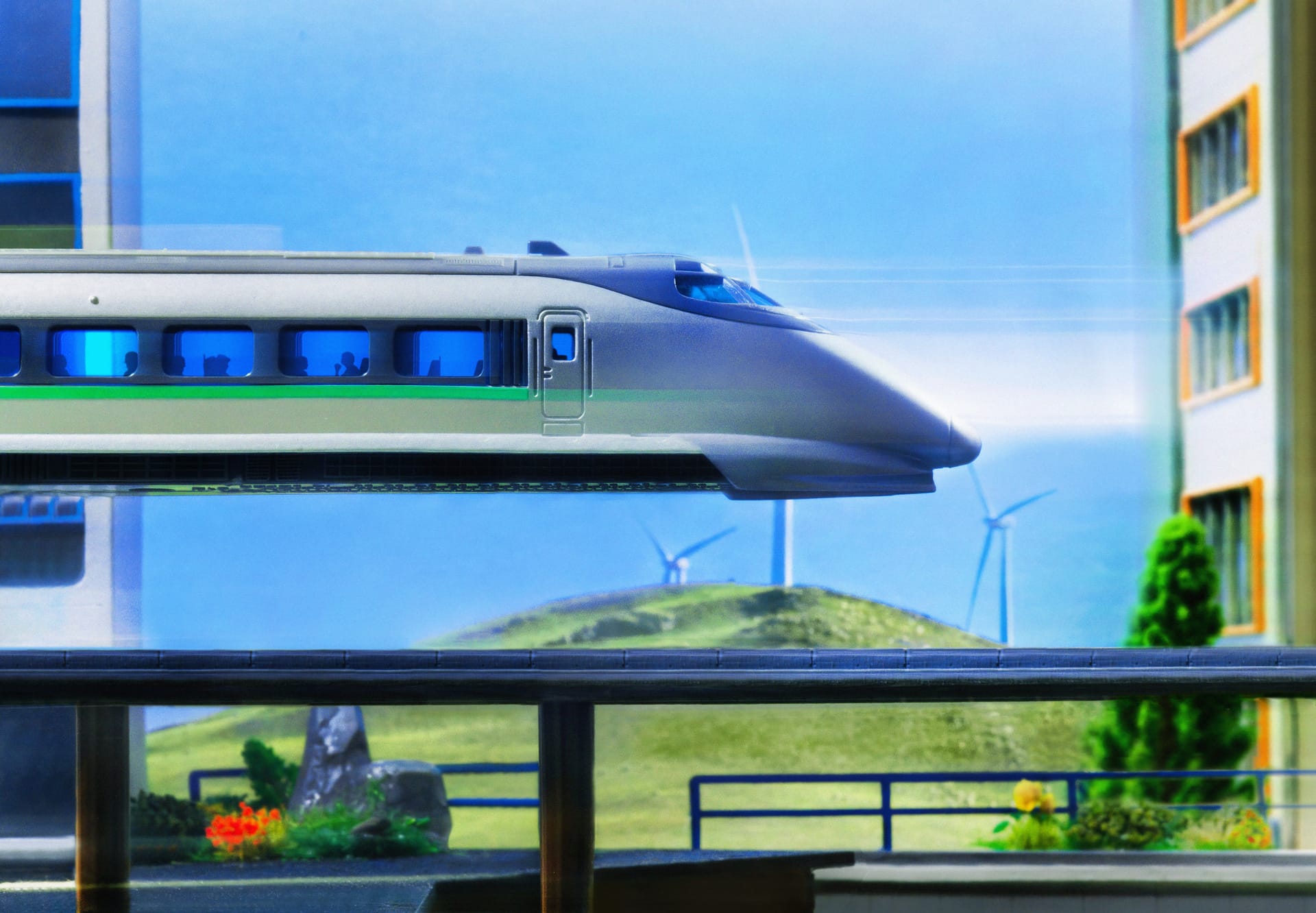
It’s 2049 and I’m sitting on a train traveling at around 500-600 kilometers per hour. The ride is completely silent. I can place a glass of water on the windowsill and its surface remains still. Perfectly still. The reason is this is a maglev train – it hovers above the tracks using magnetic fields generated by superconducting materials, allowing for these incredible, seamless speeds. When the train stops, it’s a gentle deceleration. As I step out onto the elegant platform, I’m surrounded by lush green nature. I see happy people walking about, cyclists passing by, and only electric vehicles on the roads.
His sudden stream of detail caught us all by surprise – including Anders himself. We had witnessed the power of imagination in real time.
“Everyone experiences pride in envisioning a scenario where they contributed to society positively”
From then on, we had sentence-starters ready to kickoff the flow: ‘It’s 2049 and when I look back at my accomplishments, I’m most proud of…’ or, ‘What has surprised me most about the green transition has been…’ They enabled us to explore the nooks and crannies of people’s ideas of a sustainable future; their hopes and ambitions on behalf of all of us.
Familiarity amidst change
So what did I learn from time-traveling with all these amazing individuals? One thing that became clear was that almost everyone sees themselves active in 2049, regardless of their biological age. And everyone experiences pride and joy in envisioning a scenario where they managed to contribute to society positively. These feelings are very real, although the scenarios are not. And that matters.
Interestingly, only a few envisioned futures with fantastical technologies like flying cars, robot servants or miracle cures for diseases. It’s just not top of mind, I guess.
RELATED ARTICLE
What is top of mind, though, is the climate crisis: Almost everyone sees a future where the climate crisis is still ongoing: We have turned the tide by 2049 and stopped polluting like there’s no tomorrow, no doubt. But we are very much still cleaning up after our century-long bender.
On that account, what sticks with me the most after this entire project is the very last line of our episode featuring Søren: “It’s 2049, and the most striking thing about Copenhagen isn’t how much has changed – it’s how much hasn’t.”
In the face of turbulent times ahead – with climate, AI, energy, and geopolitics all in flux – this desire for familiarity amidst all the change reveals something curious: a fusion between classical conservatism and techno-progressivism. The challenges we face are so unprecedented that we desperately need radical transformation just to stay the same.
So, the future we’re hoping for might not be as different as we imagine. But getting there will require everything we’ve got.
2049 is produced (in Danish) by Third Ear Studio.
Denis Rivin also writes Actual News.
Cover star Madame Gandhi on the sounds of the Antarctic, free climber Alex Honnold reveals his biggest challenge yet, actor Rainn Wilson embraces his soulful side and much much more!
CULTURE VS CLIMATE


BIG IDEAS